Les hommes ont oublié cette vérité. Mais tu ne dois pas l'oublier, dit le renard. Tu deviens responsable pour toujours de ce que tu as apprivoisé.
Le Petit Prince, chap. 21
Showing posts with label feline hybridization. Show all posts

Friday, 30 September 2016

Feral cats: Genetic and sanitary risk for wild felids in Iberian Peninsula (in Spanish)

Tobajas, J. (2016). Riesgos genéticos y sanitarios asociados al gato asilvestrado (Felis silvestris catus): el caso de los felinos salvajes de la península ibérica. Chronica naturae, (6), 63-82.

El gato cimarrón o asilvestrado (Felis silvestris catus) se ha distribuido ampliamente
por todo el mundo, colonizando nuevos territorios e interactuando en muchas ocasiones
con las especies domésticas y silvestres. Sanitariamente, la presencia de gatos asilvestrados
trae consigo una serie de inconvenientes para las especies de felinos salvajes, actuando
como reservorios y dispersores de enfermedades. Por ello es de vital importancia conocer
la situación actual de la presencia de estas enfermedades, y conocer bien la epidemiología
asociada a la presencia del gato asilvestrado. Esta revisión recoge los estudios sanitarios
sobre el gato asilvestrado, el gato montés (Felis silvestris) y el lince ibérico (Lynx
pardinus). Estas dos últimas, son las especies silvestres que pueden sufrir las consecuencias
del aumento de la presencia de gatos asilvestrados en la naturaleza de la Península Ibérica.
Los resultados de los estudios sanitarios sobre gatos asilvestrados, muestran una prevalencia
alta de parásitos helmintos (especialmente de nematodos como Toxocara cati) y protozoos
como Toxoplasma gondii. Del mismo modo, se han encontrado altas prevalencias de virus
compartidos entre los felinos salvajes y los gatos asilvestrados, como el virus de la leucemia
felina, coronavirus y el moquillo, convirtiéndose en una amenaza para la conservación del
lince ibérico. También cabe destacar la presencia de bacterias transmitidas por vectores,
como el género Rickettsia y Bartonella. Aparte de las amenazas sanitarias, el aumento
detectado en la presencia de híbridos de gato doméstico y gato montés a lo largo de toda
Europa también es remarcable. Por estas razones, se puede considerar el gato cimarrón
como una de las mayores amenazas para el gato montés y el lince ibérico dentro de su área
de distribución.

Sunday, 17 January 2016

Conflict of wildcat conservation in Scotland

Fredriksen, A. (2015). Of wildcats and wild cats: Troubling species-based conservation in the Anthropocene. Environment and Planning D: Society and Space, 0263775815623539.

This article takes the case of Scottish wildcats, threatened with extinction through hybridisation with feral domestic cats, as a site for exploring what it means to conserve a species as such. To this end, the article looks at the practices associated with conserving Scottish wildcats as defined by a definite phenotypical, morphological and/or genetic type, abstracted from indefinite, fleshy organisms emplaced and entangled within changing ecologies. The article describes the biopolitical work of taxonomically distinguishing wildcats (Felis silvestris) from domestic cats (Felis catus) and their hybrids, exploring the challenges presented to this work by the disorderly agencies of wild-living cats. It then outlines and reflects on the proposed captive breeding programme aimed at preserving the ‘pure’ Scottish wildcat sub-species type. This case highlights the ways in which species-based conservation can conflict with care for individual animals as well as with life’s immanent, generative tendencies.

See more on domestic wild feline hybridisation with domestic cat

Saturday, 28 November 2015

Legal Status of Wildcats and their hybrids

HERITAGE, S. N. 2015. Legal Status of Wildcats and their hybrids.

This paper highlights new research into levels of hybridisation in wild-living cats in Scotland.
It describes the methods being used to select wildcats suitable for conservation breeding
and how we plan to distinguish wildcats from feral cats and hybrids in the field and for the
trap, neuter, vaccinate and release (TNVR) programme under Scottish Wildcat Action. It
recognises that most wild-living and captive ‘wildcats’ appear to have some domestic
ancestry and that this poses challenges for their legal protection.

Sunday, 6 September 2015

Lack of hybridization between wild and domestic cats explained by spatial segregation

Gil-Sánchez, J. M., Jaramillo, J., & Barea-Azcón, J. M. (2015). Strong spatial segregation between wildcats and domestic cats may explain low hybridization rates on the Iberian Peninsula. Zoology.

The European wildcat (Felis silvestris silvestris) is an endangered felid impacted by genetic introgression with the domestic cat (Felis silvestris catus). The problem of hybridization has had different effects in different areas. In non-Mediterranean regions pure forms of wildcats became almost extinct, while in Mediterranean regions genetic introgression is a rare phenomenon. The study of the potential factors that prevent the gene flow in areas of lower hybridization may be key to wildcat conservation. We studied the population size and spatial segregation of wildcats and domestic cats in a typical Mediterranean area of ancient sympatry, where no evidence of hybridization had been detected by genetic studies. Camera trapping of wild-living cats and walking surveys of stray cats in villages were used for capture–recapture estimations of abundance and spatial segregation. Results showed (i) a low density of wildcats and no apparent presence of putative hybrids; (ii) a very low abundance of feral cats in spite of the widespread and large population sources of domestic cats inhabiting villages; (iii) strong spatial segregation between wildcats and domestic/feral cats; and (iv) no relationship between the size of the potential population sources and the abundance of feral cats. Hence, domestic cats were limited in their ability to become integrated into the local habitat of wildcats. Ecological barriers (habitat preferences, food limitations, intra-specific and intra-guild competition, predation) may explain the severe divergences of hybridization impact observed at a biogeographic level. This has a direct effect on key conservation strategies for wildcats (i.e., control of domestic cats).

 Read more on domestic wild feline hybridisation with domestic cat

Thursday, 1 January 2015

Genetic analysis on hybridization between domestic cats and African wildcats

Le Roux, J. J., Foxcroft, L. C., Herbst, M., & MacFadyen, S. (2014). Genetic analysis shows low levels of hybridization between African wildcats (Felis silvestris lybica) and domestic cats (F. s. catus) in South Africa. Ecology and Evolution.

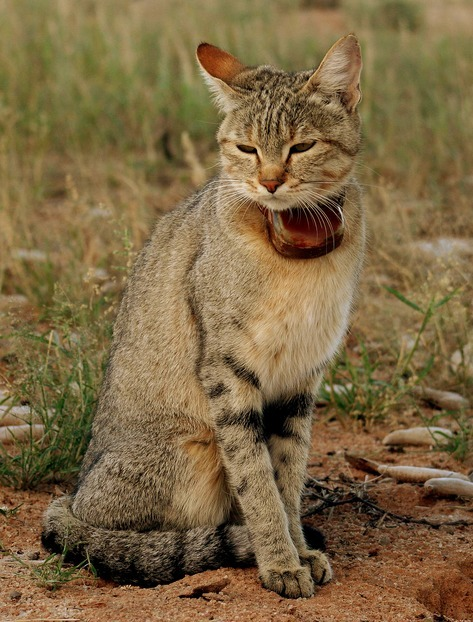
Figure 1. African wildcat (Felis silvestris lybica) in
Kgalagadi Transfrontier Park (South Africa/Botswana)
(Photo M. Herbst).
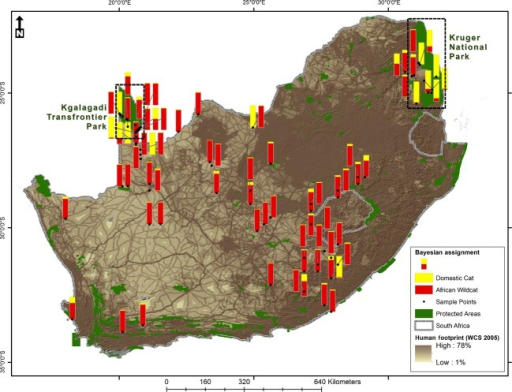
Hybridization between domestic and wild animals is a major concern for biodiversity conservation, and as habitats become increasingly fragmented, conserving biodiversity at all levels, including genetic, becomes increasingly important. Except for tropical forests and true deserts, African wildcats occur across the African continent; however, almost no work has been carried out to assess its genetic status and extent of hybridization with domestic cats. For example, in South Africa it has been argued that the long-term viability of maintaining pure wildcat populations lies in large protected areas only, isolated from human populations. Two of the largest protected areas in Africa, the Kgalagadi Transfrontier and Kruger National Parks, as well as the size of South Africa and range of landscape uses, provide a model situation to assess how habitat fragmentation and heterogeneity influences the genetic purity of African wildcats. Using population genetic and home range data, we examined the genetic purity of African wildcats and their suspected hybrids across South Africa, including areas within and outside of protected areas. Overall, we found African wildcat populations to be genetically relatively pure, but instances of hybridization and a significant relationship between the genetic distinctiveness (purity) of wildcats and human population pressure were evident.

Figure 2. Distribution of collection sites of cats included in this study across
South Africa in relation to formal protected areas and human footprint pressure
The genetically purest African wildcats were found in the Kgalagadi Transfrontier Park, while samples from around Kruger National Park showed cause for concern, especially combined with the substantial human population density along the park's boundary. While African wildcat populations in South Africa generally appear to be genetically pure, with low levels of hybridization, our genetic data do suggest that protected areas may play an important role in maintaining genetic purity by reducing the likelihood of contact with domestic cats. We suggest that approaches such as corridors between protected areas are unlikely to remain effective for wildcat conservation, as the proximity to human settlements around these areas is projected to increase the wild/domestic animal interface. Thus, large, isolated protected areas will become increasingly important for wildcat conservation and efforts need to be made to prevent introduction of domestic cats into these areas.


 Read more on domestic wild feline hybridisation with domestic cat

Sunday, 16 March 2014

Can we identify cat hybrids throught coat traits?

Ballesteros-Duperón, E., Virgós, E., Moleón, M., Barea-Azcón, J. M., & Gil-Sánchez, J. M.2014.  How accurate are coat traits for discriminating wild and hybrid forms of Felis silvestris?. Mammalia

Hybridisation between domestic cats, Felis catus, and wildcats, Felis silvestris, could lead to the genetic extinction of the latter; therefore, checking hybridisation rates in wild populations is of vital conservation importance. However, detecting hybridisation in the field is particularly challenging. Here, we aim to test the success of morphological-based procedures for discriminating wildcats from their hybrids and domestic cats, against genetic methods. We checked 17 putative Spanish wildcats by using two different classification systems based on coat patterns. None of the putative wildcats analysed in this study seemed to have an admixed genotype. Concordance between genetic and pelage approaches was almost total: only one coat classification produced mixed results with detection of one potential hybrid. Assignment was worse when performed in the field after a rapid examination of coat characters. We conclude that classification systems using coat traits could serve as surrogates of genetic approaches, but only after careful examination of those characters with more discriminatory power. Thus, the control of hybrid populations in the field as a management tool to preserve the genetic identity of wild forms is problematic if based on crude approaches or incomplete classification systems.


Distinctive traits of Wild cat (after Wildcat project)

See more on domestic cat introgression in wildcat


Monday, 13 January 2014

Interbreeding of feral and wild cats in Britain

Hubbard, A.L., S. McOrist, T.W. Jones, R. Boid, R. Scott & N. Easterbee. 1992. Is survival of European wildcats Felis silvestris in Britain threatened by interbreeding with domestic cats? Biological Conservation, 61: 203-208.

The relationship of the domestic cat Felis catus in Britain to the European wildcat Felis silvestris remaining in northern Britain includes a significant overlap of the phenotypic features of introgressive hybrids. The status of wildcats as a separate endangered species requiring protection to remain viable in the wild required analysis of their genetic relationship to domestic cats. Despite the discovery of free-living cats with both phenotypic resemblance to F. silvestris and close genetic similarities to F. catus, as measured by nucleic acid probe analysis, albumin heterogeneity (immunological distance) and isoenzyme analysis, eight of 42 putative wildcats caught in remote areas of northern and western Scotland showed clear differences from F. catus in the genetic analyses used. These eight wildcats had pelages consistent with the wildcat; however, 15 of the remaining cats had pelages containing domestic cat characters and had either one or no wildcat genetic character. The results suggest that some genetically distinct European wildcats remain in Britain, and the efforts to prevent interbreeding with domestic cats may enhance their conservation.

See more on domestic cat introgression in wildcat


Wednesday, 8 January 2014

Wild or feral cats in NE France

O’Brien, J., Devillard, S., Say, L., Vanthomme, H., Léger, F., Ruette, S., Pontier, D., 2009. Preserving genetic integrity in a hybridising world: are European Wildcats (Felis silvestris silvestris) in eastern France distinct from sympatric feral domestic cats? Biodiversity Conservation, 18, 2351–2360.

We investigate the genetic profile of putative European Wildcats in north-eastern France, possessing the wildcat phenotype, but sampled in an area where they are sympatric with free-roaming domestic cats and, thus, are exposed to potential hybridisation. From a sample of 209 cats, the programme STRUCTURE clearly identified two distinct genetic clusters that corresponded to European Wildcats and domestic cats. The cats from these two clusters were clearly differentiated from each other (F ST = 0.16). However, the genotypes of some individual cats were split between the two clusters, indicative of genetic admixture. Our analysis demonstrates that a genetically distinct population of cats that possess the European Wildcat phenotype persists in north-eastern France, but that there is a low, yet real, risk of hybridisation with sympatric domestic cats. These European Wildcats warrant conservation efforts to protect their genetic integrity.

See more on domestic cat introgression in wildcat


Cat hybridization in Germany

Krüger, M., Hertwig, S. T., Jetschke, G., & Fischer, M. S. (2009). Evaluation of anatomical characters and the question of hybridization with domestic cats in the wildcat population of Thuringia, Germany. Journal of Zoological Systematics and Evolutionary Research, 47(3), 268-282.

Germany’s large population of wildcats (Felis silvestris silvestris) can be clearly distinguished from domestic cats on the basis of morphological characters. However, an examination of 71 specimens from Thuringia also illustrates the risks involved in using only a few such characters. The most reliable tool for identification in the field are three pelage characters (distinctness of tail bands, stripes on the nape and stripes on the shoulder). Only two morphological characters (intestine length and cranial volume) are unambiguous and demonstrate no overlap in distribution between domestic cats and wildcats. A linear discriminant analysis with forward selection of variables showed that only five skull variables are necessary to distinguish all four groups (subspecies × sex). Additionally, the high degree of correlation between most of the 49 variables examined (as indicated by Pearson’s r correlation matrix) speaks against the utility of measuring such high numbers of characters in the future. Principal component analysis (PCA) enabled the subspecies to be separated clearly. The first PCA axis was highly correlated with variables characterizing overall body size, thus separating male and female into wildcats and domestic cats. Even when the chief differentiating characters are missing, the PCA still resulted in a good separation of subspecies. None of the genetically determined hybrids could have been deciphered unambiguously using the morphological characters still intact after a road death. Hybridization seems to occur whenever wildcats change their ecological function and become field cats. The impulse to hybridize seems to come much more from the wildcat side than the side of feral cats, and deforestation represents the major threat to the wildcat.


Hertwig, S. T., Schweizer, M., Stepanow, S., Jungnickel, A., Böhle, U. R., & Fischer, M. S. (2009). Regionally high rates of hybridization and introgression in German wildcat populations (Felis silvestris, Carnivora, Felidae). Journal of Zoological Systematics and Evolutionary Research, 47(3), 283-297.

While the western populations of the wildcat (Felis silvestris silvestris) in Germany come into contact with wildcats in France and Switzerland, the eastern distribution area is geographically completely isolated and consists of scattered subpopulations. To investigate population structure, evolutionary relationships and degree of hybridization with domestic cats we analysed the mitochondrial control region of 86 cats in combination with 11 microsatellite loci of 149 cats. According to our microsatellite data, German wildcats are divided into two separate populations corresponding to the western and eastern distribution areas. We found no indication of a further subdivision of the eastern population. German wildcat populations are genetically distinct from domestic cats in the main, but we identified 18.4% of the whole wildcat sample as being of hybrid origin, corresponding to 4.2% of the eastern and 42.9% of the western wildcat population, and 2.7% of the domestic cat sample. The mitochondrial haplotypes form a network of three connected clusters and reveal a high level of genetic diversity, especially within the eastern population. Our findings are explained at best in terms of continuous introgression between domestic cats and wildcat populations and differing degrees of recent hybridization in the various populations. Future conservation efforts should focus on preserving the existing gene flow between the isolated distribution areas, but also on preventing the spread of hybrids and limiting the habitat alterations that lead to increased contact with domestic cats. In conclusion we discuss possible evolutionary reasons for the still traceable genetic integrity of the wildcat despite its long history of interbreeding.


See more on domestic cat introgression in wildcat


Wednesday, 25 December 2013

Friday, 1 November 2013

Habitat sharing of wildcat, domestic cat and hybrids

Germain, E., Benhamou, S., & Poulle, M. L. (2008). Spatio‐temporal sharing between the European wildcat, the domestic cat and their hybrids. Journal of Zoology, 276(2), 195-203.

The European wildcat Felis silvestris silvestris, which can hybridize with the domestic cat Felis catus to produce fertile hybrids, is threatened by hybridization. To identify the behavioural processes that can affect interbreeding, we investigated the spatio-temporal sharing between wildcats, domestic cats and their hybrids (defined on their genotypes) in a rural area of north-eastern France where hybridization is frequent. Wildcats' and hybrids' home ranges were larger than those of domestic cats, and they did not vary according to body mass, season and reproductive period. The three types of cats had similar daily activity rhythms but the concordance between their space use patterns was low or null. Thus, a high spatio-temporal concordance is not a prerequisite for hybridization. Rare excursions made by the cats outside of their home ranges may be at the origin of interbreeding. Moreover, hybrids may play a key role in hybridization by behaving as wildcats and by sharing at least a part of their range with them as well as with domestic cats. Behavioural barriers between them and wildcats may not exist because of their similarity in morphology and spatial behaviour.


See more on domestic cat introgression in wildcat

Sunday, 15 September 2013

Domestic cat introgression in wildcat in Iberia


Oliveira, R., Godinho, R., Randi, E., Ferrand, N., & Alves, P. C. (2008). Molecular analysis of hybridisation between wild and domestic cats (Felis silvestris) in Portugal: implications for conservation. Conservation Genetics9(1): 1-11.

The endangered European wildcat (Felis silvestris silvestris) is represented, today, by fragmented and declining populations whose genetic integrity is considered to be seriously threatened by crossbreeding with widespread free-ranging domestic cats. Extensive and recent hybridisation has been described in Hungary and Scotland, in contrast with rare introgression of domestic alleles in Italy and Germany. In Portugal, the wildcat is now listed as VULNERABLE in the Red Book of Portuguese Vertebrates. Nevertheless, genetic diversity of populations and the eventual interbreeding with domestic cats remain poorly studied. We surveyed genetic variation at 12 autosomal microsatellites for 34 wild and 64 domestic cats collected across Portugal. Wild and domestic cats were significantly differentiated both at allele frequencies and sizes (F ST=0.11, R ST = 0.18, P < 0.001). Population structure and admixture analyses performed using Bayesian approaches also showed evidence of two discrete groups clustering wild and domestic populations. Results did not show significant genetic divergence among Northern, Central and Southern wildcats. Six morphologically identified wildcats were significantly assigned to the domestic cluster, revealing some discrepancy between phenotypic and genetic identifications. We detected four hybrids (approximately 14%) using a consensus analysis of different Bayesian model-based software. These hybrids were identified throughout all sampled areas, suggesting that hybridisation is of major concern for the appropriate implementation of wildcat conservation strategies in Portugal.

Cross-breeding between wild and free-ranging domestic species is one of the main conservation problems for some threatened species. The situation of wildcats (Felis silvestris silvestris) in Europe is a good example of this critical phenomenon. Extensive hybridization was described in Hungary and Scotland, contrasting with occasional interbreeding in Italy and Germany. First analyses in Portugal revealed a clear genetic differentiation between wild and domestic cats; however, four hybrids were detected. Here, we extended the approach to Iberian Peninsula using multivariate and Bayesian analyses of multilocus genotypes for 44 Portuguese wildcats, 31 Spanish wildcats and 109 domestic cats. Globally, wild and domestic cats were significantly differentiated (F ST=0.20, p<0.001) and clustered into two discrete groups. Diverse clustering methods and assignment criteria identified an additional hybrid in Portugal, performing a total of five admixed individuals. The power of admixture analyses was assessed by simulating hybrid genotypes, which revealed that used microsatellites were able to detect 100, 91 and 85% of first-generation hybrids, second-generation genotypes and backcrosses, respectively. These findings suggest that the true proportion of admixture can be higher than the value estimated in this study and that the improvement of genetic tools for hybrids detection is crucial for wildcat conservation.


See more on domestic cat introgression in wildcat

Wednesday, 5 June 2013

Domestic cat gene introgression into wild cat in Europe

Randi, E., Pierpaoli, M., Beaumont, M., Ragni, B., & Sforzi, A. (2001). Genetic identification of wild and domestic cats (Felis silvestris) and their hybrids using Bayesian clustering methods. Molecular Biology and Evolution, 18(9), 1679-1693.

Crossbreeding with free-ranging domestic cats is supposed to threaten the genetic integrity of wildcat populations in Europe, although the diagnostic markers to identify "pure" or "admixed" wildcats have never been clearly defined. Here we use mitochondrial (mt) DNA sequences and allelic variation at 12 microsatellite loci to genotype 128 wild and domestic cats sampled in Italy which were preclassified into three separate groups: European wildcats (Felis silvestris silvestris), Sardinian wildcats (Felis silvestris libyca), and domestic cats (Felis silvestris catus), according to their coat color patterns, collection localities, and other phenotypical traits, independently of any genetic information. For comparison, we included some captive-reared hybrids of European wild and domestic cats. Genetic variability was significantly partitioned among the three groups (mtDNA estimate of F(ST) = 0.36; microsatellite estimate of R(ST) = 0.30; P < 0.001), suggesting that morphological diversity reflects the existence of distinct gene pools. Multivariate ordination of individual genotypes and clustering of interindividual genetic distances also showed evidence of distinct cat groups, partially congruent with the morphological classification. Cluster analysis, however, did not enable hybrid cats to be identified from genetic information alone, nor were all individuals assigned to their populations. In contrast, a Bayesian admixture analysis simultaneously assigned the European wildcats, the Sardinian wildcats, and the domestic cats to different clusters, independent of any prior information, and pointed out the admixed gene composition of the hybrids, which were assigned to more than one cluster. Only one putative Sardinian wildcat was assigned to the domestic cat cluster, and one presumed European wildcat showed mixed (hybrid) ancestry in the domestic cat gene pool. Mitochondrial DNA sequences indicated that three additional presumed European wildcats might have hybrid ancestry. These four cats were sampled from the same area in the northernmost edge of the European wildcat distribution in the Italian Apennines. Admixture analyses suggest that wild and domestic cats in Italy are distinct, reproductively isolated gene pools and that introgression of domestic alleles into the wild-living population is very limited and geographically localized.

Pierpaoli, M., Birò, Z.S., Herrmann, M., Hupe, K., Fernandes, M., Ragni, B., Szemethy, L. & Randi, E. (2003). Genetic distinction of wildcat (Felis silvestris) populations in Europe, and hybridization with domestic cats in Hungary. Molecular Ecology 12: 2585-2598.

The genetic integrity and evolutionary persistence of declining wildcat populations are threatened by crossbreeding with widespread free-living domestic cats. Here we use allelic variation at 12 microsatellite loci to describe genetic variation in 336 cats sampled from nine European countries. Cats were identified as European wildcats (Felis silvestris silvestris), Sardinian wildcats (F. s. libyca) and domestic cats (F. s. catus), according to phenotypic traits, geographical locations and independently of any genetic information. Genetic variability was significantly partitioned among taxonomic groups (FST = 0.11; RST = 0.41; P < 0.001) and sampling locations (FST = 0.07; RST = 0.06; P < 0.001), suggesting that wild and domestic cats are subdivided into distinct gene pools in Europe. Multivariate and Bayesian clustering of individual genotypes also showed evidence of distinct cat groups, congruent with current taxonomy, and suggesting geographical population structuring. Admixture analyses identified cryptic hybrids among wildcats in Portugal, Italy and Bulgaria, and evidenced instances of extensive hybridization between wild and domestic cats sampled in Hungary. Cats in Hungary include a composite assemblage of variable phenotypes and genotypes, which, as previously documented in Scotland, might originate from long lasting hybridization and introgression. A number of historical, demographic and ecological conditions can lead to extensive crossbreeding between wild and domestic cats, thus threatening the genetic integrity of wildcat populations in Europe.

Lecis, R., Pierpaoli, M., Biro, Z. S., Szemethy, L., Ragni, B., Vercillo, F., & Randi, E. (2006). Bayesian analyses of admixture in wild and domestic cats (Felis silvestris) using linked microsatellite loci. Molecular Ecology, 15(1), 119-131.

Methods recently developed to infer population structure and admixture mostly use individual genotypes described by unlinked neutral markers. However, Hardy–Weinberg and linkage disequilibria among independent markers decline rapidly with admixture time, and the admixture signals could be lost in a few generations. In this study, we aimed to describe genetic admixture in 182 European wild and domestic cats (Felis silvestris), which hybridize sporadically in Italy and extensively in Hungary. Cats were genotyped at 27 microsatellites, including 21 linked loci mapping on five distinct feline linkage groups. Genotypes were analysed with structure 2.1, a Bayesian procedure designed to model admixture linkage disequilibrium, which promises to assess efficiently older admixture events using tightly linked markers. Results showed that domestic and wild cats sampled in Italy were split into two distinct clusters with average proportions of membership Q > 0.90, congruent with prior morphological identifications. In contrast, free-living cats sampled in Hungary were assigned partly to the domestic and the wild cat clusters, with Q < 0.50. Admixture analyses of individual genotypes identified, respectively, 5/61 (8%), and 16–20/65 (25–31%) hybrids among the Italian wildcats and Hungarian free-living cats. Similar results were obtained in the past using unlinked loci, although the new linked markers identified additional admixed wildcats in Italy. Linkage analyses confirm that hybridization is limited in Italian, but widespread in Hungarian wildcats, a population that is threatened by cross-breeding with free-ranging domestic cats. The total panel of 27 loci performed better than the linked loci alone in the identification of domestic and known hybrid cats, suggesting that a large number of linked plus unlinked markers can improve the results of admixture analyses. Inferred recombination events led to identify the population of origin of chromosomal segments, suggesting that admixture mapping experiments can be designed also in wild populations.


See more on domestic cat gene introgression in wildcat

Saturday, 19 January 2013

Distribution and spatial genetic structure of wildcat in France

Say, L., S. Devillard, F. Léger, D. Pontier & S. Ruette. 2012. Distribution and spatial genetic structure of European wildcat in France. Animal Conservation , 15 (1): 18-27

Given the problem of hybridization with domestic cats, there is a growing need to identify populations of the European wildcat Felis silvestris silvestris in order to protect the genetic integrity of this subspecies. In this paper, we use known locations of observations of wildcats or recovered carcasses to reassess the distribution of the wildcat in France and, in cases where carcasses were collected, we use both phenotypic and molecular genetic analyses to distinguish wildcats from hybrids with domestic cats. Spatially explicit multivariate analysis of wildcat' genotypes was then performed to define genetic units. Our study confirms the presence of wildcats in a large area of c. 155 000 km2 , suggestive of a range of expansion, and divided into two clearly distinct and unconnected areas – the Pyrenees and the north-eastern part of France. However, European wildcat populations may be decreasing in the French Pyrenees, whereas the north-eastern part represents the main area (MA) of wildcat presence. This extension does not appear to be primarily due to hybrids, as both wildcats and hybrids were located throughout the MA. In addition, we found that genetic diversity of wildcats in the MA is remarkably high, suggesting that French populations are not threatened by a lack of genetic diversity. Furthermore, wildcats of the MA are structured into two genetically distinct populations that are contiguous and probably extend into Germany to form the largest area of wildcat presence in Europe and an area of major interest for their conservation. Our study calls for localized examination of the feasibility and usefulness of wildlife corridors to enhance connectivity between the different populations, thereby allowing sufficient levels of immigration and gene flow within the regional meta-population to ensure the long-term viability of these populations.


See more on domestic cat introgression in wildcat

Friday, 4 January 2013

One more review on cat's impacts on wildlife

Brickner, I. 2003. The impact of domestic cat (Felis catus) on wildlife welfare and conservation: a literature review with a situation summary from Israel. Tel Aviv University report.

Reviews dozens of articles on cat impact on wildlife. After discussin the role of domestic cats as predators, the author reviews predation impact and choice of preys around the world, as well as the indirect impact of predation by domestic cats. The document also discusses hybridization problems, diseases transmition, to wildlife and to humans. There's also a review of spatial and social organisation and demographic parameters of domestic cats. The last chapters discuss moral issues and management measures.

Saturday, 15 December 2012

Cat hybridisation in UK

Beaumont, M. E.M. Barratt, D.Gottelli, A.C. Kitchener, M.J. Daniels, J.K. Pritchard & M.W. Bruford. 2001. Genetic diversity and introgression in the Scottish wildcat. Molecular Ecology, 10, 319–336

This paper describes a genetic analysis of wild-living cats in Scotland. Samples from 230 wild-living Scottish cats (including 13 museum skins) and 74 house cats from England and Scotland were surveyed for nine microsatellite loci. Pelage characteristics of the wild-living cats were recorded, and the cats were then grouped into five separate categories depending on the degree to which they conformed to the characteristics attributed to Felis silvestris Schreber, 1775. Allele frequency differences between the morphological groups are greater than those among the three house cat samples. Analysis of genetic distances suggests that more of the differences between individuals can be explained by pelage than geographical proximity, and that pelage and geographical location are not confounded. Ordination of the genetic distances suggests two main groups of wild-living cats, with intermediates, and one group is genetically very similar to the house cats, while the other group contains all cats taxonomically identified as wildcat based on morphology. A genetic mixture analysis gives similar results to the ordination, but also suggests that the genotypes of a substantial number of cats in the wildcat group are drawn from a gene pool with genotypes in approximately equilibrium proportions. We argue that this is evidence that these cats do not have very recent domestic ancestry. However, from the morphological data it is highly likely that this gene pool also contains a contribution from earlier introgression of domestic cat genes.


See more on domestic cat introgression in wildcat
Related Posts Plugin for WordPress, Blogger...