Les hommes ont oublié cette vérité. Mais tu ne dois pas l'oublier, dit le renard. Tu deviens responsable pour toujours de ce que tu as apprivoisé.
Le Petit Prince, chap. 21
Showing posts with label 2007. Show all posts

Sunday, 18 December 2016

No evidence of dietary shift by native predators in sympatry with feral cats

Phillips, R. B., Winchell, C. S., & Schmidt, R. H. (2007). Dietary overlap of an alien and native carnivore on San Clemente Island, California. Journal of Mammalogy, 88(1), 173-180.


Predation by feral cats (Felis catus) is recognized as a major threat to native fauna worldwide, but the competitive effects of cats on native species have not been extensively studied. Cats occur on San Clemente Island, California, in sympatry with endemic island foxes (Urocyon littoralis clementae). We examined diets of cats and island foxes between years, seasons, and habitats to assess the potential for resource competition between the 2 species. Analysis of 602 cat and 958 fox feces revealed a high level of dietary overlap (O = 0.93) and relatively narrow niche breadths for both species (Bstandard Fox = 0.37; Bstandard Cat = 0.49). Despite the overlap in diet, cats and foxes appear to partition prey resources. Cats consume approximately equal proportions of arthropod (47.9%) and vertebrate (44.2%) prey, the latter primarily rodents (29.2%) and lizards (12.9%). In contrast, foxes appear to rely more on arthropods (57.7%), with plants (20.5%) and vertebrates (21.6%) occurring in lower, but roughly equal frequencies. Season appeared to have little effect on diet; however, diet did vary between habitats and years for both species. Diets of cats on San Clemente Island are consistent with those from other studies. We found no evidence of a dietary shift by foxes that were in sympatry with cats.

Sunday, 1 May 2016

US public opinion on humane treatment of stray cats

Chu, K., & Anderseon, W. M. US Public Opinion on Humane Treatment of Stray Cats. 2007. Alley Cat Allies: Bethesda, MD, 6.

An overwhelming majority of Americans believe that leaving a stray cat outside to live out his life is more humane than having him caught and put down, according to a nationally representative survey conducted for Alley Cat Allies by Harris Interactive in April and May 2007. These results reveal a significant disparity between the public’s humane ethic and the operating policy of most U.S. animal pounds and shelters.
 The current animal control policy is that it is more humane to kill a stray cat now than let him live out his life outdoors; however, this policy rests on untenable bases. While those bases will be discussed in detail below, what is most salient to note is that the socalled humane ethic of the animal control and sheltering system ends more cats’ lives than does any other documented cause of death.

Thursday, 13 November 2014

Toxoplasmosis in prey species and consequences for prevalence in feral cats

Afonso, E., Thulliez, P., Pontier, D., & Gilot-Fromont, E. (2007). Toxoplasmosis in prey species and consequences for prevalence in feral cats: not all prey species are equal. Parasitology, 134(14), 1963-1971.

Toxoplasma gondii is largely transmitted to definitive felid hosts through predation. Not all prey species represent identical risks of infection for cats because of differences in prey susceptibility, exposure and/or lifespan. Previously published studies have shown that prevalence in rodent and lagomorph species is positively correlated with body mass. We tested the hypothesis that different prey species have different infection risks by comparing infection dynamics of feral cats at 4 sites in the sub-Antarctic Kerguelen archipelago which differed in prey availability. Cats were trapped from 1994 to 2004 and anti-T. gondii IgG antibodies were detected using the modified agglutination test (1:40). Overall seroprevalence was 51·09%. Antibody prevalence differed between sites, depending on diet and also on sex, after taking into account the effect of age. Males were more often infected than females and the difference between the sexes tended to be more pronounced in the site where more prey species were available. A difference in predation efficiency between male and female cats may explain this result. Overall, our results suggest that the composition of prey items in cat diet influences the risk of T. gondii infection. Prey compositon should therefore be considered important in any understanding of infection dynamics of T. gondii.

Saturday, 8 November 2014

Adjustments to new predators in the Galapagos marine iguana


Berger, S., Wikelski, M., Romero, L. M., Kalko, E. K., & Rödl, T. (2007). Behavioral and physiological adjustments to new predators in an endemic island species, the Galapagos marine iguana. Hormones and behavior, 52(5), 653-663.

For the past 5 to 15 million years, marine iguanas (Amblyrhynchus cristatus), endemic to the Galápagos archipelago, experienced relaxed predation pressure and consequently show negligible anti-predator behavior. However, over the past few decades introduced feral cats and dogs started to prey on iguanas on some of the islands. We investigated experimentally whether behavioral and endocrine anti-predator responses changed in response to predator introduction. We hypothesized that flight initiation distances (FID) and corticosterone (CORT) concentrations should increase in affected populations to cope with the novel predators. Populations of marine iguanas reacted differentially to simulated predator approach depending on whether or not they were previously naturally exposed to introduced predators. FIDs were larger at sites with predation than at sites without predation. Furthermore, the occurrence of new predators was associated with increased stress-induced CORT levels in marine iguanas. In addition, age was a strong predictor of variation in FID and CORT levels. Juveniles, which are generally more threatened by predators compared to adults, showed larger FIDs and higher CORT baseline levels as well as higher stress-induced levels than adults. The results demonstrate that this naive island species shows behavioral and physiological plasticity associated with actual predation pressure, a trait that is presumably adaptive. However, the adjustments in FID are not sufficient to cope with the novel predators. We suggest that low behavioral plasticity in the face of introduced predators may drive many island species to extinction.

Wednesday, 1 October 2014

Feeding-order in an urban feral domestic cat colony

Bonanni, R., Cafazzo, S., Fantini, C., Pontier, D., & Natoli, E. (2007). Feeding-order in an urban feral domestic cat colony: relationship to dominance rank, sex and age. Animal Behaviour, 74(5), 1369-1379.

In social species, dominance relationships and access to food resources are often affected by asymmetries in resource-holding potential (RHP) between competitors of different age–sex classes with males usually being dominant and feeding first, followed by females and then juveniles. In this study we investigated how variables such as sex and age affected dominance rank and feeding order in a social group of feral domestic cats, Felis silvestris catus, a sexually dimorphic species in which males are larger than females and do not take part in parental care. Intersexual dominance relationships varied depending on the competitive context: males occupied top rank positions away from food, whereas females increased in rank at the expense of males in a feeding context. Around the age of 4–6 months, kittens were significantly more likely than adults of both sexes to be the first to feed, indicating that they received a certain level of tolerance. These results provide support for game-theory models predicting conflict outcome in favour of the smaller competitor when asymmetries in both the value of winning and in the cost of winning inappropriately may compensate for the smaller competitor's lower RHP. It is suggested that the results are not an artifact of domestication: unlike male lions, Panthera leo, which usually dominate both females and cubs at kills, male domestic cats may value the food less than females and juveniles, because they do not need to maintain constantly a peak physical condition to defend a group of females and protect offspring from infanticide.

Saturday, 6 September 2014

Cat predation on Middle East wildlife

Brickner-Braun, I., Geffen, E., & Yom-Tov, Y. (2007). The domestic cat as a predator of Israeli wildlife. Israel Journal of Ecology & Evolution, 53(2), 129-142.

Predation of wildlife by domestic cats was studied in Israel. Analysis of stomach contents and data provided by observers revealed that many domestic cats enriched the diet provided by their owners with many species of wild animals, including 12 mammals, 26 birds, 18 reptiles, and one amphibian, and scavenged from garbage. The proportion of manufactured cat food and garbage dump food in the diet of urban cats decreased from 70% of stomach volume among those living in rural settlements to 44% among cats living in open areas, with the rest of the stomach contents consisting of wild animals. Of the wild animals hunted by cats, the most common category was mammals (75% of the stomach volume), followed by amphibians (10%), birds (9%), and reptiles (6%).

Most cats do not wander more than 200 m away from either a food source or cover. Female cats living in (southern) desert settlements do not leave the inhabited area and have very small home ranges, while those living in the Mediterranean region (central and northern) wander outside under the cover of trees and bushes and have significantly larger home ranges. The mean distance traveled daily by females from their center of activity was 51.3 m and 103.4 m for the southern and northern populations, respectively. Males were studied only in the Mediterranean region, and their travel distances were greater than those of females.

Although our results of predation are mainly qualitative, this study supports those done elsewhere in the world where the cat was shown to be a generalist predator whose potential impact on some species, especially endangered ones, may be considerable.

Saturday, 28 June 2014

The welfare of feral cats

Slater, M. R. (2007). The welfare of feral cats. In The welfare of cats (pp. 141-175). Springer Netherlands.

The  control of feral cats is a controversial issue in many countries, due to the differences in the way humans perceive cats in general and feral cats in particular. As cats spread into a wide rage of habitats, there are concerns regarding the best methods to control their numbers. Predation on wildlife, public health and zoonotic diseases, as well as the welfare of the cats themselves, are issues that drive the need to control the feral cat population. Killing the cats, or letting nature take its course, were the usual historical approaches but in recent years non-lethal methods have been espoused as being more humane and effective. Effors have been made to improve the welfare of feral cat populations through sterilization, the control of infectious disease and ensuring that they are adequately cared for. A combination of approaches are necessary to decrease feral cat numbers, to prevent influx of owned cats into the populations, and to manage established feral cat colonies successfully.

Thursday, 26 June 2014

Parasite Shed in Cat Feces Kills Sea Otters

Conrad, P. (2007). Parasite Shed in Cat Feces Kills Sea Otters. Healthy Marine Ecosystems • November 2006

Endangered sea otters in California have been found to suffer lethal infections from a parasite, Toxoplasma gondii, shed in cat feces. These infections may be a factor contributing to the marine mammal’s slow recovery from near extinction.

Toxoplasma gondii is a protozoan parasite that attacks an otter’s brain tissue, causing lesions, depression, convulsions and death.

Because cats are the only animals known to shed Toxoplasma gondii, runoff must be carrying cat feces and the parasite to the coast. From there, it is not clear how otters are getting sick. One possibility is that they are ingesting infected mussels or other filter-feeding bivalves, which accumulate pathogens in their tissues.

The parasite is usually harmless to healthy people. The exception is pregnant women, whose fetuses can develop toxoplasmosis, hence the advice for pregnant women to avoid cleaning cat litter boxes.

Once numbering more than 300,000, southern sea otters were hunted to near extinction in the 19th century for their lush pelts. They were granted protection under the Endangered Species Act in 1977, when their numbers were about 1,789. In the mid-1990s, their recovery staggered and concerns were raised about the animal’s long-term prospects. More recently their numbers seem to be rising.

Observers tallied a total of 2,692 California sea otters for the 2006 spring survey, compared with 2,100 in 2002 and 2,377 in 1995.

Wednesday, 14 May 2014

Human attitudes towards semi-owned cats

Toukhsati, S. R., Bennett, P. C., & Coleman, G. J. (2007). Behaviors and attitudes towards semi-owned cats. Anthrozoos: A Multidisciplinary Journal of The Interactions of People & Animals, 20(2), 131-142.

The intentional provision of food, medical treatment and shelter by humans for a cat that is not considered to be owned by the individual is defined as "semi-ownership." The aim of this study was to explore the prevalence of such behaviors and the attitudes held by individuals who engage in them. The sample, comprising 424 residents from rural and non-rural Victoria, Australia, were surveyed in relation to their ownership status, practices, and attitudes towards companion animals. The findings revealed that 22% of the sample engaged in one or more cat semi-ownership behaviors; primarily feeding. Cat semi-ownership was associated with positive feelings towards cats, and the belief that cats are independent. Opportunities to engage cat semi-owners in education programs that promote responsible companion animal ownership behaviors were evident.

Sunday, 11 May 2014

The taming of cat

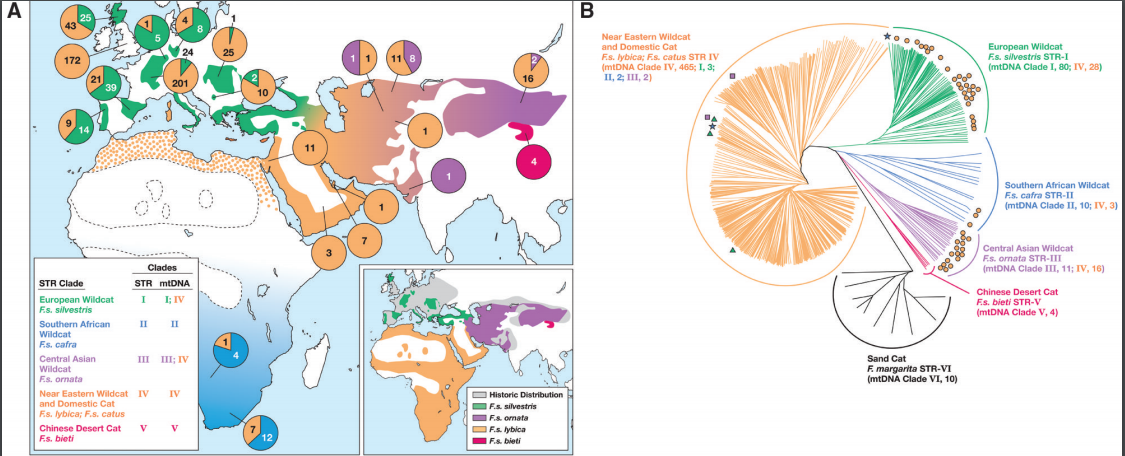
Driscoll, C. A., M. Menotti-Raymond, A.L. Roca, K. Hupe, W.E. Johnson, E. Geffen, E.H. Harley, M. Delibes, D.Pontier, A.C. Kitchener, N. Yamaguchi, S.J. O'Brien, & D.W. Macdonald (2007). The Near Eastern origin of cat domestication. Science, 317(5837), 519-523.

The world's domestic cats carry patterns of sequence variation in their genome that reflect a history of domestication and breed development. A genetic assessment of 979 domestic cats and their wild progenitors—Felis silvestris silvestris (European wildcat), F. s. lybica (Near Eastern wildcat), F. s. ornata (central Asian wildcat), F. s. cafra (southern African wildcat), and F. s. bieti (Chinese desert cat)—indicated that each wild group represents a distinctive subspecies of Felis silvestris. Further analysis revealed that cats were domesticated in the Near East, probably coincident with agricultural village development in the Fertile Crescent. Domestic cats derive from at least five founders from across this region, whose descendants were transported across the world by human assistance.
http://www.mobot.org/plantscience/resbot/Repr/Add/DomesticCat_Driscoll2007.pdf


Driscoll, C. A., Clutton-Brock, J., Kitchener, A. C., & O'Brien, S. J. (2009). The taming of the cat. Scientific American, 300(6), 68-75.

KEY CONCEPTS
  • Unlike other domesticated creatures, the house cat contributes little to human survival. Researchers have therefore wondered how and why cats came to live among people. Experts traditionally thought that the Egyptians were the first to domesticate the cat, some 3,600 years ago. 
  • But recent genetic and archaeological discoveries indicate that cat domestication began in the Fertile Crescent, perhaps around 10,000 years ago, when agriculture was getting under way. 
  • The findings suggest that cats started making themselves at home around people to take advantage of the mice and food scraps found in their settlements. 

Saturday, 19 April 2014

Urban coyotes and cats

Webster, J.C. (2007). Missing cats, stray coyotes: one citizen’s perspective. Wildlife Damage Management Conferences -- Proceedings.Paper 78.

Comments

Originally published in Proceedings of the 12th Wildlife Damage Management Conference (D.L. Nolte, W.M. Arjo, D.H. Stalman, Eds). 2007. This is the revised version that appears in Urban Coyote Management: A collection of papers pre-sented at the Urban Coyote Symposium within the 12th Wildlife Damage Management Conference Corpus Christi, Texas, April 11, 2007, Robert M. Timm, Editor (Collierville, TN, 2008). ISBN 978-1-60458-362-5 Copyright © 2007 by the Wildlife Damage Management Working Group of The Wildlife Society. Used by permission.


Abstract

The author explores the issue of urban coyotes and coyote management from a cat owner’s perspective, with specific examples from Vancouver, B.C., Canada. Following a personal encounter with two coyotes in July 2005 that led to the death of a cat, the author has delved into the history of Vancouver’s “Co-existing with Coyotes”, a government-funded program run by a nonprofit ecological society. The policy’s roots in conservation biology, the environmental movement, and the human dimensions branch of wildlife management are documented. The author contends that “Co-existing with Coyotes” puts people and pets at greater risk of attack by its inadequate response to habituated coyotes, and by an educational component that misrepresents real dangers and offers unworkable advice. The environmental impact of domestic cats is addressed. The author makes the case that generalized opinions about the negative effects of cats on songbird populations and other wildlife, and assertions that urban coyotes are beneficial, are unsupported by objective experimental data. When environmentalists, who predominantly hold these views, also research, promote, and oversee urban wildlife policy, there is a consequent lack of interest in restricting coyote populations in cities, along with little concern for the fate of outdoor cats and even a desire for their depredation.

Thursday, 3 April 2014

Reducing feral cat threats to native wildlife in Hawai`i

Hess, S. C., H. Hansen, and P. C. Banko. 2007. Reducing feral cat threats to native wildlife in Hawai`i. Hawai`i Cooperative Studies Unit Technical Report HCSU-010. University of Hawai`i at Hilo. 102 pp., incl. 14 figures, & 19 tables.

We documented the diet of feral cats (Felis catus) on Kīlauea and Mauna Loa within Hawai`i Volcanoes National Park (HAVO), determined the incidence of three feline diseases on Mauna Kea, studied feral cat home range, developed and tested trap-signaling devices, tested food-based baits and attractants, analyzed feral cat population dynamics using genetic techniques, and developed an adaptive strategy for reducing predation on endangered Hawaiian birds.

We documented the diet of feral cats by analyzing the contents of 42 digestive tracts from Kīlauea and Mauna Loa in Hawai`i Volcanoes National Park. Small mammals, invertebrates, and birds were the most common prey types consumed by feral cats. Birds occurred in 27.8–29.2% of digestive tracts. The total number of bird, small mammal, and invertebrate prey differed between Kīlauea and Mauna Loa. On Mauna Loa, significantly more (89%) feral cats consumed small mammals, primarily rodents, than on Kīlauea Volcano (50%). Mice (Mus musculus) were the major component of the feral cat diet on Mauna Loa, whereas Orthoptera were the major component of the diet on Kīlauea. We recovered a mandible set, feathers, and bones of an endangered Hawaiian Petrel (Pterodroma sandwichensis) from a digestive tract from Mauna Loa. This specimen represents the first well-documented endangered seabird to be recovered from the digestive tract of a feral cat in Hawai`i and suggests that feral cats prey on this species.

We determined prevalence to feline immunodeficiency virus (FIV) antibodies, feline leukemia virus (FeLV) antigen, and Toxoplasma gondii antibodies in feral cats on Mauna Kea Hawai`i from April 2002 to May 2004. Six of 68 (8.8%) and 11/68 (16.2%) were antibody positive to FIV and antigen positive for FeLV, respectively; 25/67 (37.3%) were seropositive to T. gondii. Antibodies to FeLV and T. gondii occurred in all age and sex classes, but FIV occurred only in adult males. Evidence of previous or current infections with two of these infectious agents was detected in eight of 64 cats (12.5%). Despite exposure to these infectious agents, feral cats remain abundant throughout the Hawaiian Islands.

Feral cats in dry subalpine woodland of Mauna Kea, Hawai`i, live in low density and exhibit some of the largest reported home ranges in the literature. While 95% fixed kernel home range estimates for three females averaged 772 ha, four males averaged 1,418 ha, and one male maintained a home range of 2,050 ha. Mean daily movement rates between sexes overlapped widely and did not differ significantly (P = 0.083). Log-transformed 95% kernel home ranges for males were significantly larger than those of females (P = 0.024), but 25% kernel home ranges for females were larger than those of males (P = 0.017). Moreover, logtransformed home ranges of males were also significantly larger than those of females in this and seven other studies from the Pacific region (P = 0.044). Feral cats present a major threat to endangered Hawaiian birds, but knowledge of their ecology can be used for management by optimizing trap spacing and creating buffer zones around conservation areas.

Frequent checks of live traps require enormous amounts of labor and add human scents associated with repeated monitoring which may reduce capture efficiency. To reduce efforts and increase efficiency, we developed a trap-signaling device with long-distance reception, durability in adverse weather, and ease of transport, deployment, and use. Modifications from previous designs include a normally-open magnetic switch and a mounting configuration to maximize reception. The system weighed < 225 g, was effective ≤ 17.1 km, and failed in < 1% of trap-nights. Employing this system, researchers and wildlife managers may reduce the amount of effort checking traps while improving the welfare of trapped animals.

Successful feral cat control programs require effective baits and lures. Non-targets may interfere with trapping efforts by rapidly consuming bait before feral cats encounter traps, necessitating frequent bait replacement. We compared the effectiveness of baits and lures by analyzing capture rates of feral cats and non-targets and monitoring animal visits to bait stations with remotely-triggered cameras. We tested four different baits and attractants: canned cat food, sardines, catnip, and a bait sausage that we formulated from pork and fat. We trapped for a total of 3,389 trap nights and captured 35 feral cats. There were 323 incidences of trap interferences, reducing the effective trap nights (ETN) to 3,225. The primary cause of trap interference was feral pigs rolling over traps (n = 185, 57.3% of interferences). The primary non-target species captured were small Indian mongooses (n = 74, 22.9% of interferences). Overall, more cats and mongooses were captured using sardines, although the catch frequencies were not dependent on the bait type used. We obtained photographs of 1,476 small mammals at the bait stations. Mongooses were the principal mammals photographed (n = 939, 69.5% of pictures). We also obtained 398 photographs of rats (29.5%) and 9 (0.7%) of mice. Feral cats were photographed only 5 (0.4%) times. We found strong differences between mongooses, rodents, and cats photographed at the four bait types. Sardines were the most visited bait type (n = 641, 47.4% of photographs). Pork sausage and cat food accounted for 383 (28.3%) and 322 (23.8%) visits while catnip had only 67 (5.0%) visits. Feral cats were photographed only at sardine bait. Mongooses were attracted primarily to  sardines (49.3%). Pork sausage was the most attractive bait to rats, accounting for 44.5% of photographs. Due to the high rate of non-target interference, other attractants need to be tested for successful feral cat control programs.

Population genetics can provide information about the demographics and dynamics of invasive species that is beneficial for developing effective control strategies. We studied the population genetics of feral cats on Hawai`i Island by microsatellite analysis to evaluate genetic diversity and population structure, assess gene flow and connectivity among three populations, identify potential source populations, characterize population dynamics, and evaluate sex-biased dispersal. High genetic diversity, low structure, and high number of migrants per generation supported high gene flow that was not limited spatially. Migration rates revealed that most migration occurred out of West Mauna Kea. Effective population size estimates indicated increasing cat populations despite control efforts. Despite high gene flow, relatedness estimates declined significantly with increased geographic distance and Bayesian assignment tests revealed the presence of three population clusters. Genetic structure and relatedness estimates indicated male-biased dispersal. Mauna Kea may be a source population that can be targeted for control. However, recolonization seems likely given the great dispersal ability that may not be inhibited by barriers such as lava flows. Genetic monitoring will be necessary to assess the effectiveness of future control efforts.

Despite the long history of feral cats in Hawai`i, there has been little research to provide strategies to improve control programs and reduce depredation on endangered species. Our objective was to develop a predictive model to determine how landscape features on Mauna Kea such as habitat, elevation, and proximity to roads affect the number of feral cats captured at each trap. We used log-link generalized linear models and QAICc model ranking criteria to determine the effect of these factors. We found that the number of cats captured per trap was related to trapping effort, habitat type, and whether traps were located on the West or North Slope of Mauna Kea. We recommend an adaptive management strategy to minimize trapping interference by non-target small Indian mongoose (Herpestes auropunctatus) with toxicants, to focus trapping efforts in māmane (Sophora chrysophylla) habitat on the West slope of Mauna Kea, and to cluster traps near others that have previously captured multiple cats.

Thursday, 13 February 2014

Habitat selection of feral cats on Stewart island

Harper, G. A. (2007). Habitat selection of feral cats (Felis catus) on a temperate, forested island. Austral Ecology, 32(3), 305-314.

Habitat selection of mammalian predators is known to be influenced by availability and distribution of prey. The habitat selection of feral cats on Stewart Island, southern New Zealand, was investigated using telemetry of radio-tagged cats. Compositional analysis of the habitat selection of radio-tagged cats showed they were using the available habitats non-randomly. Feral cats avoided subalpine shrubland and preferentially selected podocarp-broadleaf forest. The avoidance of subalpine shrubland by cats was probably due to a combination of the presence of a large aggressive prey species, Norway rats Rattus norvegicus, and the lack of rain-impervious shelter there. Most cats also used subalpine shrubland more often in dry weather than in wet weather. Cats did not preferentially select all the other habitats with only smaller rat species, Rattus rattus and Rattus exulans, present however. Cats were probably further influenced by the availability of large trees, in podocarp-broadleaf forest, that can provide shelter. Cats were also more active in dry rather than wet weather which supports this conclusion. Home ranges of feral cats on Stewart Island were some of the largest recorded, probably because of limited primary and alternative prey.

Wednesday, 15 January 2014

Early cat taming in Egypt

Linseele, V., Van Neer, W., & Hendrickx, S. (2007). Evidence for early cat taming in Egypt. Journal of Archaeological Science, 34(12), 2081-2090.

The remains are described of a young small felid found in a Predynastic burial at Hierakonpolis, Upper Egypt. Osteometric and zoogeographical arguments indicate that the specimen, dated to around 3700 B.C. on the basis of the associated pottery, belongs to Felis silvestris.
Hunting cat with several bird preys. Tomb of Nebamun 
Thebes, Egypt, 18th dynasty, ca. 1400-1350 BCE.
In the same cemetery several other animal species, both wild and domestic, have been found. The left humerus and right femur of the cat show healed fractures indicating that the animal had been held in captivity for at least 4–6 weeks prior to its burial. We believe that this pathology suggests early cat taming more convincingly than a buried cat recently reported from Neolithic Cyprus (7500 B.C.). Such taming events were probably part of the processes that eventually led to the domestication of Felis silvestris. However, the absence of the cat in Predynastic and Early Dynastic depictions and its rare attestation in the archaeozoological record indicates that domestic status had not yet been attained during those early periods. Other species that were also held in captivity by Ancient Egyptians probably never became domesticated because they had one or more characteristics that prevented it.

Monday, 16 December 2013

Dogs among the threats to wild carnivores in Brazil

Whiteman, C. W., Matushima, E. R., Palha, M. D. D. C., & da Silva, A. D. S. L. (2007). Human and domestic animal populations as a potential threat to wild carnivore conservation in a fragmented landscape from the Eastern Brazilian Amazon. Biological Conservation, 138(1), 290-296.

Hydroelectric projects are one of the well known factors responsible for habitat loss and fragmentation in the Amazon. The Tucuruí Lake Protected Area (Tucuruí Lake APA), in the state of Pará, Brazil, Eastern Brazilian Amazon, is under the influence of the Tucuruí dam. Zones of wildlife protection (ZWPs), where no human activities should be allowed, were created inside this protected area. However, human populations and their domestic animals still reside within the ZWPs. Domestic carnivores have been implicated in wild carnivore population declines, particularly in Africa, as a consequence of disease transmission, especially involving the canine distemper virus. This study examined the seroprevalence of antibodies to this pathogen in domestic dogs from the ZWPs and its immediate surroundings at the Tucuruí Lake Protected Area, and revealed 27% seropositivity. Wild carnivore species such as the jaguar (Panthera onca), puma (Puma concolor), ocelot (Leopardus pardalis), coati (Nasua nasua), among others, inhabit the ZWPs and information provided by the local community indicates their close contact with the human and domestic dog populations. Such evidence supports the concern that relates the presence of the domestic dogs to disease transmission and conservation risks for wild carnivores in the ZWPs of the Tucuruí Lake APA.

Wednesday, 11 December 2013

Eradication of non-native mammals and the status of insular mammals on the California and Baja California Islands

Knowlton, J. L., Josh Donlan, C., Roemer, G. W., Samaniego-Herrera, A., Keitt, B. S., Wood, B., Aguirre-Muñoz, A., Faulkner, K.R. & Tershy, B. R. (2007). Eradication of non-native mammals and the status of insular mammals on the California Channel Islands, USA, and Pacific Baja California Peninsula Islands, Mexico. The Southwestern Naturalist, 52(4), 528-540.

The California Channel Islands, USA, and Pacific Baja California Peninsula Islands, Mexico (hereafter referred to as the California islands), are known for their high levels of biodiversity and globally important colonies of seabirds. We document the history, impacts, and management of non-native mammals and summarize the current status of native, non-volant mammals on the California islands. Of the 26 species of native mammals on the California islands, including 6 species and 41 subspecies that are endemic, ≥10 populations have suffered extirpation or global extinction. All recent extirpations and extinctions resulted directly from non-native mammalian predators or indirectly via habitat degradation by non-native herbivores. In light of the devastating effects non-native mammals have had on the native insular biotas of the California islands, a variety of organizations have collaborated to eradicate 44 populations of non-native mammals from 19 California islands. Documentation of impacts of non-native mammals and timely implementation of successful eradication efforts are essential to the conservation of these and other insular ecosystems.

Friday, 8 November 2013

Feral cat vaccination and TNR

Fischer, S.M., C.M. Quest, E. J. Dubovi, R. D. Davis, S.J. Tucker, J.A. Friary, P.C. Crawford, T. A. Ricke, & J.K. Levy. (2007) Response of feral cats to vaccination at the time of neutering. Journal of the American Veterinary Medical Association 230 (1): 52-58

Objective—To determine whether administration of inactivated virus or modified-live virus (MLV) vaccines to feral cats at the time of neutering induces protective serum antiviral antibody titers.

Design—Prospective study.

Animals—61 feral cats included in a trap-neuter-return program in Florida.

Procedures—Each cat received vaccines against feline panleukopenia virus (FPV), feline herpes virus (FHV), feline calicivirus (FCV), FeLV, and rabies virus (RV). Immediately on completion of surgery, vaccines that contained inactivated RV and FeLV antigens and either MLV or inactivated FPV, FHV, and FCV antigens were administered. Titers of antiviral antibodies (except those against FeLV) were assessed in serum samples obtained immediately prior to surgery and approximately 10 weeks later.

Results—Prior to vaccination, some of the cats had protective serum antibody titers against FPV (33%), FHV (21%), FCV (64%), and RV (3%). Following vaccination, the overall proportion of cats with protective serum antiviral antibody titers increased (FPV [90%], FHV [56%], FCV [93%], and RV [98%]). With the exception of the FHV vaccine, there were no differences in the proportions of cats protected with inactivated virus versus MLV vaccines.

Conclusions and Clinical Relevance—Results suggest that exposure to FPV, FHV, and FCV is common among feral cats and that a high proportion of cats are susceptible to RV infection. Feral cats appeared to have an excellent immune response following vaccination at the time of neutering. Incorporation of vaccination into trap-neuter-return programs is likely to protect the health of individual cats and possibly reduce the disease burden in the community.

Tuesday, 3 September 2013

Pet cats' impact on biodiversity in Australian suburbia

Lilith, M. (2007) Do pet cats (Felis catus) have an impact on species richness and abundance of native mammals in low-density Western Australian suburbia? PhD thesis, Murdoch University.

Cat ownership in Australia is declining compared to an increasing trend of cat ownership in the United Kingdom, United States and Europe. The decline in Australia may be linked to concerns over perceived impacts of cat predation and an associated dislike of cats. However, while there are numerous studies on feral cats and their impacts on declining native fauna, the impact of pet cats on suburban wildlife or fauna in remnant bushland is relatively unknown although there is a wide perception of risk. The primary aim of this thesis was to apply the precautionary principle to the question of the putative impact of pet cats on the abundance and diversity of small mammals in urban bushland adjacent to low-density suburbia in the City of Armadale, a municipality on the south-east fringe of Perth, Western Australia. At the time of writing, Western Australia is yet to introduce state legislation governing cat control although many local councils within the state have either implemented or are in the process of implementing cat regulations.

The precautionary principle was deemed an ideal approach to this question, because it provides a rationale for deciding on possible actions where both the potential risk to environmental values and the uncertainty about possible impacts are high. In such cases the precautionary principle requires two broad lines of action: firstly, detailed consultation with stakeholders to determine their perceptions of risk and the actions they are prepared to take to reduce it and, secondly, research to reduce uncertainty.

With regard to stakeholder consultation, local residents were surveyed in regard to their attitudes and current cat husbandry practices. A substantial proportion of respondents within this municipality believed cat regulations were necessary (75% of owners and 95% of non-owners). At least 70% of both owners and non-owners agreed with the propositions that cats not owned by licensed breeders should be desexed, local councils should restrict the maximum number of cats that can be owned on one property and that pet cats entering nature reserves are harmful to wildlife. Most (c.85%) cat owners agreed that they would license their cats if that became compulsory. Although fewer owners (c.60%) were prepared to keep their cats on their property at all times to protect wildlife, over 80% were willing to confine their cats at night if it was required. Owners seemed to be substantially motivated by the value of these measures in reducing injury to cats and facilitating the return of lost animals rather than concern over wildlife protection.

Attempts to reduce uncertainty involved (i) assessing roaming patterns of pet cats to determine the sizes of appropriate buffer zones around nature reserves, and (ii) determining species diversity, species richness and abundance of small mammals in remnant bushland adjacent to sub-divisions with varying regulations governing cat husbandry. Radio tracking results to assess cat roaming patterns showed substantial variation in home range size between cats in high density suburbia (ranged between 0.01 ha - 0.64 ha) and those in low density suburbia (ranged from 0.07 ha - 2.86ha). Larger home range sizes of cats in the rural areas (up to 2.9 ha) suggest buffer zones of up to 500 metres around nature reserves are needed to exclude almost all roaming cats. The abundance and species richness of small mammals were investigated in four areas of remnant bushland. Two were adjacent to subdivisions where cat ownership was unrestricted, one next to a subdivision where cat ownership was prohibited and the remaining one next to a subdivision where compulsory night curfew and bells on pet cats were enforced. No definitive evidence of predatory impact by pet cats on the small mammals was found. Mammal species diversity was not significantly different between sites and species richness and absolute abundance were not higher in sites where cats were restricted. Vegetation comparisons showed significant differences in the structure and species composition of the vegetation between most sites and the mammal species richness and abundance appeared linked to ground cover density in the various sites. This factor, not cat restrictions, appeared to be the primary determinant of species richness, species diversity and absolute numbers of small mammals in these sites.

This study in the City of Armadale has shown that the implementation of proposed cat legislation must have a 'whole of ecosystem' approach, i.e. protecting identified remnant bushland containing biodiversity from threatening processes such as plant disease and inappropriate fire, especially arson, as well as possible predations from pet cats. Habitat restoration and protection may be more important conservation activities than regulation of cats. Regulation of cats can be done at differing levels of intensity and cost, bearing in mind that this community is receptive to regulation of some aspects of cat ownership. Community education on the values of cat confinement in regards to cat welfare might increase chances of compliance.

Sunday, 18 August 2013

Mesopredator release within an oceanic island

Rayner, M. J., Hauber, M. E., Imber, M. J., Stamp, R. K., & Clout, M. N. (2007). Spatial heterogeneity of mesopredator release within an oceanic island system. Proceedings of the National Academy of Sciences, 104(52), 20862-20865.

Predator–prey communities are ubiquitous in ecology, but introduced predators can drive native species to extinction within island systems, prompting the eradication of such exotics. Ecological theory predicts that elimination of top-introduced predators from islands can lead to the counterintuitive decline of native prey populations through the ecological release of smaller introduced species in a process termed “mesopredator release”.
 We show, in accordance with mesopredator release theory and counter to conservation goals for a New Zealand island reserve, that initial eradication of cats on Little Barrier Island led to reduced breeding success of Cook's petrels, which also are vulnerable to predation by a mesopredator, the Pacific rat. The rat's impact on prey productivity varied with elevation within the island. Rat eradication was followed by a rise in petrel productivity, in support of both ecological theory and practical conservation management goals. It appears that interactions among introduced predators, native prey, and environmental gradients can drive counterintuitive and spatially heterogeneous responses to predator eradications from islands. Location-specific, ecosystem-level understanding is essential for predicting the outcomes of such restoration management techniques.


Related articles

Monday, 12 August 2013

Hyperpredation: Cat diet on a small Mediterranean island

Bonnaud, E., Bourgeois, K., Vidal, E., Kayser, Y., Tranchant, Y., & Legrand, J. (2007). Feeding ecology of a feral cat population on a small Mediterranean island. Journal of Mammalogy, 88(4), 1074-1081.

Domestic cats (Felis catus) have been introduced on many islands in the world and are responsible for much damage to native insular faunas. The worldwide success and spread of this opportunistic predator is generally associated with its trophic adaptability. We examined the diet of a long-established feral cat population on a small Mediterranean island through the analysis of 1,219 scats collected during a 4-year period. Our results confirm that feral cats are generalist predators, able to feed on a wide range of prey. However, only a few prey species formed the major part of its diet. Two introduced mammals and a Mediterranean endemic seabird provided 93% of the yearly biomass consumed by cats (ship rats, 70%; wild rabbits, 7%; and yelkouan shearwaters, 6%). Ship rats remained by far the staple prey for cats throughout the year, but the diet of feral cats was more diversified in spring and early summer, frequently including insects, reptiles, and migrant birds. Endemic yelkouan shearwaters were preyed upon most frequently in autumn and winter, that is, during the shearwaters' prelaying period. Because rats provide the majority of the food of cats, they could help to maintain or inflate this alien predator population with deleterious consequences to the endemic shearwater. A cat eradication campaign would help protect the population of shearwaters on this island.
Related Posts Plugin for WordPress, Blogger...