Les hommes ont oublié cette vérité. Mais tu ne dois pas l'oublier, dit le renard. Tu deviens responsable pour toujours de ce que tu as apprivoisé.
Le Petit Prince, chap. 21
Showing posts with label semi-ownership. Show all posts

Monday, 30 May 2016

Domestic dogs in protected areas: a threat to Brazilian mammals?

Lessa, I., Guimarães, T. C. S., de Godoy Bergallo, H., Cunha, A., & Vieira, E. (2016). Domestic dogs in protected areas: a threat to Brazilian mammals?.Natureza & Conservação.

The presence of domestic dogs (Canis lupus familiaris) in Brazilian protected areas is fairly frequent. The interaction of such dogs with native animals leads to population declines for many species, particularly carnivores. In this paper the main threats dogs bring about Brazilian biodiversity are assessed with a focus on protected areas. We collected information from papers on the interaction of dogs and wildlife species as well as from interviews with National Park managers. Studies in protected areas in Brazil listed 37 native species affected by the presence of dogs due to competition, predation, or pathogen transmission. Among the 69 threatened species of the Brazilian fauna, 55% have been cited in studies on dogs. Dog occurrence was assessed for 31 National Parks in Brazil. 
(A) Domestic dog sniffing a prey (Dasypus novemcinctus) in the Ilha Grande State Park. (B) A female dog with territorial marking behavior registered by a camera trap in the same Park; the dog was 3 km away from the nearest village. Photos: H.G. Bergallo and I.C.M. Lessa.

The presence of human residents and hunters in protected areas were the factors most often quoted as facilitating dog occurrence. These may be feral, street or domestically owned dogs found in protected areas in urban, rural or natural areas. Effective actions to control this invasive alien species in natural areas must consider dog dependence upon humans, pathways of entry, and the surrounding landscape and context.

Tuesday, 12 April 2016

The presence of females shapes male cats' home range

Ferreira, G. A., Nakano-Oliveira, E., Andriolo, A., & Genaro, G. The influence of female presence and seasonality on the home range size and activity patterns of male domestic cats in Brazil’s Atlantic Forest. Journal of Ethology, 1-11.
The factors that affect the home range size of domestic cats (Felis silvestris catus) in a semi-domesticated condition (i.e., cats that receive shelter and food from humans but are free to move in the wider natural environment) is not completely understood. Here, using radio telemetry, we present the first assessment of the home range size and activity patterns of male domestic cats living in the insular environment of Brazil’s Atlantic Forest, and examine the extent to which these were influenced by the presence (‘resident males with females’: RMF group) or absence (‘single males’: SM group) of females in the residences of their owners. Daily and seasonal activity patterns have also been characterized. Home ranges of the RMF were markedly smaller than that of the SM and exhibited less overlap with the home ranges of other males than did those of the SM. Male cats were most active at twilight and evening (44.68 ± 1.07) and least active in the afternoon (28.76 ± 2.79). RMF presented nocturnal activity greater than SM, especially in the dry season. Our data indicate that presence of females is an important factor in shaping these parameters of domestic male cats.

Sunday, 10 April 2016

A descriptive study on human-dog intercations in Brazil

Kwok, Y. E., von Keyserlingk, M. A., Sprea, G., & Molento, C. F. M. (2016). Human-animal interactions of community dogs in Campo Largo, Brazil: A descriptive study. Journal of Veterinary Behavior: Clinical Applications and Research.

Highlights
•We introduce and describe the community dog program of Campo Largo, Brazil
•The relative frequency of dog-initiated interactions towards vehicles was much lower than those directed towards humans
•Community members and strangers interacted similarly and mostly in a positive manner with community dogs
•Only strangers kicked dogs
•Behaviors varied across dogs, particularly regarding chasing and avoiding vehicles

Free-roaming, ownerless dogs comprise a considerable portion of Brazil’s dog population. To address societal concerns for animal welfare, the Brazilian town of Campo Largo established the ‘community dog program’, where free-roaming dogs are cared for by self-appointed community members, known as maintainers. As this program was established only two years ago, little is known about the interactions that take place between these dogs and people residing in these communities. Thus, the objective of this study was to describe the types of human-animal interactions observed between community dogs and humans in Campo Largo. Dog subjects (n=7), selected by the municipality based on accessibility and community approval, were of mixed breeds, and averaged 4.0±4.16 (mean±SD) years old, ranging from 1 to 10 years old. Over an 18-day period, each dog was observed through continuous focal sampling for six consecutive hours on three separate days, with the exception of two dogs, Pitoco and Moranguinha, who were observed for one and two days, respectively. Interactions were presented as medians and total counts, and grouped as dog-initiated or human-initiated. Human-initiated interactions were further distinguished as either stranger-initiated and community member-initiated. Of the 465 total dog-human interactions, 298 were initiated by dogs and 167 by humans. Dogs interacted with vehicles a total of 157 times. Relative frequency of dog-initiated interactions towards vehicles was much lower than those directed at humans. While dogs approached humans a median of 9 times per 6 h observation period they approached vehicles 0 times per observation day. Vehicle-chasing was observed a median of 2 times per 6 h period. Avoiding and barking at humans was observed, directed most often towards strangers who had no known previous contact with the dogs. While humans petted, hugged and kissed dogs, they were also seen to kick, scold and attempt to scare them. Both community members and strangers showed affection towards dogs. Kicking was observed a total of 4 times, only performed by strangers. However, strangers were also observed to feed dogs a median of once per observation period. This descriptive study is the first documentation on the types of interactions between community dogs and humans in Campo Largo.

Thursday, 3 September 2015

Population dynamics and health status of free-roaming dogs in Bhutan

Rinzin, K. 2015. Population dynamics and health status of free-roaming dogs in Bhutan. Thesis disertation. Murdoch UniversityWestern Australia 

In 2009 a capture-neuter-vaccinate-release (CNVR) programme commenced in Bhutan to control the dog population and to reduce the number of cases of rabies in humans and other animals. Limited understanding of the community’s attitudes towards dog population control and the population dynamics of the free-roaming dog population in Bhutan motivated the study reported in this thesis.
Household surveys were undertaken in six Dzongkhags to determine the knowledge, attitudes and practices of the community towards dog population control and to describe the demographics and management of owned dogs. Approximately 90% of the Bhutanese community believed that stray dogs were a problem to society and 77% believed they presented a threat to human health. Most participants (84%) were in favour of dog population control with birth control being the preferred method. A need to develop educational programmes on rabies and the dog population specifically
targeting farmers and women from rural areas was identified. The total owned dog population was estimated at 71,245 with 24.4% of the households in the urban areas and 0.8% of the households in rural areas owning dogs. Forty percent of dog owners did not confine their dogs. Based on the number of owned dogs and the ratio of owned to stray dogs presented to the CNVR clinic, the stray dog population was estimated at 48,379.
The population characteristics of both owned and stray dogs that were presented to CNVR clinics from 01 July 2011 to 30 June 2013 were described. More than half (53.3%) of the dogs presented to the CNVR clinic were free-roaming dogs, with comparable numbers of males and females presented. Although pregnant bitches were seen throughout the year, more pregnancies were observed from September to December.
Field population survey undertaken in the main towns of six Dzongkhags to estimate the programme’s coverage in January and February 2012 showed overall CNVR coverage of 52% ranging from 32% in Bumthang to 72% in Samdrup Jongkhar. Field population survey was undertaken in Thimphu city to estimate the size of the free-roaming dog population and to assess the health status of dogs. The free-roaming dog population in Thimphu Municipal area was highest in June 2011 at 6,033 (95% CI 5,644 – 6,430), prior to which there had been no CNVR campaign for 15 months. From July 2011 to September 2014 the free-roaming dog population size remained relatively constant (range 5,765 to 5,949 dogs) as CNVR campaigns were regularly carried out. Neutered dogs had a significantly lower prevalence of antibodies to canine distemper virus (44.2%) and canine parvovirus CPV (4.0%) than entire dogs (52.9 & 18.4%, respectively) (P < 0.01); and neutered dogs had significantly higher body condition scores than entire dogs (P < 0.01).
The studies presented in this thesis have demonstrated that the success of a CNVR programme will depend on the initial planning of the programme which includes assessing the size of the local dog population and continuous monitoring and evaluation of the programme. To effectively control the dog population in Bhutan and to address problems associated with free-roaming dogs, it is recommended that: regular CNVR programmes are carried out throughout the country; female dogs, especially during the breeding season, are specifically targeted; programmes are monitored regularly;
community participation in programmes is encouraged; and legislation on responsible dog ownership is implemented.

Sunday, 10 May 2015

Dogs in Lombok Island, Indonesia

Mustiana A, Toribio J-A, Abdurrahman M, Suadnya IW, Hernandez-Jover M, Putra AAG, et al. (2015) Owned and Unowned Dog Population Estimation, Dog Management and Dog Bites to Inform Rabies Prevention and Response on Lombok Island, Indonesia. PLoS ONE 10(5): e0124092. doi:10.1371/journal.pone.0124092

Although Indonesia has been rabies-infected since at least the 1880s, some islands remain rabies-free, such as Lombok. However, due to its adjacency to rabies-infected islands such as Bali and Flores, there is considerable risk of a rabies incursion. As part of a rabies risk assessment project, surveys were conducted to estimate the size of the dog population and to describe dog management practices of households belonging to different ethnic groups. A photographic-recapture method was employed and the number of unowned dogs was estimated. A total of 400 dog owning households were interviewed, 300 at an urban site and 100 at a rural site. The majority of the interviewed households belonged to the Balinese ethnic group. Owned dogs were more likely male, and non-pedigree or local breed. These households kept their dogs either fully restricted, semi-free roaming or free-roaming but full restriction was reported only at the urban site. Dog bite cases were reported to be higher at the urban site, and commonly affected children/young adults to 20 years old and males. A higher number of unowned dogs was observed at the urban site than at the rural site. Data generated within these surveys can inform rabies risk assessment models to quantify the probability of rabies being released into Lombok and resulting in the infection of the local dog population. The information gained is critical for efforts to educate dog owners about rabies, as a component of preparedness to prevent the establishment of rabies should an incursion occur.

Owned dog and cat populations in remote Indigenous communities in Australia's Northern Territory

Burleigh, A., McMahon, S., & Kiely, S. (2015). Owned dog and cat populations in remote Indigenous communities in the Northern Territory: a retrospective study. Australian Veterinary Journal, 93(5), 145-150.

Objective
To determine the population of owned dogs and cats in Indigenous communities in the Northern Territory (NT), and compare the data with those for the average Australian household.

Methods
Results of 20 Indigenous community animal health programs were analysed for species present and dog and cat numbers. The female breeding and puppy populations were also identified.

Results
The average dog population density was significantly higher than the average Australian household, with an average of 24.4 dogs per 10 households, but the average cat population density was similar (3.3 cats per 10 households). Numbers of other species were not determined. The average percentage of puppies in these communities was 17.6% of the treated canine population, the average percentage of breeding canine females was 18.6% of the treated canine population, and the average percentage of breeding feline females was 19.7% of the total feline population.

Conclusions
Dog populations in NT Indigenous communities were at least 6.3-fold higher per household compared with data for the rest of Australia. Cat populations per household were similar to the overall population. Factors contributing to the relatively high dog populations in remote Indigenous communities include a lack of veterinary presence, community remoteness, poor socioeconomic factors, poor house and yard designs, cultural reasons, communal beliefs, lack of community animal management and a lack of funding. We believe that animal health programs are an important way of addressing a number of these issues. Other elements that should be addressed include improving house and yard design, increasing education regarding animal health, care and welfare, and increasing the training and presence of health and animal professionals.

Thursday, 15 January 2015

Correlation between coat colour and behaviour in semi-feral cats

Datta, J. (2014). Correlation between coat colour and behaviour in semi-feral cats. Science and Culture, 80(9/10), 283-286.

Correlation of coat colour and certain behavioural patterns has been studied in 192 semi-feral cats. Of the 5 different categories of coat colour namely, (1) pure black, (2) pure white, (3) black and white, (4) white and yellow, (5) white, yellow and black, the first (pure black) was the wildest (most shy) while category 2 (pure white) was the most tameable. However, pure black once tamed (forcefully), behave rather like a "one man's dog" owing allegiance to the master only and avoiding members of his/her family. Furthermore both category (1) and (2), each comprising only 4% of the total population are basically loners. The majority (49%) of the cats belongs to category (3) (black and white) and these cats are tameable and social among themselves. Categories (4) (white and yellow) and (5) (white, yellow and black) comprise 22% and 21%, respectively of the cat population. Only category 4 (white and yellow) shows reaction with family members of the person who feeds, but these cats are basically aggressive; they direct their aggressiveness even to the person who feeds, if they are disturbed while feeding. Ethological implications of the findings have been discussed.

Thursday, 1 January 2015

Genetic analysis on hybridization between domestic cats and African wildcats

Le Roux, J. J., Foxcroft, L. C., Herbst, M., & MacFadyen, S. (2014). Genetic analysis shows low levels of hybridization between African wildcats (Felis silvestris lybica) and domestic cats (F. s. catus) in South Africa. Ecology and Evolution.

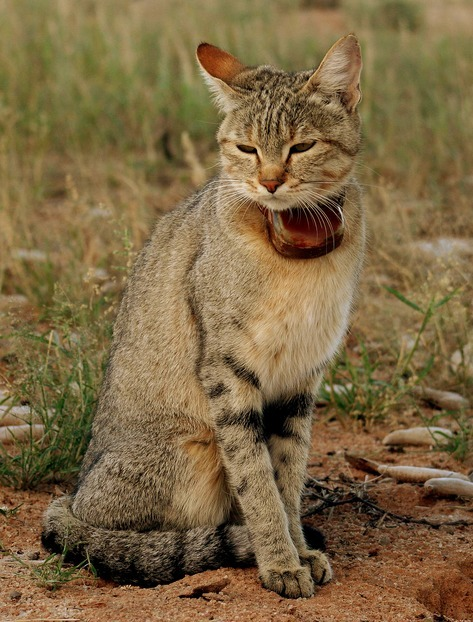
Figure 1. African wildcat (Felis silvestris lybica) in
Kgalagadi Transfrontier Park (South Africa/Botswana)
(Photo M. Herbst).
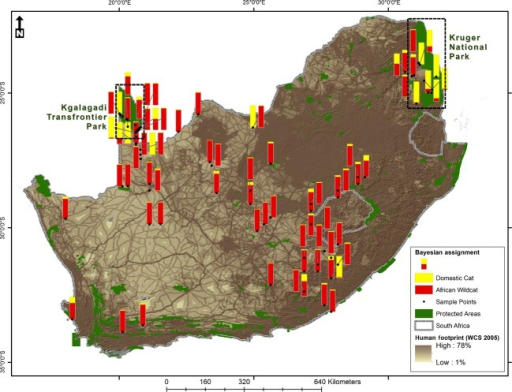
Hybridization between domestic and wild animals is a major concern for biodiversity conservation, and as habitats become increasingly fragmented, conserving biodiversity at all levels, including genetic, becomes increasingly important. Except for tropical forests and true deserts, African wildcats occur across the African continent; however, almost no work has been carried out to assess its genetic status and extent of hybridization with domestic cats. For example, in South Africa it has been argued that the long-term viability of maintaining pure wildcat populations lies in large protected areas only, isolated from human populations. Two of the largest protected areas in Africa, the Kgalagadi Transfrontier and Kruger National Parks, as well as the size of South Africa and range of landscape uses, provide a model situation to assess how habitat fragmentation and heterogeneity influences the genetic purity of African wildcats. Using population genetic and home range data, we examined the genetic purity of African wildcats and their suspected hybrids across South Africa, including areas within and outside of protected areas. Overall, we found African wildcat populations to be genetically relatively pure, but instances of hybridization and a significant relationship between the genetic distinctiveness (purity) of wildcats and human population pressure were evident.

Figure 2. Distribution of collection sites of cats included in this study across
South Africa in relation to formal protected areas and human footprint pressure
The genetically purest African wildcats were found in the Kgalagadi Transfrontier Park, while samples from around Kruger National Park showed cause for concern, especially combined with the substantial human population density along the park's boundary. While African wildcat populations in South Africa generally appear to be genetically pure, with low levels of hybridization, our genetic data do suggest that protected areas may play an important role in maintaining genetic purity by reducing the likelihood of contact with domestic cats. We suggest that approaches such as corridors between protected areas are unlikely to remain effective for wildcat conservation, as the proximity to human settlements around these areas is projected to increase the wild/domestic animal interface. Thus, large, isolated protected areas will become increasingly important for wildcat conservation and efforts need to be made to prevent introduction of domestic cats into these areas.


 Read more on domestic wild feline hybridisation with domestic cat

Friday, 26 December 2014

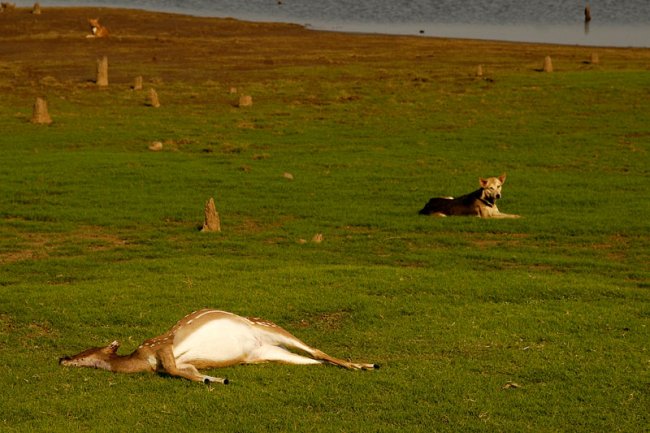
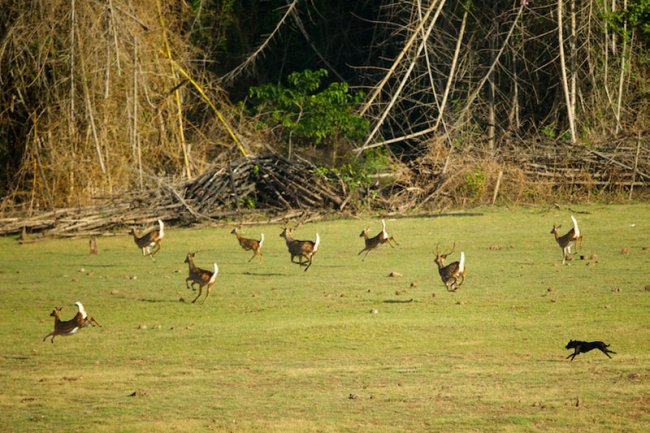
Some cases of stray and village dogs' attack to wild ungulates in wildlife reserves in India

Two village dogs resting after bringing down a chital

Village Dogs Hunting Chital, Nagarahole Tiger Reserve

A pack of stray dogs attacking a nilgai in Sultanpur Wildlife Sanctuary, near New Delhi


Thursday, 11 December 2014

Toxocara cati in Didelphis albiventris from Brazil

Pinto, H. A., Mati, V. L. T., & de Melo, A. L. 2014. Toxocara cati (Nematoda: Ascarididae) in Didelphis albiventris (Marsupialia: Didelphidae) from Brazil: a case of pseudoparasitism. Braz. J. Vet. Parasitol., Jaboticabal, 23, (4): 522-525
Eggs of Toxocara cati were found in the feces of Didelphis albiventris from a peridomestic urban environment in Brazil. Negative fecal tests following short-term captivity of the opossums, as well as the absence of ascaridids during necropsy, suggest the occurrence of pseudoparasitism. Implications of the findings for the epidemiology of toxocariasis are discussed.

Thursday, 6 November 2014

Dog ecology and demography in Antananarivo

Ratsitorahina, M., Rasambainarivo, J. H., Raharimanana, S., Rakotonandrasana, H., Andriamiarisoa, M. P., Rakalomanana, F. A., & Richard, V. (2009). Dog ecology and demography in Antananarivo, 2007. BMC veterinary research, 5(1), 21.

Background

Rabies is a widespread disease in African domestic dogs and a serious public health problem in developing countries. Canine rabies became established in Africa during the 20th century, coinciding with ecologic changes that favored its emergence in canids.

This paper reports the results of a cross-sectional study of dog ecology in the Antananarivo urban community in Madagascar.

A questionnaire survey of 1541 households was conducted in Antananarivo from October 2007 to January 2008. The study addressed both owned and unowned dogs. Various aspects of dog ecology were determined, including size of dog population, relationship between dogs and humans, rabies vaccination.

Results

Dog ownership was common, with 79.6 to 94.1% (mean 88.9%) of households in the six arrondissements owning dogs. The mean owned dog to person ratio was 1 dog per 4.5 persons and differed between arrondissements (administrative districts), with ratios of 1:6.0 in the first arrondissement, 1:3.2 persons in the 2nd, 1:4.8 in the 3rd, 1:5.2 in the 4th, 1:5.6 in the 5th and 1:4.4 in the 6th arrondissement. Overall, there were more male dogs (61.3%) and the male/female sex ratio was estimated to be 1.52; however, mature females were more likely than males to be unowned (OR: 1.93, CI 95%; 1.39<OR<2.69). Most (79.1%) owned dogs were never restricted and roamed freely to forage for food and mix with other dogs. Only a small proportion of dogs (11.7%) were fed with commercial dog food. Only 7.2% of owned dogs had certificates confirming vaccination against rabies. The proportion of vaccinated dogs varied widely between arrondissements (3.3% to 17.5%).
Conclusion

Antananarivo has a higher density of dogs than many other urban areas in Africa. The dog population is unrestricted and inadequately vaccinated against rabies. This analysis of the dog population will enable targeted planning of rabies control efforts.

Monday, 4 August 2014

Domestic cat predation in an insular Atlantic Forest remnant

Ferreira, G. A., Nakano-Oliveira, E., & Genaro, G. (2014). Domestic cat predation on Neotropical species in an insular Atlantic Forest remnant in southeastern Brazil. Wildlife Biology, 20(3), 167-175.

The domestic cat Felis silvestris catus is considered a potential threat to the native fauna of regions it populates, particularly when it has free access to these areas. Although this problem is known in Brazil, little is known regarding the effects of this species on natural areas. This study aimed to obtain information concerning the diet of domestic cats by identifying the main items found in fecal samples from domestic cats. In addition, the effects of seasonality on the diet were examined, as it has been hypothesized that seasonal variation of food items has little influence of the diet of the domestic cat. These semi-domiciled cats are thought to face a constant and continuous supply food offered by their owners throughout the year. Feces were collected in a remnant fragment of an Atlantic Forest located south of the municipality of Ilha Comprida — SP, Brazil. These samples provided important information regarding the dietary ecology and predation behavior of this species in endangered forest areas. The results of the scat content analyses demonstrated that domestic cats inserted in this biome presented a generalist and opportunist diet with little seasonal variation, even when receiving food from their owners. The most frequently consumed groups of prey were insects (20.8%) followed by mammals (13.9%) and birds (4.0%). Although the cat is not the only factor that impacts the species of the region, management programs need to be established in conjunction with the local community with the aim of minimizing the pressure exerted by these animals on the native fauna.

Monday, 14 July 2014

Perception of village dogs by villagers and tourists

Ruiz-Izaguirre, E., & Eilers, C. H. A. M. (2012). Perceptions of village dogs by villagers and tourists in the coastal region of rural Oaxaca, Mexico. Anthrozoos: A Multidisciplinary Journal of The Interactions of People & Animals, 25(1), 75-91.

The objective of this study was to gain an understanding of the village dog-keeping system, and of perceptions of dog-related problems by villagers and tourists, in the coastal region of Oaxaca, Mexico. We conducted a survey of the inhabitants of three villages (Mazunte, Puerto Angel, and Río Seco), whose main economic activities were tourism, fishing, and farming (n = 99), and a survey of tourists (n = 151). Dogs were the most commonly kept animals in all the villages. Cultural and economic aspects were reflected in dog-keeping practices. All dog owners allowed their dog(s) to roam free in the farming village (Río Seco), but not in the tourist villages (Mazunte and Puerto Angel). Significantly more dog owners in the tourist village of Mazunte mentioned companionship as a reason for keeping dogs than those in the farming village. All villagers perceived as a problem that there were too many dogs. The mean number of dogs per household was 1.8, and there were significantly more male dogs in the farming village than in the tourist villages. Efforts to control the dog population in the rural coastal region are aimed at rabies prevention or wildlife protection, whereas this study revealed that these issues were far less often mentioned by local people as other dog-related problems. Significantly more villagers in the tourist villages perceived there to be dog-welfare problems than those in the farming village. Significantly more North American and European tourists were concerned about dog welfare than Mexican tourists. Despite significant differences in dog-keeping between the tourist and farming villages, opinions of villagers in regard to dog breeding and methods of dog population control were similar. Villagers agreed on dog sterilization to control the dog population, but also considered that female dogs should breed at least once in their lifetime. Those living in tourist villages could benefit from improving dog welfare and implementing strategies to lessen the problems dogs cause tourists.

Thursday, 5 June 2014

The demography of free-roaming dog populations and applications to disease and population control

Morters, M. K., McKinley, T. J., Restif, O., Conlan, A. J. K., Cleaveland, S., Hampson, K.,
Whay, 
H. R , Damriyasa, I M.  & Wood, J. L. N. (2014). The demography of free‐roaming dog populations and applications to disease and population control. Journal of Applied Ecology.


Understanding the demography of domestic dog populations is essential for effective disease control, particularly of canine-mediated rabies. Demographic data are also needed to plan effective population management. However, no study has comprehensively evaluated the contribution of demographic processes (i.e. births, deaths and movement) to variations in dog population size or density, or determined the factors that regulate these processes, including human factors.

We report the results of a three-year cohort study of domestic dogs, which is the first to generate detailed data on the temporal variation of these demographic characteristics. Two communities were monitored at each study site in rabies-endemic areas and where the majority of dogs were free-roaming: Bali, Indonesia and Johannesburg, South Africa. None of the four communities had been engaged in any dog population management interventions by local authorities or animal welfare organizations. All identified dogs in the four communities were monitored individually throughout the study.

We observed either no population growth or a progressive decline in population size during the study period. There was no clear evidence that population size was regulated through environmental resource constraints. Rather, almost all of the identified dogs were owned and fed regularly by their owners, consistent with population size regulated by human demand. Finally, a substantial fraction of the dogs originated from outside the population, entirely through the translocation of dogs by people, rather than from local births. These findings demonstrate that previously reported growth of dog populations is not a general phenomenon, and challenge the widely held view that free-roaming dogs are unowned and form closed populations.

Synthesis and applications. These observations have broad implications for disease and population control. The accessibility of dogs for vaccination and evaluation through owners and the movement of dogs (some of them infected) by people will determine the viable options for disease control strategies. The impact of human factors on population dynamics will also influence the feasibility of annual vaccination campaigns to control rabies and population control through culling or sterilisation. The complex relationship between dogs and people is critically important in the transmission and control of canine-mediated rabies. For effective management, human factors must be considered in the development of disease and population control programmes.


Wednesday, 14 May 2014

Human attitudes towards semi-owned cats

Toukhsati, S. R., Bennett, P. C., & Coleman, G. J. (2007). Behaviors and attitudes towards semi-owned cats. Anthrozoos: A Multidisciplinary Journal of The Interactions of People & Animals, 20(2), 131-142.

The intentional provision of food, medical treatment and shelter by humans for a cat that is not considered to be owned by the individual is defined as "semi-ownership." The aim of this study was to explore the prevalence of such behaviors and the attitudes held by individuals who engage in them. The sample, comprising 424 residents from rural and non-rural Victoria, Australia, were surveyed in relation to their ownership status, practices, and attitudes towards companion animals. The findings revealed that 22% of the sample engaged in one or more cat semi-ownership behaviors; primarily feeding. Cat semi-ownership was associated with positive feelings towards cats, and the belief that cats are independent. Opportunities to engage cat semi-owners in education programs that promote responsible companion animal ownership behaviors were evident.

Wednesday, 2 April 2014

Why do people feed stray cats?

Coleman, G., & Coffey, M. Food for thought–why do people feed stray cats?.
What cats are we talking about?
- Semi-owned cats are stray cats that are fed by people who do not consider themselves to own the cat.

What did we research?
- Australia wide online survey
– Demographics
– Feeding stray cats (where, how many, how long etc.)

– Attitudes:
– about feeding stray cats
– about important others’ view of their feeding stray cats
– about perceived control over feeding stray cats

What we found:
– Semi-owners
* Most are women
* Most are middle aged or older
* Most feed one cat daily or every few days, in their home or within their property and have done so for several months or more
* Most cats that semi-owners feed are able to be picked up or at least patted
* Can also be pet owners

– Attitudes correlated with semi-ownership:
* Benevolent attitudes about the outcomes of feeding for the cat
* Positive attitudes about outcomes for the person doing the feeding
* Belief of support from important others to semi-own

– We can predict semi-ownership based primarily on beliefs about positive outcomes of feeding (behavioural beliefs)
* These beliefs outweigh any influence other factors

Why is this knowledge important?
– Semi-ownership:
* It’s a result of benevolent beliefs
* Semi-owned cats are in good body condition
* Many semi-owned cats are tolerant of human interaction
* But….
- Semi-owned cats are in the main un-desexed
- There are estimated to be 500 000 stray cats in Victoria alone
- semi-owned cats aid in maintaining this
- Semi-owned cats have much shorter lives than responsibly owned cats
- Semi-owned cats suffer with disease and injury
– Semi-owned cats make up a significant proportion of shelter admissions
– 64,000++ unwanted cats are admitted to shelters annually in Australia
* 60-74% of admitted cats are euthanized

Food for thought….

- Nearly ¼ of Victorians semi-own cats
- We know benevolent beliefs drive this behaviour
- We know many semi-owned cats have poor welfare
 - Challenging/changing beliefs an important part of effecting change
– Could people’s benevolent attitudes be better directed to benefit semi-owned
cat welfare?
* What are the barriers to taking the next steps (responsible ownership)?
– Continuing education on semi-owned cat welfare


Thursday, 27 February 2014

Behaviour of village dogs in coastal Mexico


Ruiz-Izaguirre, E., Eilers, K., Bokkers, E. A., Ortolani, A., Ortega-Pacheco, A., & de Boer, I. J. (2014). Human–dog interactions and behavioural responses of village dogs in coastal villages in Michoacán, Mexico. Applied Animal Behaviour Science.


In Mexican villages, most households keep dogs that roam freely. Therefore, socialisation of village dogs occurs in a different context than that of companion dogs in developed countries. The objectives of this study x: (1) to assess village dogs’ behavioural responses towards familiar and unfamiliar humans, (2) to compare body condition of dogs living in a village with a seasonal trade in international tourism (IT-village) with dogs living in a village located in the vicinity of a sea-turtle nesting site (STN-village), and (3) to identify whether dog characteristics influence dog behaviour and body condition.

Two coastal villages in Michoacán, Mexico, were selected as case study sites. Fifty-nine dogs were initially visited, 35 of which were repeatedly visited during the high and low seasons for international tourism and sea-turtle nesting. Caregivers were interviewed regarding human–dog interactions, and dogs were behaviourally tested and rated for body condition. Behavioural indicators were: 1) the dog's qualitative response to a caregiver's call and 2) the dog's willingness to approach an unfamiliar human. Additionally, a dog census per village was conducted to ascertain the dog population structure. Dogs were kept by over 60% of households in both villages. Body condition was optimal for 68% of the dogs. In the low season, dogs in the STN-village had better body condition than dogs in IT-village (P = 0.007). Dog characteristics that influenced behavioural responses were: sex, age, and whether the dog played with humans. The most common response to the caregiver's call was tail wagging, shown by 83% of male dogs and 50% of female dogs (P=0.021). About 70% of the pups approached the unfamiliar human completely, whereas only 24% of the juveniles (P =0.040) and 26% of the adults did so (P =0.026). Human–dog play was reported to occur mainly with children (77%). The percentage of dogs that played with humans was higher in dogs responding with tail wagging (82%) than in dogs showing the rest of the response categories (withdrawal, baring teeth, and other) (50%) (P =0.012). Human—dog play was reported for 85% of the male dogs compared to 55% of the female dogs (P=0.036). This study showed that village dogs were socialised to familiar humans but were not attracted to unfamiliar humans. Village dogs maintained their body condition in the low season. Child–dog play may have a role in shaping village dog social behaviour towards humans.


Saturday, 15 February 2014

Semi-ownership and sterilisation of cats and dogs in Thailand


Toukhsati, S. R., Phillips, C. J., Podberscek, A. L., & Coleman, G. J. (2012). Semi-Ownership and Sterilisation of Cats and Dogs in Thailand. Animals, 2(4), 611-627.


The aim of this study was to identify the prevalence of cat and dog semi-ownership in Thailand and factors that predict sterilisation. Semi-ownership was defined as interacting/caring for a companion animal that the respondent does not own, such as a stray cat or dog. A randomised telephone survey recruited 494 Thai nationals residing in Thailand. The findings revealed that 14% of respondents (n = 71) engaged in dog semi-ownership and only 17% of these dogs had been sterilised. Similarly, 11% of respondents (n = 55) engaged in cat semi-ownership and only 7% were known to be sterilised. Using Hierarchical Multiple Regression, the findings showed that 62% and 75% of the variance in intentions to sterilise semi-owned dogs and cats, respectively, was predicted by religious beliefs, and psychosocial factors such as attitudes, perceived pressure from others, and perceived behavioural control. Community awareness campaigns that approach the issue of sterilisation in a way that is consistent with cultural and religious traditions using Thai role models, such as veterinarians, may go some way in reducing stray animal population growth.
Related Posts Plugin for WordPress, Blogger...