Les hommes ont oublié cette vérité. Mais tu ne dois pas l'oublier, dit le renard. Tu deviens responsable pour toujours de ce que tu as apprivoisé.
Le Petit Prince, chap. 21
Showing posts with label Ungulate. Show all posts

Sunday, 17 July 2016

Implications for human-wolf conflict due to free-roaming domestic dogs predation on deer in southern Spain:

Duarte, J., García, F. J., & Fa, J. E. (2016). Depredatory impact of free-roaming domestic dogs on Mediterranean deer in southern Spain: implications for human-wolf conflict. Folia Zoologica, 65(2).

Feral domestic dogs are efficient wild ungulate hunters in many parts of the world. This has not been confirmed in Mediterranean ecosystems. However, if feral dogs can predate upon wild Mediterranean ungulates, they can also do so upon livestock. Therefore, to more realistically understand human-wolf conflict in areas where wolves and feral dogs overlap, the possible role of the latter taking domestic prey should be considered. During a 6-month study period, we carried out daily observations of a pack of mediumsized dogs, where they were the only large-bodied carnivore capable of killing ungulates in a fenced estate in southern Spain. The estate contained sizeable populations of red deer, fallow deer and mouflons, but no livestock. We described feral dog predation patterns and depredatory impact. We found that dogs predated upon a total of 57 ungulates; fallow deer (47 %), red deer (37 %), and mouflon (16 %). Red deer adults were the least frequent prey, but dogs killed significantly more females and fawns of red and fallow deer. Mouflons were attacked indistinctly. Our results suggest that dogs in our study exhibited a kill pattern similar to Iberian wolves. Therefore, in areas where wolves and feral dogs coexist, a significant proportion of livestock predation could be falsely attributed to the wild canid. In addition, the presence of feral dogs may be a cause of risk in big game hunting estates.

Sunday, 3 July 2016

Ecological impact of free-ranging dogs in Poland

Wierzbowska, I. A., Hędrzak, M., Popczyk, B., Okarma, H., & Crooks, K. R. (2016). Predation of wildlife by free-ranging domestic dogs in Polish hunting grounds and potential competition with the grey wolf. Biological Conservation, 201, 1-9.

Although the domestic dog (Canis familiaris) is a ubiquitous exotic predator that can detrimentally affect natural environments, studies on their ecological impact are relatively scarce, particularly at a national scale. We exploited data derived from Polish Hunting Association reports to provide a national evaluation of rural free-ranging dogs in Poland. Our results demonstrate that free-ranging dogs are widespread and abundant, frequently killing wildlife and livestock in Poland and likely exerting intraguild competition with native carnivores such as grey wolves (Canis lupus). On average, hunting club records estimate that over 138,000 rural free-ranging dogs occurred annually in hunting grounds. In addition, nearly 3000 free-ranging greyhounds and their mixed breeds occurred annually on hunting grounds, although greyhound hunting has been banned in Poland and they are legally required to be restrained within fencing. On average, over 33,000 wild animals and 280 livestock were killed by free-ranging dogs on Polish hunting grounds annually. The number of both wild animals and livestock killed by dogs were strongly and positively correlated with the numbers of rural free-ranging dogs recorded on hunting grounds, reflective of their predation pressure. Also, the number of wild animals killed by dogs was positively correlated with estimates of population sizes and harvest levels of wildlife, reflective of prey availability. Dog predation, in conjunction with harvest by humans, may cause unsustainable off-take rates of some game species. Grey wolves, documented within 39 of the 49 Hunting Districts, ate similar prey as dogs, including ungulates and livestock, and killed dogs on hunting grounds, suggesting both resource and interference competition between these sympatric canids. This comprehensive analysis provides important information about the ecological impact of free-ranging dogs and recommendations for alternative legislative and management measures to control their impacts.


Sunday, 5 June 2016

Disease and endangered species

Thorne, E., & Williams, E. S. (1988). Disease and endangered species: the black‐footed ferret as a recent example. Conservation Biology, 2(1), 66-74.

Diseases may play major roles in the conservation of endangered species. Although the threat of disease received extensive consideration and influenced research and management activities governing the endangered black-footed ferret (Mustela nigripes) in Wyoming, a canine distemper epizootic in 1985 severely affected a captive breeding program and led to extirpation of the species from the wild. This recent example of the catastrophic effect of epizootic disease in an endangered species is described in an historical context. In addition, examples are given of disease further endangering other rare species, including Mauritius pink pigeon, Père David's deer, cranes, maned wolves, native Hawaiian birak, cheetahs, and others.

__________________

Las enfermedades pueden jugar un papel importante en la conservación de especies en peligro de extinción. Aunque la amenaza de enfermedad recibió gran consideratión e influyó en la investigación y las actividades de manejo del hurón de patas-negras (Mustela nigripes), especie en peligro de extinción en Wyoming en 1985 el moquillo canino epizoótico impactó severamente un programa de crianza en cautiverio y condujo a la extinción de esta especie en su ambiente silvestre. Este reciente ejemplo del efecto catastrófico de una enfermedad epizoótica sobre una especie en peligro de extinción es descrito en un contexto histórico. Además, se dan ejemplos de enfermedades que amenazan aun más a otras especies raras, incluyendo la paloma rosada de Mauricio, el ciervo de David, el lobo de crin, el guepardo, diversas grullas, varias aves de las islas de Hawaii, entre otros.

Wednesday, 1 June 2016

Feral dog impact on a urban fragment of Atlantic forest in Brazil

Galetti, M. & I. Sazima. 2006 . Impacto de cães ferais em um fragmento urbano de Floresta Atlântica no sudeste do Brasil.  Natureza & Conservação 4 (1): 58-63

Os cães ferais domésticos são um dos principais predadores da vida selvagem nativa em áreas
protegidas em todo o mundo. Entretanto, o número de presas caçadas por cães ferais não é registrado
de maneira precisa. Foram encontradas, em um fragmento urbano de 250 hectares de Floresta
Atlântica na Região Sudeste do Brasil, 46 carcaças de no mínimo 12 espécies de vertebrados, caçadas
pelos cães ao longo de 44 meses. Os cães ferais não demonstraram qualquer seleção aparente em
relação às diferentes espécies de presa, matando desde veados a pequenos sapos. Os mamíferos
foram a presa mais freqüentemente encontrada (75%). Nossos dados indicam que os cães ferais têm
um grande impacto sobre a vida selvagem da Floresta Atlântica, especialmente em áreas onde os
animais silvestres precisam mover-se entre os fragmentos florestais. Os programas de erradicação,
embora controversos, são a única maneira de reduzir a predação da vida selvagem por cães ferais.

Feral dogs are one of the main predators of native wildlife inside protected areas all around the world. Nevertheless, the number of preys hunted by feral dogs has not been precisely recorded. In a 250 hectares Atlantic forest fragment in Southeast Brazil, 46 carcasses have been found from at least 12 vertebrate species, hunted by feral dogs along 44 months. Feral dogs didn't have any apparent selection related to their different preys, killing from deer to small toads. Mammals were the most frequently found preys (75%). Our data show that feral dogs have a great impact on wildlife in the Atlantic forest, especially in areas where wild animals have to move between forest fragments. Eradication programs, even if controversial, are the only way to reduce predation of wildlife by feral dogs.

Wednesday, 6 January 2016

Dogs are a significant problem for the native mammal community in one Andean region

Zapata-Ríos, G., & Branch, L. C. (2016). Altered activity patterns and reduced abundance of native mammals in sites with feral dogs in the high Andes. Biological Conservation, 193, 9-16.

Negative impacts of some introduced carnivores like feral cats are well documented, widespread, and significant. Comparatively, the effects of feral dogs (individuals that are not associated with people or human settlements) on native wildlife are poorly known, even though feral dogs occur worldwide. We assessed the density of feral dogs and compared relative abundance, activity patterns and habitat use of 10 species of mammals in areas with and without feral dogs in Cayambe-Coca National Park in the northern Ecuadorian Andes using line transect surveys, camera traps, and track and sign surveys. In areas where feral dogs were present, four native mammals were absent: mountain coati (Nasuella olivacea), mountain paca (Cuniculus taczanowskii), long-tailed weasel (Mustela frenata), and northern pudu (Pudu mephistophiles). Relative abundances of six species were lower compared to areas without feral dogs: puma (Puma concolor), Andean fox (Lycalopex culpaeus), Andean bear (Tremarctos ornatus), striped hog-nosed skunk (Conepatus semistriatus), mountain tapir (Tapirus pinchaque), and little red brocket deer (Mazama rufina). Three species significantly altered activity patterns where feral dogs were present (Andean bear, mountain tapir, and little red brocket deer). In contrast, none of the native mammal species exhibited shifts in habitat use in areas with feral dogs. Dogs used all habitat types according to availability. Our results point to feral dogs as a significant problem for the native mammal community of this Andean region, and highlight the need to consider feral dogs as a potential threat to wildlife in other regions where anthropogenic effects appear to be low but feral dogs are present, particularly natural areas that contain endangered and endemic species.

Sunday, 20 September 2015

Immunocontraception for cats

Benka, V. A., & Levy, J. K. (2015). Vaccines for feline contraception GonaCon GnRH–hemocyanin conjugate immunocontraceptive. Journal of feline medicine and surgery, 17(9), 758-765.

Vaccine: GonaCon™ is the trade name of a GnRH–hemocyanin conjugate immunocontraceptive vaccine formulation shown to prevent reproduction and inhibit production of sex hormones in numerous mammalian species for extended durations. GonaCon is currently registered with the US Environmental Protection Agency (EPA) for contraception of female white-tailed deer, and GonaCon™-Equine for female wild horses and burros. Multiple formulations of this GnRH-hemocyanin conjugate immunocontraceptive vaccine have been developed at the National Wildlife Research Center in the United States.
Evidence base: Three studies employing an early generation vaccine formulation indicated its potential for multi-year contraception of female cats (median duration of effect in excess of 39.7 months). The contraceptive effect for male cats was less predictable and of shorter duration (median duration of effect 14 months). Since these initial feline studies there have been formulation composition changes, and further investigation of the safety, efficacy and duration of this contraceptive vaccine for cats is warranted.
Future prospects: Individual country regulations will determine if GonaCon could be registered for unowned, free-roaming and/or pet cats.

Monday, 13 April 2015

Feral dogs are the main threat to wild ungulates in Thar region

GEHLOT, H., & JAKHER, G. (2015). Threats to Existence of Blackbuck (Antelope cervicapra) and Chinkara (Gazella bennetti) in the Thar region of Rajasthan, INDIA. Int. J. Rec. Biotech, 3(1), 1-6.

Thar region is located in west of Aravalli ranges, lies between 22°30’ N to 32°05’N and 68°05’ E to 75°45’E in Rajasthan state of India. It is part of the "The Great Indian Thar Desert”, which is seventh largest desertsof the world. This region, with all climatic vagaries, is endowed with diversities of wild fauna, including free ranging wild ungulates, like Indian gazelle (Gazella bennetti), Blackbuck (Antelope cervicapra) and Nilgai or Bluebull (Boselaphus tragocamelus). Present study comprised of about 2100 km road survey in the region. We surveyed 05 closed areas (19 transect) in Jodhpur and Nagaur districts of Rajasthan. It was found that feral dogs are major cause of the deaths in the blackbuck (about 45%) and the chinkara (35%) population in the study areas. The feral dogs caused as high as 62%mortality in ungulate’s fawn population. Another hazard to ungulate population is found to be over speeding of vehicles on the roads, which passes through ungulates inhabited areas, caused 24% mortality in the chinkara and about 15% in the blackbuck population. There are other numerous causes, which are responsible for mortality and health hazard to wild ungulate population in arid region of Rajasthan. Blackbuck and Chinkara is included in the Schedule-I of Wildlife (Protection) Act, 1972

Saturday, 10 January 2015

Mobility of deers and their arassment by dogs

Progulske, D. R., & Baskett, T. S. (1958). Mobility of Missouri deer and their arassment by dogs. The Journal of Wildlife Management, 184-192.

There is little information on the mobility of the white-tailed deer (Odocoileus virginianus) in the middle United States; data are equally limited on the mobility of white-tails on land that is primarily agricultural or where ther's a yearlong harassment by dogs...


Friday, 26 December 2014

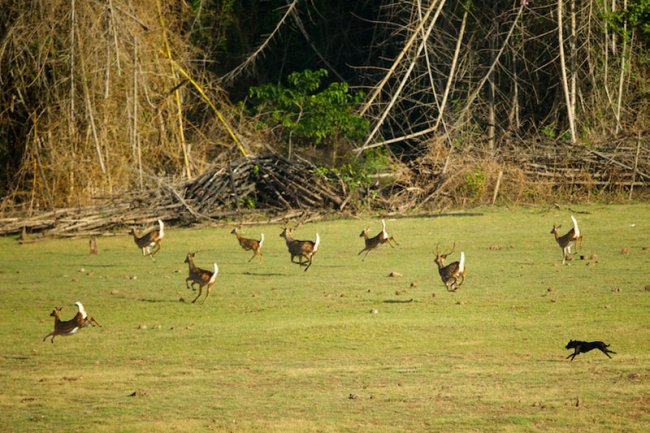
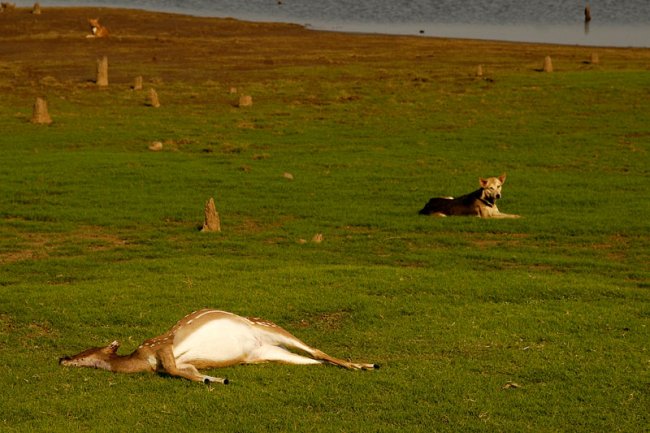
Some cases of stray and village dogs' attack to wild ungulates in wildlife reserves in India

Two village dogs resting after bringing down a chital

Village Dogs Hunting Chital, Nagarahole Tiger Reserve

A pack of stray dogs attacking a nilgai in Sultanpur Wildlife Sanctuary, near New Delhi


Saturday, 18 October 2014

Increasing impact of feral dogs on wild ungulates in Urals

Korytin, N,, V. Bolshakov & N. Markov. 2014. Effect of mammalian predator on the populations of ungulates in Middle Urals. 9th Baltic Theriological Conference. Book of Abstracts, Daugavpils, 16 – 18 October, 2014

Wild ungulates are the main food source for large carnivores in Russia and particularly in Urals. Here we present the results of the analysis of the effect of carnivores on ungulates populations according to the official statistics of ungulate mortality not related to legal hunting (“natural” mortality). Predation of wolf accounts for 16 and 19% of wild boar and moose mortality respectively, for the pair “lynx” – “Siberian roe deer” this index equals 19%. Another important predator of roe deer is feral dogs. Their impact on ungulate populations has increased in recent years. Prey preferences differ between predators. The proportion of young among animals killed by feral dogs is higher than that for other carnivores.

Sunday, 5 October 2014

Toxoplasmosis in White tailed deers

Ballash, G. A., Dubey, J. P., Kwok, O. C. H., Shoben, A. B., Robison, T. L., Kraft, T. J., & Dennis, P. M. 2014. Seroprevalence of Toxoplasma gondii in White-Tailed Deer (Odocoileus virginianus) and Free-Roaming Cats (Felis catus) Across a Suburban to Urban Gradient in Northeastern Ohio. EcoHealth, 1-9.

Felids serve as the definitive host of Toxoplasma gondii contaminating environments with oocysts. White-tailed deer (WTD; Odocoileus virginianus) are used as sentinel species for contaminated environments as well as a potential source for human foodborne infection with T. gondii. Here we determine the seroprevalence of T. gondii in a WTD and felid population, and examine those risk factors that increase exposure to the parasite. Serum samples from 444 WTD and 200 free-roaming cats (Felis catus) from urban and suburban reservations were tested for T. gondii antibodies using the modified agglutination test (MAT, cut-off 1:25). Antibodies to T. gondii were found in 261 (58.8%) of 444 WTD, with 164 (66.1%) of 248 from urban and 97 (49.5%) of 196 from suburban regions. Significant risk factors for seroprevalence included increasing age (P < 0.0001), reservation type (P < 0.0001), and household densities within reservation (P < 0.0001). Antibodies to T. gondii were found in 103 (51.5%) of 200 cats, with seroprevalences of 79 (51%) of 155 and 24 (53.3%) of 45 from areas surrounding urban and suburban reservations, respectively. Seroprevalence did not differ by age, gender, or reservation among the cats’ sample. Results indicate WTD are exposed by horizontal transmission, and this occurs more frequently in urban environments. The difference between urban and suburban cat densities is the most likely the reason for an increased seroprevalence in urban WTD. These data have public health implications for individuals living near or visiting urban areas where outdoor cats are abundant as well as those individuals who may consume WTD venison.

Tuesday, 16 September 2014

Leopards prefer dogs in India

Athreya, V, M. Odden, J.D. C. Linnell, J. Krishnaswamy & K. U. Karanth 2014. A cat among the dogs: leopard Panthera pardus diet in a human-dominated landscape in western Maharashtra, India. Oryx, DOI: http://dx.doi.org/10.1017/S0030605314000106 :1-7

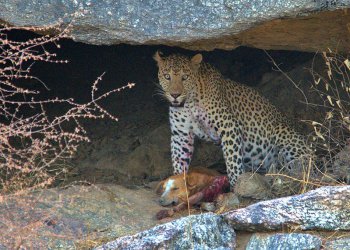
Leopard with its dog prey (Photo Gaffar Khan) 
The ecology and predator–prey dynamics of large felids in the tropics have largely been studied in natural systems where wild ungulates constitute the majority of the prey base. However, human-dominated landscapes can be rich in potential prey for large carnivores because of the high density of domestic animals, especially in tropical countries where pastoralism is an important livelihood activity. We report the almost complete dependence of leopards Panthera pardus on domestic animals as prey in the crop lands of Ahmednagar district, Maharashtra, India. From analysis of 85 confirmed leopard scats, 87% of the leopard's prey biomass consisted of domestic animals, with 39% consisting of domestic dogs Canis lupus familiaris alone. The only wild species that occurred in the leopard's diet were rodents, small indian civet Viverricula indica, bonnet macaque Macaca radiata and other primates Semnopithecus spp., mongoose Herpestes spp., and birds. Interviews conducted in 77 households distributed randomly in the study area documented a high density of domestic animals: adult cattle Bos taurus, calves, goats Capra aegagrus, dogs and cats Felis catus occurred at densities of 169, 54, 174, 24 and 61 per km2, respectively. Ivlev's electivity index indicated that dogs and cats were over-represented in the leopard's diet, given the higher densities of goats and cattle. The standing biomass of dogs and cats alone was sufficient to sustain the high density of carnivores at the study site. Our results show that the abundance of potential domestic prey biomass present in human-use areas supports a relatively high density of predators, although this interaction could result in conflict with humans.

Wednesday, 9 July 2014

Scavenging by Wild Dogs, Red Foxes and Feral Cats in South-Eastern Australia

Forsyth, D. M., Woodford, L., Moloney, P. D., Hampton, J. O., Woolnough, A. P., & Tucker, M. (2014). How Does a Carnivore Guild Utilise a Substantial but Unpredictable Anthropogenic Food Source? Scavenging on Hunter-Shot Ungulate Carcasses by Wild Dogs/Dingoes, Red Foxes and Feral Cats in South-Eastern Australia Revealed by Camera Traps. PloS one, 9(6), e97937.

There is much interest in understanding how anthropogenic food resources subsidise carnivore populations. Carcasses of hunter-shot ungulates are a potentially substantial food source for mammalian carnivores. The sambar deer (Rusa unicolor) is a large (≥150 kg) exotic ungulate that can be hunted throughout the year in south-eastern Australia, and hunters are not required to remove or bury carcasses. We investigated how wild dogs/dingoes and their hybrids (Canis lupus familiaris/dingo), red foxes (Vulpes vulpes) and feral cats (Felis catus) utilised sambar deer carcasses during the peak hunting seasons (i.e. winter and spring). We placed carcasses at 1-km intervals along each of six transects that extended 4-km into forest from farm boundaries. Visits to carcasses were monitored using camera traps, and the rate of change in edible biomass estimated at ~14-day intervals. Wild dogs and foxes fed on 70% and 60% of 30 carcasses, respectively, but feral cats seldom (10%) fed on carcasses. Spatial and temporal patterns of visits to carcasses were consistent with the hypothesis that foxes avoid wild dogs. Wild dog activity peaked at carcasses 2 and 3 km from farms, a likely legacy of wild dog control, whereas fox activity peaked at carcasses 0 and 4 km from farms. Wild dog activity peaked at dawn and dusk, whereas nearly all fox activity occurred after dusk and before dawn. Neither wild dogs nor foxes remained at carcasses for long periods and the amount of feeding activity by either species was a less important predictor of the loss of edible biomass than season. Reasons for the low impacts of wild dogs and foxes on sambar deer carcass biomass include the spatially and temporally unpredictable distribution of carcasses in the landscape, the rapid rate of edible biomass decomposition in warm periods, low wild dog densities and the availability of alternative food resources.

Saturday, 21 June 2014

Feeding cats deplates native fauna

Hawkins, C.C., W.E. Grant & M.T. Longnecker. 1999. Effect of subsidized house cats on California birds and rodents. Transactions of the Western Section of The Wildlife Society, 35: 29-33

Cat advocates are establishing feeding stations in public parks, often claiming that well-fed cats pose little threat to wildlife. This claim was tested east of San Francisco, California, in a cat area and a no-cat area. In 1995, more harvest mice were trapped in the no-cat area. In 1996, more harvest mice (Reithrodontomys megalotis) and deer mice (Peromyscus sp.) were trapped in the no-cat area, and more house mice were trapped in the cat area. The numbers of trapped California meadow voles (Microtus californicus) were not different between the areas in either year. More native rodents were trapped in the no-cat area. Birds present during the breeding season were seen more often in the no-cat area. California quail (Callipepla californicus) and California thrashers (Toxostoma redivivum) were present in the no-cat area and absent in the cat area. Cats at artificially high densities, sustained by supplementary feeding, reduced the abundance or native rodent and bird populations, changed the rodent species composition, and may have facilitated the expansion of the house mouse into new areas. Thus we recommend that the feeding of cats in parks should be strictly prohibited. 

Friday, 25 April 2014

Ancient introductions of mammals in Mediterranean islands and their implications for conservation

Gippoliti, S., & Amori, G. (2006). Ancient introductions of mammals in the Mediterranean Basin and their implications for conservation. Mammal Review,36(1), 37-48.

1 The importance of taxonomy to the determination of conservation priorities and actions is widely accepted. It should be not surprising therefore that the taxonomic treatment of mammal species that have been subject to human actions in antiquity may well influence the contemporary assessment of conservation priorities at various levels.
2 As a result of early extinctions caused by humans and protohistoric and historic introductions, we suggest that the Mediterranean Basin and its islands are particularly prone to misdirection of efforts towards biodiversity conservation.
3 The two main risks associated with the failure to use an evolutionary and palaeoecological approach to conservation efforts are (i) an underestimation of the conservation importance of distinctive continental taxa vs. the apparent endemicity of island taxa; and (ii) a serious risk for native and endemic island species when anthropochorous mammals, especially ungulates, misguidedly become the focus of conservation actions, particularly inside protected areas.
4 Urgent measures, including refinement of mammal taxonomy, the exclusion of known anthropochorous taxa from conservation lists and implementation of protective legislation, are necessary to maintain the uniqueness and richness of the Mediterranean biodiversity hotspot.

Friday, 21 February 2014

Monitoring feral dog’s population at Isla de Cedros

García-Aguilar, M.C. 2012. Monitoring feral dog’s population at Isla de Cedros, Baja California, and the associated threats over native mastofauna. Acta Zoológica Mexicana (n. s.), 28(1): 37-48.

Monitoring introduced species is an important management tool in order to preserve native species. The aim of this study was to monitor the feral dog’s population in Isla de Cedros and to identify actual and potential threats of their presence over the native mastofauna. Data were collected at two sampling areas of the island, the Northeast Coast (CNE) and the Central-South Region (RCS). Dog’s distribution pattern and density was assess using a non-invasive method based on scat counts along transect surveys and relative density (R) and faecal relative abundance index (fRAI) were estimated. Dog’s diet composition was evaluated by scat analysis. Both R and fRAI were significant greater (P < 0.05) in the CNE than in the RCS. The results showed that feral dogs are feeding from at least three endemic terrestrial mammal species (the mule deer, the brush rabbit, and the Anthony’s pocket mouse) and two pinnipeds species (the northern elephant seal and the California sea lion). With this study provide a useful baseline for future comparison and monitoring and control purposes. Nevertheless, it is necessary to conduct studies about the dog’s feeding behavior to measure their predatory activity and to assess the associated damage level. Also, due to the fact that interactions between dogs and pinnipeds appeared frequently and because they are phylogenetically related, the greatest threat of the dog’s presence is that it could be a disease vector, with serious health outcomes for the wildlife.


García-Aguilar, M. C. 2012. Monitoreo de la población de perros ferales en la Isla de Cedros, Baja California, y las amenazas a la mastofauna nativa. Acta Zoológica Mexicana (n. s.), 28(1): 37-48.

El monitoreo de especies introducidas es una herramienta importante para preservar las especies nativas. El objetivo de este estudio fue monitorear a la población de perros ferales en la Isla de Cedros e identificar las amenazas actuales y potenciales de su presencia sobre la mastofauna nativa. La colecta de datos se realizó en dos áreas de la isla, la costa noreste (CNE) y la región centro-sur (RCS). Los patrones de distribución y la densidad de los perros se determinaron con un método no invasivo basado en el conteo de excretas a lo largo de transectos y se estimó la densidad relativa (R) y el índice de abundancia relativa fecal (fRAI). La composición de la dieta se evaluó por medio del análisis de las excretas. Tanto los valores de R como de fRAI fueron significativamente mayores (P < 0.05) en CNE que en RCS. Los resultados mostraron que los perros se alimentan de al menos tres especies de mamíferos endémicos (el venado bura, el conejo matorralero y el ratón de abazones de Cedros) y de dos especies de pinnípedos (el elefante marino del norte y el lobo marino de California). A partir de este estudio se cuenta con una línea de base que podrá ser usada en los programas de control y monitoreo futuros. Sin embargo, es necesario desarrollar estudios sobre el comportamiento alimentario de los perros para evaluar su actividad predatoria y medir el nivel de daño asociado; además, dado que las interacciones entre pinnípedos y perros parecen ser frecuentes y están relacionados filogenéticamente, posiblemente la mayor amenaza de la presencia de los perros sea la propagación de enfermedades infeccionas, con graves resultados para la vida silvestre.

Monday, 14 October 2013

Domestic dogs in Wildlife habitats


It is difficult to segregate human demographic trends from trends in rural development and outdoor recreational participation in settings like the West where they appear to be interrelated. One extension of human recreation in wildlife habitats is the effect of disturbance, harassment, displacement, or direct mortality of wildlife attributable to domestic dogs that accompany recreationists. At some level, domestic dogs still maintain instincts to hunt and/or chase. Given the appropriate stimulus, those instincts can be triggered in many different settings. Even if the chase instinct is not triggered, dog presence in and of itself has been shown to disrupt many wildlife species. Authors of many wildlife disturbance studies concluded that dogs with people, dogs on-leash, or loose dogs provoked the most pronounced disturbance reactions from their study animals. During winter, concerns are primarily related to human activity on ungulate winter ranges. Dogs extend the zone of human influence when off-leash. Many ungulate species demonstrated more pronounced reactions to unanticipated disturbances, as a dog off-leash would be until within very close range. In addition, dogs can force movement by ungulates (avoidance or evasion during pursuit), which is in direct conflict with overwinter survival strategies which promote energy conservation. During summer, concerns are primarily related to the birth and rearing of young for all wildlife species. Dogs are noted predators for various wildlife species in all seasons. Domestic dogs can potentially introduce diseases (distemper, parvovirus, and rabies) and transport parasites into wildlife habitats. While dog impacts to wildlife likely occur at the individual scale, the results may still have important implications for wildlife populations. For most wildlife species, if a “red flag” is raised by pedestrian-based recreational disturbance, there could also be problems associated with the presence of domestic dogs. Managers may consider the following when evaluating recreational impacts of dogs in wildlife habitats: species biology, reproductive potential, abundance, density, distribution, degree of habitat specificity or reliance on certain habitat components, and predisposition and sensitivity to disturbance by other agents. This information is intended to increase awareness among natural resource professionals and the public about the potential implications of uncontrolled domestic dogs in wildlife habitats and to encourage responsible outdoor recreation ethics.

Friday, 11 October 2013

Behaviour of deers chased by hunting dogs

Sweeney, J. R., Marchinton, R. L., & Sweeney, J. M. (1971). Responses of radio-monitored white-tailed deer chased by hunting dogs. The Journal of Wildlife Management, 35 (4): 707-716.

Studies were conducted on three separate areas-Auburn, Alabama; Eglin Air Force Base, Florida; and Savannah River Plant, South Carolina-to determine the responses of white-tailed deer (Odocoileus virginianus) to chasing by hunting dogs (Canis familiaris). Deer chosen for harassment were animals that had been studied by telemetry until normal behavior, movement patterns, and ranges were delineated. In every chase the deer escaped the hounds, and all deer remained in good physical condition throughout the study. Behavior that resulted in escape was classified into five categories: holding, distance running, circuitous zigzag running, separating from a group, and using escape habitat. Chases averaged 33 minutes in duration and 2.4 miles in distance with maximums of 155 minutes and 13.4 miles recorded. Deer in high populations were more difficult to chase for extended periods than those in low populations. Although the deer did not require water for escape, they usually selected swamps or other bodies of water when these were available. The deer could readily be chased out of their home ranges, but usually they returned in 1 day or sooner.

Monday, 7 October 2013

Feral dogs' ecology in Alabama

Scott, M. D., & Causey, K. (1973). Ecology of feral dogs in Alabama. The Journal of Wildlife Management, 37 (3): 253-265.

Feral dog ecology was investigated in two areas in Alabama during 1970 and 1971 utilizing live-trapping and radiotelemetry techniques. The very aggressive behavior of feral dogs when trapped was used to distinguish them from free-ranging and tame dogs. Confirmation of the dog's classification was provided by telemetric procedures. Three feral packs and two solitary feral dogs were studied. Feral dogs were retrapped significantly more times than other dogs. Morphological characteristics did not differ. Pack sizes varied from two to five adult dogs, with home ranges covering 444 to 1,050 hectares (1,100-2,600 acres). Packs utilized moist flood-plain areas during warm weather and dry upland sites during cool weather. Daytime activity and distances traveled were greater during cool weather than in hot weather but dogs were most active at night during all seasons. Distances moved by packs during diel (24-hour) periods ranged from 0.5 to 8.2 km (0.3-5.1 miles). Sources of feral dogs were reproduction in the wild and recruitment from tame and free-ranging dogs. Feral dogs studied did not appear to be preying on white-tailed deer (Odocoileus virginianus) or cattle. Foods eaten included small mammals, garbage, and vegetable material.

Saturday, 5 October 2013

Dogs in Atlantic forest fragments in Brazil

Galetti, M., & Sazima, I. (2006). Impact of feral dogs in an urban Atlantic forest fragment in southeastern Brazil. Natur. Conservation, 4, 146-151.

Feral domestic dogs are one of the main predators of native wildlife in protected areas all over the world. However, the number of prey killed by feral dogs is poorly recorded. A total of 46 carcasses of at least 12 vertebrate species killed by dogs were found along 44 months in an urban, 250 ha Atlantic forest fragment in southeastern Brazil. Feral dogs showed no apparent selection towards different species of prey, killing from small frogs to deer. Mammals were the most frequent prey found (75%). Our data indicate that feral dogs have a great impact on wildlife in the Atlantic forest, especially in areas where wildlife needs to move between forest fragments. Eradication programs, although controversial, are the only way to reduce wildlife predation by feral dogs.

Related Posts Plugin for WordPress, Blogger...