Les hommes ont oublié cette vérité. Mais tu ne dois pas l'oublier, dit le renard. Tu deviens responsable pour toujours de ce que tu as apprivoisé.
Le Petit Prince, chap. 21
Showing posts with label predation. Show all posts

Tuesday, 2 May 2017

Domestic dogs threaten endangered species worldwide


Humans and their canine companions share many close bonds. Wolves (Canis lupus) were the first animal domesticated by people, some time between 15,000 and 50,000 years ago. 

There are now an estimated 1 billion domestic dogs across their near-global distribution.


Saturday, 21 January 2017

Invasive mesopredators should be controlled at the same time

Molsher, R., Newsome, A. E., Newsome, T. M., & Dickman, C. R. (2017). Mesopredator Management: Effects of Red Fox Control on the Abundance, Diet and Use of Space by Feral Cats. PloS one, 12(1), e0168460.

Apex predators are subject to lethal control in many parts of the world to minimize their impacts on human industries and livelihoods. Diverse communities of smaller predators—mesopredators—often remain after apex predator removal. Despite concern that these mesopredators may be 'released' in the absence of the apex predator and exert negative effects on each other and on co-occurring prey, these interactions have been little studied. Here, we investigate the potential effects of competition and intraguild predation between red foxes (Vulpes vulpes) and feral cats (Felis catus) in south-eastern Australia where the apex predator, the dingo (Canis dingo), has been extirpated by humans. We predicted that the larger fox would dominate the cat in encounters, and used a fox-removal experiment to assess whether foxes affect cat abundance, diet, home-range and habitat use. Our results provide little indication that intraguild predation occurred or that cats responded numerically to the fox removal, but suggest that the fox affects some aspects of cat resource use. In particular, where foxes were removed cats increased their consumption of invertebrates and carrion, decreased their home range size and foraged more in open habitats. Fox control takes place over large areas of Australia to protect threatened native species and agricultural interests. Our results suggest that fox control programmes could lead to changes in the way that cats interact with co-occurring prey, and that some prey may become more vulnerable to cat predation in open habitats after foxes have been removed. Moreover, with intensive and more sustained fox control it is possible that cats could respond numerically and alter their behaviour in different ways to those documented herein. Such outcomes need to be considered when estimating the indirect impacts of fox control. We conclude that novel approaches are urgently required to control invasive mesopredators at the same time, especially in areas where apex predators are absent.

Monday, 9 January 2017

Impacts of introduced mammalian predators on New Zealand’s alpine fauna

O’Donnell, C. F., Weston, K. A., & Monks, J. M. (2017). Impacts of introduced mammalian predators on New Zealand’s alpine fauna. New Zealand Journal of Ecology, 41(1), 01-22.

Alpine zones are threatened globally by invasive species, hunting, and habitat loss caused by fire, anthropogenic development and climate change. These global threats are pertinent in New Zealand, with the least understood pressure being the potential impacts of introduced mammalian predators, the focus of this review. In New Zealand, alpine zones include an extensive suite of cold climate ecosystems covering c. 11% of the land mass. They support rich communities of indigenous invertebrates, lizards, fish, and birds. Many taxa are obligate alpine dwellers, though there is uncertainty about the extent to which distributions of some species are relicts of wider historical ranges. The impacts of introduced mammalian predators are well described in many New Zealand ecosystems, though little is known about the impacts of these predators on alpine fauna. Here we review the importance of alpine habitats for indigenous fauna and the impacts of introduced mammalian predators; and develop a conceptual model explaining threat interactions. Most evidence for predation is anecdotal or comes from studies of species with wider ranges and at lower altitudes. Nevertheless, at least ten introduced predator species have been confirmed as frequent predators of native alpine species, particularly among birds and invertebrates. In the case of the endangered takahe (Porphyrio hochstetteri) and rock wren (Xenicus gilviventris), stoats (Mustela erminea) are primary predators, which are likely to be impacting significantly on population viability. We also document records of mammalian predation on alpine lizards and freshwater fish. While the precise impacts on the long-term viability of threatened species have not been evaluated, anecdotal evidence suggests that predation by mammals is a serious threat, warranting predator control. Future research should focus on predicting when and where mammalian predators impact on populations of indigenous fauna, furthering our understanding of the alpine predator guild particularly through adaptive management experiments, and exploring interactions with other threats.

Sunday, 8 January 2017

Feral cats driving the regional extinction of a threatened rodent in northern Australia

Davies, H. F., McCarthy, M. A., Firth, R. S., Woinarski, J. C., Gillespie, G. R., Andersen, A. N., ... & Murphy, B. P. (2016). Top‐down control of species distributions: feral cats driving the regional extinction of a threatened rodent in northern Australia. Diversity and Distributions.

Aim

To investigate whether feral cats influence the distribution of Australia's largest remnant population of the threatened brush-tailed rabbit-rat Conilurus penicillatus and examine whether they influenced the extinction probability of C. penicillatus over a 15-year period (2000–2015).

Location

Melville Island, northern Australia.

Methods

In 2015, small mammal surveys were conducted at 88 sites across Melville Island, 86 of which had previously been surveyed in 2000–2002. We used single-season occupancy models to investigate correlates of the current distribution of C. penicillatus and dynamic occupancy models to investigate correlates of C. penicillatus local extinction.

Results

Our results show that C. penicillatus, which once occurred more widely across the island, is now restricted to parts of the island where feral cats are rarely detected and shrub density is high. Our results suggest that feral cats are driving C. penicillatus towards extinction on Melville Island, and hence have likely been a significant driver in the decline of this species in northern Australia more broadly. The impact of feral cats appears to be mitigated by vegetation structure.

Main conclusions

The ongoing development and implementation of methods to effectively reduce feral cat densities, coupled with the management of landscape processes to maintain shrub density, through fire management and the removal of large exotic herbivores, will contribute substantially to conserving this threatened species. This study demonstrates that the distribution of species can be strongly influenced by top-down factors such as predation, thereby highlighting the importance of including biotic interactions when investigating the distribution of predation-susceptible species.


Thursday, 5 January 2017

Interactions between invasive predators, native mammals and fire in a forest ecosystem

Hradsky, B. A. K. (2016). Interactions between invasive predators, native mammals and fire in a forest ecosystem (Doctoral dissertation, University of Melbourne).

A predator’s impact upon its prey depends not only on the evolutionary history and intrinsic characteristics of the two species, but also on the structure of the environment in which they interact. Fire is a major driver of vegetation structure, and there is growing concern that fire could increase the threat that invasive predators pose to native fauna. In this thesis, I investigated the interactions between fire, two invasive predators (red foxes Vulpes vulpes and feral cats Felis catus), and a suite of native mammal species. I used four different approaches to examine this problem within a fire-prone forest ecosystem of south-eastern Australia.
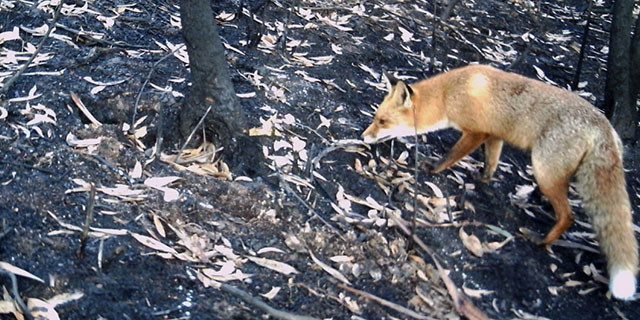

At a landscape-scale, species distributions are often poorly predicted by time-since-fire. I developed a conceptual model of the potential interactions between fire and other drivers of faunal occurrence (including predation), and then used non-parametric Bayesian networks to quantify these relationships for terrestrial native mammals. I found that critical-weight-range mammals were more likely to occur at long unburnt sites with high habitat complexity, and in wetter forest types. In contrast, large macropods preferred less complex habitats and younger or drier forest. Species distributions were generally more strongly associated with habitat complexity than time-since-fire or invasive predator occurrence. Yet, because Bayesian networks captured the relationships between proximal and distal drivers, models could effectively predict the distributions of most species using only mapped and remote-sensed data.

At a finer-scale, I used a before-after control-impact experiment to investigate the short-term effects of a prescribed fire on understorey vegetation cover, native mammal occurrence, and invasive predator occurrence and diet. Associations between species occurrences and vegetation cover in unburnt forest indicated that fire was likely to promote invasive predators but disadvantage small- and medium-sized native mammals. After the fire, there was a five-fold increase in invasive predator occurrence at burnt sites, relative to the control. Concurrently, red foxes increased their consumption of medium-sized native mammals, and selected more strongly for long-nosed bandicoots Perameles nasuta and short-beaked echidnas Tachyglossus aculeatus. The occurrence of several native mammals declined after the fire, but it was difficult to distinguish the effects of the fire from seasonal variation.

I used GPS-tracking collars to investigate whether forest-dwelling red foxes selected for human-modified habitats (including recently-burnt forest). There was substantial variation in fox behaviour, highlighting the importance of considering individual variation in habitat selection studies. At a broad-scale, however, red fox habitat selection tended to vary with proximity to the forest edge. Most foxes selected for human-modified habitats such as reservoirs, roads and forest-farmland edges in their fine-scale movements, particularly at night. Two foxes whose home-ranges overlapped a burn-block intensified their use of the block immediately after fire. Yet other nearby foxes showed little response, suggesting that fire responses are highly localised.

Finally, I used an agent-based simulation model to explore how changes in vegetation cover and predator abundance after fire could affect a critical-weight-range mammal. The model confirmed that fire and predation can have synergistically negative impacts on native mammal populations in burnt forest, and that local access to unburnt refuges substantially reduces these effects.

Invasive predators are highly opportunistic, wide-ranging and thoroughly integrated into this flammable forest ecosystem. Lethal control programs for foxes need to consider fox movement across land-tenures, and could selectively target habitat features such as roadsides, forest-farmland edges and recently-burnt forest. Habitat-based management approaches might also reduce invasive predator impacts on native mammals, for example by preserving dense vegetation in unburnt refuges, or removing anthropogenic resources that subsidise predator populations within forests. Evidence-based, integrated management of threatening processes is vital to conserving native biodiversity.

Thursday, 29 December 2016

Research, conservation and urban cat management in NZ

Kikillus, K. H., Chambers, G. K., Farnworth, M. J., & Hare, K. M. 2106. Research challenges and conservation implications for urban cat management in New Zealand. Pacific Conservation Biology.

Over the past 20 years, conservation efforts in New Zealand have moved from being concentrated in rural and isolated island locations, where exotic mammalian predators are often controlled, to begin to bring native fauna back to major cities. However, human–wildlife conflicts arise when conservation occurs in close proximity to cities. These are particularly intense when companion animals are involved either as potential predators or prey of high-value conservation animals. Within New Zealand, this conflict is particularly fraught around domestic cats (Felis catus) in the urban environment. Cats in New Zealand are recognised as major introduced predators of native fauna, but they also prey on small introduced predatory mammals. This dynamic causes much conflict between people with different attitudes towards animals; however, as yet, few studies have explored the role(s), either negative or positive, of urban cats in New Zealand. Here, we review current knowledge on domestic cats in urban New Zealand, identify gaps in knowledge and make suggestions for future research, which includes further social science research, citizen science-based research programs, market research, investigation into cat-management legislation, and more in-depth studies of cat diseases and zoonoses. These data are vital for informing the public and improving the management of urban cat populations, including mitigating conservation impacts. Urban ecologists will need to be versatile in the way they design and conduct experiments, exploiting multiple disciplines to both ensure scientific robustness, but also community and government support for uptake of results into management and legislation.

Saturday, 24 September 2016

Cats are a factor contributing to the collapse of mammal communities in N Australia

Hohnen R, Tuft K, McGregor HW, Legge S, Radford IJ, Johnson CN (2016) Occupancy of the Invasive Feral Cat Varies with Habitat Complexity. PLoS ONE 11(9): e0152520. https://doi.org/10.1371/journal.pone.0152520

The domestic cat (Felis catus) is an invasive exotic in many locations around the world and is thought to be a key factor driving recent mammal declines across northern Australia. Many mammal species native to this region now persist only in areas with high topographic complexity, provided by features such as gorges or escarpments. Do mammals persist in these habitats because cats occupy them less, or despite high cat occupancy? We show that occupancy of feral cats was lower in mammal-rich habitats of high topographic complexity. These results support the idea that predation pressure by feral cats is a factor contributing to the collapse of mammal communities across northern Australia. Managing impacts of feral cats is a global conservation challenge. Conservation actions such as choosing sites for small mammal reintroductions may be more successful if variation in cat occupancy with landscape features is taken into account.

Wednesday, 7 September 2016

Electronic boundary fence dont impair quality of life of cats

Kasbaoui, N., Cooper, J., Mills, D. S., & Burman, O. (2016). Effects of long-term exposure to an electronic containment system on the behaviour and welfare of domestic cats. PloS one, 11(9), e0162073.
Free-roaming cats are exposed to a variety of risks, including involvement in road traffic accidents. One way of mitigating these risks is to contain cats, for example using an electronic boundary fence system that delivers an electric ‘correction’ via a collar if a cat ignores a warning cue and attempts to cross the boundary. However, concerns have been expressed over the welfare impact of such systems. Our aim was to determine if long-term exposure to an electronic containment system was associated with reduced cat welfare. We compared 46 owned domestic cats: 23 cats that had been contained by an electronic containment system for more than 12 months (AF group); and 23 cats with no containment system that were able to roam more widely (C group). We assessed the cats’ behavioural responses and welfare via four behavioural tests (unfamiliar person test; novel object test; sudden noise test; cognitive bias test) and an owner questionnaire. In the unfamiliar person test, C group lip-licked more than the AF group, whilst the AF group looked at, explored and interacted more with the unfamiliar person than C group. In the novel object test, the AF group looked at and explored the object more than C group. No significant differences were found between AF and C groups for the sudden noise or cognitive bias tests. Regarding the questionnaire, C group owners thought their cats showed more irritable behaviour and AF owners thought that their cats toileted inappropriately more often than C owners. Overall, AF cats were less neophobic than C cats and there was no evidence of significant differences between the populations in general affective state. These findings indicate that an electronic boundary fence with clear pre-warning cues does not impair the long term quality of life of cats.

Saturday, 27 August 2016

Feral cats overlap with prey and competitors in primary and altered habitats

Bogdan, V., Jůnek, T., & Vymyslická, P. J. (2016). Temporal overlaps of feral cats with prey and competitors in primary and human-altered habitats on Bohol Island, Philippines. PeerJ, 4, e2288.

The vertebrate fauna of the Philippines, known for its diversity and high proportion of endemic species, comprises mainly small- to medium-sized forms with a few large exceptions. As with other tropical ecosystems, the major threats to wildlife are habitat loss, hunting and invasive species, of which the feral cat (Felis catus) is considered the most damaging. Our camera-trapping study focused on a terrestrial vertebrate species inventory on Bohol Island and tempo-spatial co-occurrences of feral cats with their prey and competitors. The survey took place in the Rajah Sikatuna Protected Landscape, and we examined the primary rainforest, its border with agricultural land, and rural areas in the vicinity of villages. Altogether, over 2,885 trap days we captured 30 species of vertebrates–10 mammals (including Sus philippensis), 19 birds and one reptile, Varanus cumingi. We trapped 81.8% of expected vertebrates. Based on the number of events, the most frequent native species was the barred rail (Gallirallus torquatus). The highest overlap in diel activity between cats and potential prey was recorded with rodents in rural areas (Δ = 0.62); the lowest was in the same habitat with ground-dwelling birds (Δ = 0.40). Cat activity was not recorded inside the rainforest; in other habitats their diel activity pattern differed. The cats’ activity declined in daylight in the proximity of humans, while it peaked at the transition zone between rainforest and fields. Both rodents and ground-dwelling birds exhibited a shift in activity levels between sites where cats were present or absent. Rodents tend to become active by day in cat-free habitats. No cats’ temporal response to co-occurrences of civets (Paradoxurus hermaphroditus and Viverra tangalunga) was found but cats in diel activity avoided domestic dogs (Canis lupus familiaris). Our first insight into the ecology of this invasive predator in the Philippines revealed an avoidance of homogeneous primary rainforest and a tendency to forage close to human settlements in heterogeneous habitats. A detailed further investigation of the composition of the cat’s diet, as well as ranging pattern, is still needed.

Monday, 18 July 2016

Domestic dogs as nest predators of Wilson’s plover in northeastern Brazil


Diniz, C. G., de Morais Magalhães, N. G., Guerreiro, D., Diniz, P. D. C. P., Paulo, D. C., Renato, F., ... & Diniz, C. W. P. (2016). Cães domésticos predadores de ninho de batuíra bicuda (Charadrius wilsonia) no nordeste brasileiro. Revista da Biologia, 16(1), 24-27. 

Although Wilson´s plovers (Charadrius wilsonia) are migratory, a resident population breeds in coastal northeastern Brazil and there population trend is described as decreasing by the IUCN Red List. Domestic dogs are a major predator of Wilson’s plover nests on an island in northeastern Brazil where dogs are kept to guard fishing equipment. Local fishermen, however, are motivated to protect the nests of shorebirds and when shown video recordings documenting nest predation acted quickly to remove dogs. We found that providing local residents with evidence about the causes of nest
predation could play an effective role in protecting bird populations.

Sunday, 17 July 2016

Implications for human-wolf conflict due to free-roaming domestic dogs predation on deer in southern Spain:

Duarte, J., García, F. J., & Fa, J. E. (2016). Depredatory impact of free-roaming domestic dogs on Mediterranean deer in southern Spain: implications for human-wolf conflict. Folia Zoologica, 65(2).

Feral domestic dogs are efficient wild ungulate hunters in many parts of the world. This has not been confirmed in Mediterranean ecosystems. However, if feral dogs can predate upon wild Mediterranean ungulates, they can also do so upon livestock. Therefore, to more realistically understand human-wolf conflict in areas where wolves and feral dogs overlap, the possible role of the latter taking domestic prey should be considered. During a 6-month study period, we carried out daily observations of a pack of mediumsized dogs, where they were the only large-bodied carnivore capable of killing ungulates in a fenced estate in southern Spain. The estate contained sizeable populations of red deer, fallow deer and mouflons, but no livestock. We described feral dog predation patterns and depredatory impact. We found that dogs predated upon a total of 57 ungulates; fallow deer (47 %), red deer (37 %), and mouflon (16 %). Red deer adults were the least frequent prey, but dogs killed significantly more females and fawns of red and fallow deer. Mouflons were attacked indistinctly. Our results suggest that dogs in our study exhibited a kill pattern similar to Iberian wolves. Therefore, in areas where wolves and feral dogs coexist, a significant proportion of livestock predation could be falsely attributed to the wild canid. In addition, the presence of feral dogs may be a cause of risk in big game hunting estates.

Sunday, 3 July 2016

Ecological impact of free-ranging dogs in Poland

Wierzbowska, I. A., Hędrzak, M., Popczyk, B., Okarma, H., & Crooks, K. R. (2016). Predation of wildlife by free-ranging domestic dogs in Polish hunting grounds and potential competition with the grey wolf. Biological Conservation, 201, 1-9.

Although the domestic dog (Canis familiaris) is a ubiquitous exotic predator that can detrimentally affect natural environments, studies on their ecological impact are relatively scarce, particularly at a national scale. We exploited data derived from Polish Hunting Association reports to provide a national evaluation of rural free-ranging dogs in Poland. Our results demonstrate that free-ranging dogs are widespread and abundant, frequently killing wildlife and livestock in Poland and likely exerting intraguild competition with native carnivores such as grey wolves (Canis lupus). On average, hunting club records estimate that over 138,000 rural free-ranging dogs occurred annually in hunting grounds. In addition, nearly 3000 free-ranging greyhounds and their mixed breeds occurred annually on hunting grounds, although greyhound hunting has been banned in Poland and they are legally required to be restrained within fencing. On average, over 33,000 wild animals and 280 livestock were killed by free-ranging dogs on Polish hunting grounds annually. The number of both wild animals and livestock killed by dogs were strongly and positively correlated with the numbers of rural free-ranging dogs recorded on hunting grounds, reflective of their predation pressure. Also, the number of wild animals killed by dogs was positively correlated with estimates of population sizes and harvest levels of wildlife, reflective of prey availability. Dog predation, in conjunction with harvest by humans, may cause unsustainable off-take rates of some game species. Grey wolves, documented within 39 of the 49 Hunting Districts, ate similar prey as dogs, including ungulates and livestock, and killed dogs on hunting grounds, suggesting both resource and interference competition between these sympatric canids. This comprehensive analysis provides important information about the ecological impact of free-ranging dogs and recommendations for alternative legislative and management measures to control their impacts.


Sunday, 5 June 2016

Modelling the population control of the domestic cat from an island

Lessa, I. C. M., & Bergallo, H. G. (2012). Modelling the population control of the domestic cat: an example from an island in Brazil. Brazilian Journal of Biology, 72(3), 445-452.

The domestic cat is an invasive species that often causes great impacts where introduced due to its high predatory and reproductive potential, especially on islands. In this study, carried out on Ilha Grande (RJ, Brazil), we aimed to: i) estimate the population density of domestic cats, ii) calculate the number of animals preyed upon annually by domestic cats, and iii) evaluate the efficiency of methods to control the cat population. We used the Vortex program to project the population growth of domestic cats in fifty years, and simulated different scenarios of population control (without control, castration, spay and harvest). Population density of owned cats was 662 cats/km2. The annual predation rate was 1.97 prey animals/cat which is an average of 1497.96 prey/year. The population would only be reduced if 70% of females were spayed or removed annually. Measures to control the domestic cat population must be undertaken urgently, since uncontrolled growth of this predator has the potential to seriously impact the biodiversity of Ilha Grande.

______________________

O gato doméstico é uma espécie invasora que frequentemente causa grandes impactos onde é introduzido, em razão do seu alto potencial predatório e reprodutivo, especialmente em ilhas. Com este estudo realizado na Ilha Grande-RJ, Brasil, tivemos como objetivos: i) estimar a densidade populacional de gatos domésticos; ii) calcular o número de animais predados anualmente por gatos domésticos, e iii) estimar a eficiência de métodos para o controle da população de gatos. Nós utilizamos o programa Vortex para projetar o crescimento da população de gatos em 50 anos e simulamos diferentes cenários de controle populacional: sem controle, castração, esterilização de fêmeas e remoção de indivíduos. A densidade populacional de gatos que possuem donos foi de 662 gatos/km2. A taxa anual de predação foi de 1,97 animais predados/gato, ou seja, uma média de 1497,96 presas/ano. A população de gatos pode ser reduzida apenas se no mínimo 70% das fêmeas forem esterilizadas ou removidas anualmente. Medidas para o controle populacional de gatos domésticos devem ser tomadas com urgência, uma vez que o crescimento descontrolado da população desse predador tem o potencial de causar graves impactos à biodiversidade da Ilha Grande.

Wednesday, 1 June 2016

Feral dog impact on a urban fragment of Atlantic forest in Brazil

Galetti, M. & I. Sazima. 2006 . Impacto de cães ferais em um fragmento urbano de Floresta Atlântica no sudeste do Brasil.  Natureza & Conservação 4 (1): 58-63

Os cães ferais domésticos são um dos principais predadores da vida selvagem nativa em áreas
protegidas em todo o mundo. Entretanto, o número de presas caçadas por cães ferais não é registrado
de maneira precisa. Foram encontradas, em um fragmento urbano de 250 hectares de Floresta
Atlântica na Região Sudeste do Brasil, 46 carcaças de no mínimo 12 espécies de vertebrados, caçadas
pelos cães ao longo de 44 meses. Os cães ferais não demonstraram qualquer seleção aparente em
relação às diferentes espécies de presa, matando desde veados a pequenos sapos. Os mamíferos
foram a presa mais freqüentemente encontrada (75%). Nossos dados indicam que os cães ferais têm
um grande impacto sobre a vida selvagem da Floresta Atlântica, especialmente em áreas onde os
animais silvestres precisam mover-se entre os fragmentos florestais. Os programas de erradicação,
embora controversos, são a única maneira de reduzir a predação da vida selvagem por cães ferais.

Feral dogs are one of the main predators of native wildlife inside protected areas all around the world. Nevertheless, the number of preys hunted by feral dogs has not been precisely recorded. In a 250 hectares Atlantic forest fragment in Southeast Brazil, 46 carcasses have been found from at least 12 vertebrate species, hunted by feral dogs along 44 months. Feral dogs didn't have any apparent selection related to their different preys, killing from deer to small toads. Mammals were the most frequently found preys (75%). Our data show that feral dogs have a great impact on wildlife in the Atlantic forest, especially in areas where wild animals have to move between forest fragments. Eradication programs, even if controversial, are the only way to reduce predation of wildlife by feral dogs.

Predation of domestic dogs on capuchin monkey

Oliveira, V.B. de; A. M. Linares; G.L. C. Corrêa & A. G. Chiarello 2008. Predation on the black capuchin monkey Cebus nigritus (Primates: Cebidae) by domestic dogs Canis lupus familiaris (Carnivora: Canidae), in the Parque Estadual Serra do Brigadeiro, Minas Gerais, Brazil.Rev. Bras. Zool., 25 (2)  

Predation on an adult male black capuchin monkey, Cebus nigritus (Goldfuss, 1809) by two domestic dogs was observed in the Parque Estadual Serra do Brigadeiro, in the Atlantic Forest of southeastern Minas Gerais. Predation occurred in an area of well preserved native forest 800 m from the nearest forest edge. This is the first confirmed record of predation by domestic dogs in this reserve, yet data from a study in the same area indicates that the domestic dog is the most frequently recorded mammal species, which suggests that it is common in the area. The few published reports indicate that this problem occurs in other conservation units in Brazil and should, therefore, be treated with more rigor by the environmental agencies.
--------------
A predação de um macho adulto de macaco-prego, Cebus nigritus (Goldfuss, 1809) por dois cães-domésticos é relatada no interior do Parque Estadual da Serra do Brigadeiro, localizado na Mata Atlântica do sudeste de Minas Gerais. A observação foi registrada em local de mata nativa bem preservada, a cerca de 800 m da borda mais próxima da reserva. Embora este seja o primeiro registro confirmado de predação por cão doméstico nesta unidade de conservação, dados de um estudo sobre a mastofauna local, usando parcelas de pegadas, indicam que o cão-doméstico é a espécie de mamífero mais freqüentemente registrada, sugerindo que sua presença é constante e amplamente distribuída na área. Os poucos relatos existentes na literatura indicam que este problema está presente em outras unidades de conservação e deveria, portanto, ser tratado com maior rigor pelas agências ambientais.

Thursday, 26 May 2016

Cat predation on wildlife in Haute Savoie, France

Vuagnat-Kolter, M. Prédation du chat domestique, Felis catus (linnaeus, 1758) sur la faune sauvage, dans une commune péri-urbaine de Haute-Savoie (74). Le Bièvre, 22.

Le chat domestique, Felis catus (Linnaeus, 1758) est une espèce invasive, un redoutable prédateur et un animal de compagnie qui ne dépend pas de la disponibilité des proies pour survivre. Ces trois aspects associés à l’importante densité de chats font de sa prédation sur la faune sauvage, un facteur important dans le fonctionnement des écosystèmes, qui peut entraîner localement le déclin d’espèces
indigènes. La présente étude a eu lieu en Haute-Savoie dans la commune de Feigères. Toutes les proies  ramenées au domicile par 44 chats domestiques ont été identifiées sur une durée de 3 mois. Un total de 163 proies ont été tuées (86 micromammifères, 69 oiseaux, 8 reptiles) pour une moyenne de 3,7 proies par chat. Neuf espèces d’oiseaux ont été identifiées, parmi lesquelles le moineau domestique (58 %) est le plus représentée devant le merle noir (13  %). Le moineau domestique est placé en première position car il est commensal de l’homme et vit dans toutes sortes de zones modifiées par celui-ci, notamment les jardins. L’extrapolation des résultats à l’échelle de la commune montre que 2068 proies dont 878 oiseaux ont été potentiellement tuées sur trois mois entre mi-avril et mi-juillet. Le suivi télémétrique réalisé sur une durée de cinq semaines sur cinq chats, a permis de démontrer que les chats sont inactifs la majeur partie du temps (77 %) et que leurs périodes d’activité privilégiées sont l’aube et le crépuscule, lorsque les températures sont les plus basses de la journée. Le domaine vital des chats est relativement petit, ils n’effectuent pas de grandes distances et occupent principalement leur foyer ainsi que le jardin attenant à celui-ci.


The domestic cat Felix catus (Linn. 1758) is an invasive species, a formidable predator and a pet which is not dependent on the availability of prey for its survival. These three elements, plus the high density of cats, make its preying on wildlife a major factor in the functioning of ecosystems. This can lead to a decline in indigenous species locally. The present study took place in the Haute-Savoie department (France), in the commune of Feigères. All the prey brought home by 44 domestic cats were identified over a period of 3 months. There were 163 prey items in all (86 small mammals, 69 birds and 8 reptiles) for an average of 3.7 prey items per cat. 9 species of bird were identified, among which the House Sparow was the most numerous (58  %) followed by Blackbird (13  %). The House Sparrow came first because it is closely associated with man and lives in all sorts of places modified by him, notably gardens. Extrapolating the results to the scale of the commune produces 2068 prey items including 878 birds which were potentially killed over the three-month period from mid-April to mid-July. Radiotracking carried out on 5 cats over 5 weeks showed that cats are inactive most
(77  %) of the time. Their preferred periods of activity are dawn and dusk when the day temperatures are at their lowest. The cats’ territories are relatively small, not covering large distances, and mainly
occupy their homes and the adjacent gardens.

Wednesday, 13 April 2016

An international comparison of the attitudes of urban people regarding predation by pet cats

Hall, C. M., Adams, N. A., Bradley, J. S., Bryant, K. A., Davis, A. A., Dickman, C. R., ... & Pollock, K. H. (2016). Community Attitudes and Practices of Urban Residents Regarding Predation by Pet Cats on Wildlife: An International Comparison. PLoS One, 11(4), e0151962.

International differences in practices and attitudes regarding pet cats' interactions with wildlife were assessed by surveying citizens from at least two cities in Australia, New Zealand, the UK, the USA, China and Japan. Predictions tested were: (i) cat owners would agree less than non-cat owners that cats might threaten wildlife, (ii) cat owners value wildlife less than non-cat owners, (iii) cat owners are less accepting of cat legislation/restrictions than non-owners, and (iv) respondents from regions with high endemic biodiversity (Australia, New Zealand, China and the USA state of Hawaii) would be most concerned about pet cats threatening wildlife. Everywhere non-owners were more likely than owners to agree that pet cats killing wildlife were a problem in cities, towns and rural areas.
Cat husbandry practices in different countries. (a) Percentage of households that own one, two or more than two cats (b) Percentage of cats kept in different conditions of confinement (c) Percentage of desexed cats. (d) Percentage of cats that have ever caught vertebrate prey.
Agreement amongst non-owners was highest in Australia (95%) and New Zealand (78%) and lowest in the UK (38%). Irrespective of ownership, over 85% of respondents from all countries except China (65%) valued wildlife in cities, towns and rural areas. Non-owners advocated cat legislation more strongly than owners except in Japan. Australian non-owners were the most supportive (88%), followed by Chinese non-owners (80%) and Japanese owners (79.5%). The UK was least supportive (non-owners 43%, owners 25%). Many Australian (62%), New Zealand (51%) and Chinese owners (42%) agreed that pet cats killing wildlife in cities, towns and rural areas was a problem, while Hawaiian owners were similar to the mainland USA (20%).

Percentage agreement of cat owners (dark blue) and non-owners (light blue) in each country to eight survey items: (a) There is a need for cat legislation (b) All cats should be kept in at night time (c) Cats should be kept on their owner's property at all times (d) It is important to have wildlife in cities, towns and rural areas (e) Pet cats killing wildlife in cities, towns and rural areas is a serious problem (f) Pet cats on farms are harmful to wildlife (g) Pet cats in nature reserves are harmful to wildlife (h) Except for a cat owned by a breeder, all cats should be desexed.
Thus high endemic biodiversity might contribute to attitudes in some, but not all, countries. Husbandry practices varied internationally, with predation highest where fewer cats were confined. Although the risk of wildlife population declines caused by pet cats justifies precautionary action, campaigns based on wildlife protection are unlikely to succeed outside Australia or New Zealand. Restrictions on roaming protect wildlife and benefit cat welfare, so welfare is a better rationale.

Sunday, 3 April 2016

Predation by feral cats key to the failure of a long-term reintroduction of the western barred bandicoot

Short, J. (2016). Predation by feral cats key to the failure of a long-term reintroduction of the western barred bandicoot (Perameles bougainville). Wildlife Research, 43(1), 38-50.

Context: Reintroduction of endangered species potentially places them back in contact with putative factors of historical decline, inadvertently providing the opportunity to evaluate their impact.

Aims: To monitor the long-term progress of a population of western barred bandicoot reintroduced to mainland Australia and to assess factors involved in its eventual local extinction.

Methods: Bandicoots were reintroduced from offshore Dorre Island to the nearby mainland peninsula of Heirisson Prong in 1995. The narrow neck of the peninsula was fenced to exclude foxes and feral cats from a 1200 ha area, but the area was subject to periodic incursions. There was parallel management of a confined but unsupported population in an in situ 17-ha predator refuge. Bandicoots were assessed for abundance, body condition and reproduction two to four times annually between 1995 and 2010. In addition, perceived threatening processes (drought, disease and the abundance of cats, foxes and rabbits) were monitored.

Key results: Bandicoots became well established at the site, spreading to all available habitat. Numbers fluctuated strongly, peaking at ~250 in 1999 and then declining to apparent local extinction (with subsequent re-establishment from the refuge), and at ~470 animals in 2006, followed again by extinction.

Conclusions: Predation by feral cats was implicated as the primary cause of both free-range extinctions and the eventual elimination of all bandicoots from the predator refuge. Other contributing factors in one or more of the declines were a reduction in reproduction and recruitment in bandicoots during a one-in-100-year drought, the impact of overabundant European rabbits on vegetation used by bandicoots for nesting shelter and brief fox incursions at key times.

Implications: Existing methods of control of feral cats are rendered ineffective in the presence of abundant and diverse native fauna and abundant exotic species (particularly European rabbits). In addition, episodic drought in arid Australia intensifies the impact of predation by restricting reproduction of prey species. These factors hamper the attempts of conservation managers to re-establish vulnerable species at sites other than those with the infrastructure and/or management intensity to largely exclude exotic predators (and preferably European rabbits) over the long-term.

The feral cats as a factor threatening the global biodiversity

Kamieniak, J., Mazurkiewicz, T., & Tietze, M. (2016). The feral cats as a factor threatening the global biodiversity. Życie Weterynaryjne, 91(2), 96-98.

The following article is a concise presentation of the domestic cat as a predator, which lives in close proximity to humans and has the ability to self-manage in different environments. The authors refer to a significant real global problem which is the growing number of homeless and feral cats. These animals represent a serious threat to biodiversity in areas where their number is still growing. Numerous studies on this issue show a significant decrease of certain small mammals and birds population size, since they are often the prey target for feral cats. This problem is especially important when endangered species, protected by law, are considered. Cats, which have become independent from human care function well in the environments where they were previously absent. Cats living in the wild, but near human households, pose also health risk for humans and other animal species, as carriers of zoonotic infectious agents. There are various approaches to solve the problem of feral cats, but they are often opposed by the public opinion.

Thursday, 24 March 2016

Are Novel Invaders Necessarily Facing Naïve Native Species on Islands?

Gérard, A., Jourdan, H., Millon, A., & Vidal, E. (2016). Knocking on Heaven's Door: Are Novel Invaders Necessarily Facing Naïve Native Species on Islands?. PloS one, 11(3), e0151545.

The impact of alien predator species on insular native biota has often been attributed to island prey naïveté (i.e. lack of, or inefficient, anti-predator behavior). Only rarely, however, has the concept of island prey naïveté been tested, and then only a posteriori (i.e. hundreds or thousands of years after alien species introduction). The presence of native or anciently introduced predators or competitors may be crucial for the recognition and development of adaptive behavior toward unknown predators or competitors of the same archetype (i.e. a set of species that occupy a similar ecological niche and show similar morphological and behavioral traits when interacting with other species).
Here, we tested whether two squamates endemic to New Caledonia, a skink, Caledoniscincus austrocaledonicus, and a gecko, Bavayia septuiclavis, recognized and responded to the odor of two major invaders introduced into the Pacific islands, but not yet into New Caledonia. We chose one predator, the small Indian mongoose Herpestes javanicus and one competitor, the cane toad Rhinella marina, which belong respectively to the same archetype as the following two species already introduced into New Caledonia in the nineteenth century: the feral cat Felis catus and the golden bell frog Litoria aurea. Our experiment reveals that geckos are naïve with respect to the odors of both an unknown predator and an unknown competitor, as well as to the odors of a predator and a competitor they have lived with for centuries. In contrast, skinks seem to have lost some naïveté regarding the odor of a predator they have lived with for centuries and seem “predisposed” to avoid the odor of an unknown potential competitor. These results indicate that insular species living in contact with invasive alien species for centuries may be, although not systematically, predisposed toward developing adaptive behavior with respect to species belonging to the same archetype and introduced into their native range.
Related Posts Plugin for WordPress, Blogger...