Les hommes ont oublié cette vérité. Mais tu ne dois pas l'oublier, dit le renard. Tu deviens responsable pour toujours de ce que tu as apprivoisé.
Le Petit Prince, chap. 21
Showing posts with label South Africa. Show all posts

Saturday, 3 January 2015

A survey of feline leukaemia virus infection of domestic cats from selected areas in Harare

Muchaamba, F., Mutiringindi, T. H., Tivapasi, M. T., Dhliwayo, S., & Matope, G. (2014). A survey of feline leukaemia virus infection of domestic cats from selected areas in Harare, Zimbabwe. Journal of the South African Veterinary Association, 85(1), 6-pages.

A cross-sectional study was conducted to detect the feline leukaemia virus (FeLV) p27 antigen and to determine risk factors and the haematological changes associated with infection in domestic cats in Zimbabwe. Sera were collected for detection of the p27 antigen, urea, creatinine, alanine aminotransferase and gamma-glutamyl transferase levels, whilst whole blood was collected for haematology. FeLV p27 antigen was detected using a rapid enzyme-linked immunosorbent assay (ELISA) test kit. Data on risk factors were analysed using a logistic regression model. Of the 100 cats tested, 41% (95% CI: 31.19% - 50.81%) (41/100) were positive for the FeLV p27 antigen. Sex and health status of cats were not significantly (p > 0.05) associated with infection. Intact cats (OR = 9.73), those living in multicat housing (OR = 5.23) and cats that had access to outdoor life (OR = 35.5) were found to have higher odds of infection compared with neutered cats, those living in single-cat housing, and without access to outdoor life, respectively. Biochemistry and haematology revealed no specific changes. The results showed that FeLV infection was high in sampled cats, providing evidence of active infection. Thus, it would be prudent to introduce specific control measures for FeLV infection in Zimbabwe.

Thursday, 1 January 2015

Genetic analysis on hybridization between domestic cats and African wildcats

Le Roux, J. J., Foxcroft, L. C., Herbst, M., & MacFadyen, S. (2014). Genetic analysis shows low levels of hybridization between African wildcats (Felis silvestris lybica) and domestic cats (F. s. catus) in South Africa. Ecology and Evolution.

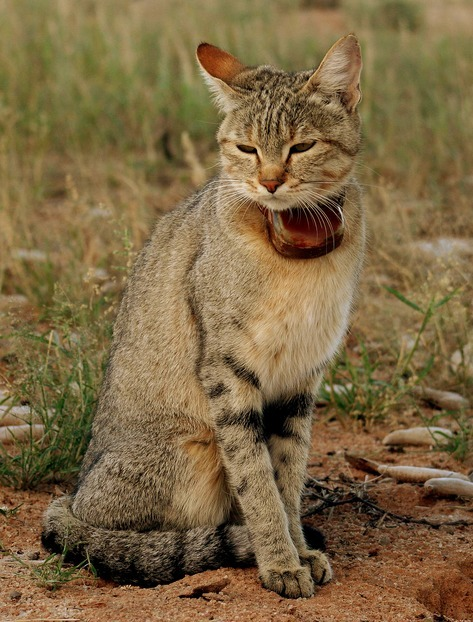
Figure 1. African wildcat (Felis silvestris lybica) in
Kgalagadi Transfrontier Park (South Africa/Botswana)
(Photo M. Herbst).
Hybridization between domestic and wild animals is a major concern for biodiversity conservation, and as habitats become increasingly fragmented, conserving biodiversity at all levels, including genetic, becomes increasingly important. Except for tropical forests and true deserts, African wildcats occur across the African continent; however, almost no work has been carried out to assess its genetic status and extent of hybridization with domestic cats. For example, in South Africa it has been argued that the long-term viability of maintaining pure wildcat populations lies in large protected areas only, isolated from human populations. Two of the largest protected areas in Africa, the Kgalagadi Transfrontier and Kruger National Parks, as well as the size of South Africa and range of landscape uses, provide a model situation to assess how habitat fragmentation and heterogeneity influences the genetic purity of African wildcats. Using population genetic and home range data, we examined the genetic purity of African wildcats and their suspected hybrids across South Africa, including areas within and outside of protected areas. Overall, we found African wildcat populations to be genetically relatively pure, but instances of hybridization and a significant relationship between the genetic distinctiveness (purity) of wildcats and human population pressure were evident.

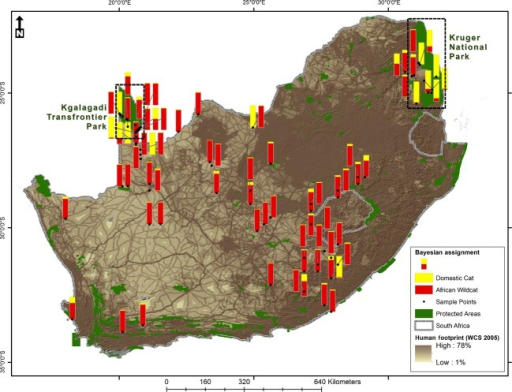
Figure 2. Distribution of collection sites of cats included in this study across
South Africa in relation to formal protected areas and human footprint pressure
The genetically purest African wildcats were found in the Kgalagadi Transfrontier Park, while samples from around Kruger National Park showed cause for concern, especially combined with the substantial human population density along the park's boundary. While African wildcat populations in South Africa generally appear to be genetically pure, with low levels of hybridization, our genetic data do suggest that protected areas may play an important role in maintaining genetic purity by reducing the likelihood of contact with domestic cats. We suggest that approaches such as corridors between protected areas are unlikely to remain effective for wildcat conservation, as the proximity to human settlements around these areas is projected to increase the wild/domestic animal interface. Thus, large, isolated protected areas will become increasingly important for wildcat conservation and efforts need to be made to prevent introduction of domestic cats into these areas.


 Read more on domestic wild feline hybridisation with domestic cat

Monday, 10 November 2014

Cat predation assessed through kitty-cams

Morling, F. (2014). Cape Town's cats: reassessing predation through kitty-cam. Mini Thesis.

Domestic cats (Felis catus) are abundant generalist predators that exploit a wide range of prey within and adjacent to the urban matrix. Cats are known to have contributed to the extinction and endangerment (mostly on islands) of a number of indigenous species, including birds, small mammals, reptiles and amphibians. Most research on this important topic has been carried out in the developed world, predominantly in Australia, New Zealand, the U.K., the U.S. and Canada with only four studies carried out in Africa. Of these, two studies in Cape Town suggest that domestic cats have a big impact on wildlife but these studies may have underestimated predation because they failed to account for the proportion of prey not returned to participants’ homes. In this study I used kitty-cams in an attempt to provide a prey correction factor for urban cats in Cape Town, South Africa. I investigated hunting of wildlife by free-ranging domestic cats in Newlands, a suburb of Cape Town, South Africa over 5 weeks in 2013. I monitored 13 cats (6 deep-urban and 7 urban-edge) by questionnaire survey, asking cat owners to record all prey items returned by their cats. A total of 43 prey items were returned, 42% of which were small mammals, 30% invertebrates, 12% reptiles, 9% amphibians and 7% birds. Combining these data with two similar survey studies carried out in Cape Town I estimated that a total of 118 cats caught an average of 0.04 prey items per cat per day. Ten of the 13 cats were also monitored for 3 weeks using kitty-cam video cameras. Participating cats wore a video camera and all activity was analysed for prey captures and behavioural activity patterns.

Monday, 6 October 2014

Management recommendations for feral cat within an urban conservancy in South Africa

Tennent, J., Downs, C.T., & Bodasing, M. 2009. Management Recommendations for Feral Cat (Felis catus) Populations Within an Urban Conservancy in KwaZulu-Natal, South Africa. South African Journal of Wildlife Research. 39(2): 137–142.

The ability of cats (Felis catus) to colonize most land habitats worldwide led to an increasing number of feral cat populations in many areas where food resources are easily available. High densities of feral cats in urban areas, particularly in conservancies, have the potential to impact negatively on both human and local wildlife populations. Of particular interest was the Howard College Campus of the University of KwaZulu-Natal, a registered conservancy where there are differing opinions concerning the resident feral cat population. Consequently methods of controlling feral cat populations and the implications of these methods were reviewed. Despite various methods of feral cat population control existing there are two basic categories: either eradication or reproductive regulation. It is suggested that to control the feral cat population effectively in this urban conservancy, a suitable and ongoing sterilization programme, that is run in conjunction with a feral cat feeding programme, needs to be Implemented. Both programmes need to be long-term and overseen by management. The feral cat population needs to be maintained at a level that allows the lowest migration rate into the conservancy, as well as a predation rate that will not negatively affect the resident wildlife populations. This may require some removal of feral cats at the start of a programme. Whatever management actions are followed, a monitoring programme must be put in place to document how effective the actions are.

Thursday, 5 June 2014

The demography of free-roaming dog populations and applications to disease and population control

Morters, M. K., McKinley, T. J., Restif, O., Conlan, A. J. K., Cleaveland, S., Hampson, K.,
Whay, 
H. R , Damriyasa, I M.  & Wood, J. L. N. (2014). The demography of free‐roaming dog populations and applications to disease and population control. Journal of Applied Ecology.


Understanding the demography of domestic dog populations is essential for effective disease control, particularly of canine-mediated rabies. Demographic data are also needed to plan effective population management. However, no study has comprehensively evaluated the contribution of demographic processes (i.e. births, deaths and movement) to variations in dog population size or density, or determined the factors that regulate these processes, including human factors.

We report the results of a three-year cohort study of domestic dogs, which is the first to generate detailed data on the temporal variation of these demographic characteristics. Two communities were monitored at each study site in rabies-endemic areas and where the majority of dogs were free-roaming: Bali, Indonesia and Johannesburg, South Africa. None of the four communities had been engaged in any dog population management interventions by local authorities or animal welfare organizations. All identified dogs in the four communities were monitored individually throughout the study.

We observed either no population growth or a progressive decline in population size during the study period. There was no clear evidence that population size was regulated through environmental resource constraints. Rather, almost all of the identified dogs were owned and fed regularly by their owners, consistent with population size regulated by human demand. Finally, a substantial fraction of the dogs originated from outside the population, entirely through the translocation of dogs by people, rather than from local births. These findings demonstrate that previously reported growth of dog populations is not a general phenomenon, and challenge the widely held view that free-roaming dogs are unowned and form closed populations.

Synthesis and applications. These observations have broad implications for disease and population control. The accessibility of dogs for vaccination and evaluation through owners and the movement of dogs (some of them infected) by people will determine the viable options for disease control strategies. The impact of human factors on population dynamics will also influence the feasibility of annual vaccination campaigns to control rabies and population control through culling or sterilisation. The complex relationship between dogs and people is critically important in the transmission and control of canine-mediated rabies. For effective management, human factors must be considered in the development of disease and population control programmes.


Sunday, 23 February 2014

Cats on Dassen Island

Apps, P. 1984. Cats on Dassen Island. Acta Zool. Fennica, 172: 115-116.

Dassen Island, a small island off the west coast of South Africa, is an important nesting site for sea birds. Introduced mammals include Felis catus and Oryctolagus cuniculus. Studies on the ecological impact of the feral cat population showed that birds and rabbits contributed almost equally to the diet of the cats, but that most of the birds were scavenged, so that the impact of cat predation on their populations was insignificant, while rabbits were hunted and the effect may have been ecologically important. The cats' ecological role was influenced strongly by their behaviour, which must be considered in the planning of conservation or control measures.

Tuesday, 4 February 2014

Eradication of cats from Dassen island

Cooper, J. & B.M. Dyer. 2013. The eradication of feral cats from Dassen Island: a first for Africa? Aliens 33: 35-37.

Feral domestic cat Felis silvestris catus where eradicated from South Africa's Dassen Island in March 2002, following three decades of intermittent control and eradication attemps. Once the last few cats are removed from nearby Robben island, all South African islands will be free of this alien predator. Freeing Dassen islands of cats appears to be the first such succeed for the African Continent as a region.


Tuesday, 14 January 2014

Feral cats in a urban conservancy in South Africa

Tennent, J., & Downs, C. T. (2008). Abundance and home ranges of feral cats in an urban conservancy where there is supplemental feeding: a case study from South Africa. African Zoology, 43(2), 218-229.

There is much debate surrounding the impact of feral cats (Felis catus) on wildlife. Conservancies are usually areas where indigenous flora and fauna are protected and aliens excluded or managed. The University of KwaZulu-Natal's Howard College campus (HCC) is an urban conservancy containing feral cats that are presently not managed, and little is known about their ecology and behaviour. Consequently a feral cat population census was conducted, and their home range investigated. Estimates of the overall campus feral cat population numbers ranged between 23.4–40.0 cats/km2  with a minimum of 55 identified as resident. They were not randomly distributed in the study area, with spacing patterns being related to resource availability. Home range area and core distribution of eight radio-collared cats were determined over 13 months. Total home range areas were relatively small, with considerable overlap between them. Home ranges were clustered in areas with permanent feeding stations and these were also within the cats' core ranges. Supplemental food resources appear to have a major influence on numbers, home and core range area, and behavior of cats. It is clear that cat densities grow to high levels with reliable and abundant food supply and only ad hoc sterilization. This has implications for their management in the HCC urban conservancy.

Thursday, 26 September 2013

Feral cats and dogs among the most abundant IAS in South African National Parks

Spear, D., Foxcroft, L. C., Bezuidenhout, H., & McGeoch, M. A. (2013). Human population density explains alien species richness in protected areas. Biological Conservation, 159: 137-147.

Understanding the drivers of biological invasions, across taxa and regions, is important for designing appropriate management interventions. However there has been no work that has examined potential drivers of both plant and animal invasions, for both species considered to be aliens and those that are invasive. We use South Africa’s national park system (19 national parks, throughout South Africa and covering ∼39,000 km2  as a model to test the generality of predictors of alien species richness in protected areas. We also compare the predictors of alien versus invasive species richness, and alien plant versus alien animal species richness. Species were classified as alien, invasive (having known negative impact on biodiversity) or extralimital, using standard definitions. Potential predictors (numbers of years since the park was proclaimed and since new land was acquired, park area, data availability, human population density in the vicinity of the park, number of roads, number of rivers, indigenous plant species richness and normalised difference vegetation index) of the number of alien and invasive species in national parks were examined for plants and animals using generalised linear models. Human population density surrounding parks was a significant and strong predictor of numbers of alien and invasive species across plants and animals. The role of other predictors, such as NDVI and park age, was inconsistent across models. Human population density has emerged here as an important predictor of alien species richness in protected areas across taxa, providing a basis for guidelines on where to focus surveillance and eradication efforts.

Saturday, 15 June 2013

TNR needs reaching 90% of the population to be effective

Jones, A. L., & Downs, C. T. (2011). Managing feral cats on a university's campuses: how many are there and is sterilization having an effect?. Journal of Applied Animal Welfare Science, 14(4), 304-320.

Worldwide domestic and feral cat (Felis catus) numbers have increased. Concerns regarding high populations of feral cats in urban areas include wildlife predation, public nuisance, and disease. This study aimed to estimate the size of the feral cat population on 5 campuses of the University of KwaZulu-Natal, South Africa, to determine whether sterilization has an effect and to make management recommendations. The study used both the total count and mark-recapture methods to estimate the feral cat population on each campus. The study chose a noninvasive method of taking photographs to “mark” individuals and record those who were sterilized. The study estimated a total of 186 cats on all campuses and density at 161 cats/ km2  There was a negative relationship between sterilization and numbers. Sites with higher sterilization showed a lower proportion of younger cats. At the average sterilization of 55%, the population, according to predictions, would remain stable at fecundity, survival, and immigration rates reported by cat caretakers. However, caretakers underestimated cat abundance by 7 ± 37 SD%. Caretakers' feral cat sterilization and feeding programs appear to provide a service to the university community. Key management recommendations were to increase sterilization to 90% to reduce the population over the long term and to raise funds to support the costs incurred by voluntary cat caretakers.

Saturday, 6 April 2013

Subsidies influence on feral cat distribution and abundance

Tennent, J. & C.T. Downs. 2008. Abundance and home ranges of feral cats in an urban conservancy where there is supplemental feeding: a case study from South Africa. African Zoology 43(2):218-229.


There is much debate surrounding the impact of feral cats (Felis catus) on wildlife. Conservancies are usually areas where indigenous flora and fauna are protected and aliens excluded or managed. The University of KwaZulu-Natal's Howard College campus (HCC) is an urban conservancy containing feral cats that are presently not managed, and little is known about their ecology and behaviour. Consequently a feral cat population census was conducted, and their home range investigated. Estimates of the overall campus feral cat population numbers ranged between 23.4–40.0 cats/kmwith a minimum of 55 identified as resident. They were not randomly distributed in the study area, with spacing patterns being related to resource availability. Home range area and core distribution of eight radio-collared cats were determined over 13 months. Total home range areas were relatively small, with considerable overlap between them. Home ranges were clustered in areas with permanent feeding stations and these were also within the cats' core ranges. Supplemental food resources appear to have a major influence on numbers, home and core range area, and behavior of cats. It is clear that cat densities grow to high levels with reliable and abundant food supply and only ad hoc sterilization. This has implications for their management in the HCC urban conservancy.

Monday, 3 December 2012

Cat eradication on Marion island

Bester, M.N., Bloomer, J.P., van Aarde, R.J., Erasmus B.H., van Rensberg P.J.J., Skinner J.D., Howell P.G. & Naude T.W. 2002. A review of the successful eradication of feral cats from sub-Antarctic Marion Island, Southern Indian Ocean. South African Journal of Wildlife Research, 32, 65-73.

This paper reviews the history of the feral cat eradication programme on sub-Antarctic Marion Island based on unpublished minutes of meetings, reports, letters, theses and published scientific papers; and reflects on the outcome of the eradication campaign. The 19-year programme comprised seven phases, commencing with a description of the effect of the cats on the Marion Island ecosystem, the characteristics of the cat population and the formulation of a management policy (phase 1: 1974–1976). Methods for control were selected and preparations were made for the implementation of the primary control measure, biological control with the feline panleucopaenia virus (phase 2: 1976/77). The virus was released in 1977 (phase 3: 1977), followed by the determination of its effects (phase 4: 1977–1980). Monitoring of the effects of the virus continued, and the secondary control measure of hunting at night was tested (phase 5: 1981–1983). Full-scale implementation of hunting and continued monitoring of the effects of both the disease and hunting followed (phase 6: 1986–1989). The inclusion of intensive trapping and poisoning as tertiary control measures culminated in the final eradication of cats from Marion Island in 1991 (phase 7: 1989–1993).


Related Posts Plugin for WordPress, Blogger...