Les hommes ont oublié cette vérité. Mais tu ne dois pas l'oublier, dit le renard. Tu deviens responsable pour toujours de ce que tu as apprivoisé.
Le Petit Prince, chap. 21
Showing posts with label India. Show all posts

Sunday, 11 December 2016

Lethal control of stray dogs could increase frequency of conflicts in India

Yoak, A. J., Reece, J. F., Gehrt, S. D., & Hamilton, I. M. (2016). Optimizing free-roaming dog control programs using agent-based models. Ecological Modelling, 341, 53-61.

Urban free-roaming dog populations in the developing world are managed by a patchwork of local veterinary practitioners, government programs, and non-governmental organizations with varied effectiveness. While lethal removal is still commonly practiced, vaccination and fertility control methods are increasingly being adopted. Identifying which method(s) provides the most cost effective management is needed to inform dog population managers who seek to limit conflicts like dog bites, the spread of disease, and predation on wildlife. Here we describe an agent-based model that simulates the population of free-roaming dogs in Jaipur, a northwestern Indian city. We then apply various lethal and fertility control methodologies to identify which most effectively lowered the dog population size. This spatially explicit model includes temporal and demographic details of street dog populations modeled after data from the study city. We tested each pairing of control type (lethal or fertility) with search method (how to target efforts) to see their efficacy at altering the city’s dog population size, age structure, sterilization coverage, as well as the number of dogs handled. Models were run for 15 years to assess the long term effects of intervention. We found that the fertility control method that targets areas of the city with the highest percentage of intact bitches outperforms all other fertility control and lethal removal programs at reducing the population size while sterilizing a significantly higher proportion of the population. All lethal program methods skewed population demographics towards significantly younger dogs, thus likely increasing the frequency of conflict with humans. This work demonstrates the benefits of modeling differing management policies in free-roaming dogs.

Saturday, 27 August 2016

Stray dogs den close to humans

Majumder, S. S., Paul, M., Sau, S., & Bhadra, A. (2016). Denning habits of free-ranging dogs reveal preference for human proximity. Scientific Reports, 6, 32014.

Dens are crucial in the early development of many mammals, making den site selection an important component of parental care in such species. Resource availability and shelter from predators primarily govern den selection. Species inhabiting human-dominated landscapes typically den away from human disturbance, often shifting dens to avoid humans during the early life of their young. Domesticated dogs have evolved in human proximity over centuries, being bred and reared in human homes for generations. While pets rely on their owners for shelter and care, free-ranging dogs roam uncared, and typically whelp in dens. We conducted a study on 148 free-ranging dog dens in India to understand their denning habits. Distance from resources influenced den choice, but anthropogenic disturbance did not. Dens were found in areas of high human activity, and begging from humans was preferred over scavenging. A study on 15 pregnant females revealed that females actively searched for denning sites, rejecting several intermediate ones before selecting the final den. We propose that the obvious preference of dogs for denning close to humans is a behavioural adaptation that helps them to survive in the urban landscape, in spite of the high human induced mortality during the early life of pups.

Sunday, 3 July 2016

Potential transmision of dog pathogens to wild carnivores in India

Chaudhary, V. (2016). Threats of Disease Spillover from Domestic Dogs to Wild Carnivores in the Kanha Tiger Reserve, India. MSc disertation  Graduate School of Clemson University.

Many mammalian carnivore species persist in small, isolated populations as a result of habitat destruction, fragmentation, poaching, and human conflict. Their small numbers, limited genetic variability, and increased exposure to domestic animals such as dogs place them at risk of further losses due to infectious diseases. In India, dogs ranging from domestic to feral are associated with villages in and around protected areas, and may serve as reservoirs and vectors of pathogens to the carnivores within. India’s Kanha Tiger Reserve (KTR) is home to a number of threatened and endangered mammalian carnivores including tigers (Panthera tigris), leopards (Panthera pardus), wolves (Canis lupus), and dhole (Cuon alpinus). It also contains hundreds of small villages with associated dog populations, and my goal was to determine whether these dogs pose a disease threat to KTR’s wild carnivores. In the summer of 2014 and again in the winter of 2015 I estimated the density of dogs in villages of varying sizes and distances from KTR’s core zone, and the exposure of these dogs to four pathogens that could threaten wild carnivores: rabies, canine parvovirus (CPV), canine distemper (CDV), and canine adenovirus (CAV). Dog population densities ranged from 3.7 to 23.7/km2(14 to 45 dogs/village), and showed no systematic variation with village area or human population size. These dog populations grew in all villages between the summer of 2014 and winter of 2015, primarily through reproduction. No dog tested positive for rabies but I found high levels of seroprevalence to the other three pathogens: CPV (83.6% in summer 2014,
68.4% in winter 2015), CDV (50.7% in summer 2014, 30.4% in winter 2015) and CAV (41.8% in summer 2014, 30.9% in winter 2015). The declines in seroprevalence between summer and winter were primarily due to births in the population, of animals not exposed to the viruses. I opportunistically documented interactions between the dogs and wild carnivores that might allow disease transmission. I measured these interactions as the presence of wild carnivores in surveyed villages. In this study I document the existence of a large population of unvaccinated dogs in and around KTR, with high levels of seroprevalence to pathogens with broad host ranges. These dogs also have frequent contact with wild carnivores. I conclude that these dogs pose a high risk of disease spillover to wild carnivores in the region.
I also tested for CPV and CDV in wild carnivore samples obtained from the KTR Forest Department from 2010 to 2015. While one tiger blood sample was seropositive for CPV antibodies, the reverse transcriptase polymerase chain reaction found no evidence of CPV in tissue samples from five tigers, one leopard and one palm civet (Paradoxurus hermaphroditus), and no CPV or CDV in the three blood samples of tigers. Despite these results, I argue for continued surveillance in KTR, given the ubiquity of village dogs in the area with high seroprevalence of CDV and CPV and the contact between dogs and endangered carnivores in KTR. 

Wednesday, 8 June 2016

Stray dog bite menace

Dhiman, A. K., Mazta, S. R. & Thakur, A. (2016) Stray dog bite menace: an open invitation to rabies in Shimla city, Himachal Pradesh, India. Int J Community Med Public Health, 3 (6), 1683-1684. doi:10.18203/2394-6040.ijcmph20161651

Shimla is the capital city of Himachal Pradesh. Shimla acts as a hub for India's tourism sector. It is among the top 10 preferred entrepreneurial locations in India. City is grappling with the problem of stray dog menace. Stray dogs have established their habitats around the restaurants, hotels, hostels, hospitals and clubs here. There are around 3500-4000 stray dogs in Shimla City. In localities like the Mall Road, the Ridge, Jakhu and Summer Hill etc. the free roaming dogs are seen barking on the people.

Saturday, 3 October 2015

Do scavenging dogs still prefer meat?

Bhadra, A., Bhattacharjee, D., Paul, M., Singh, A., Gade, P. R., Shrestha, P., & Bhadra, A. (2015). The meat of the matter: a rule of thumb for scavenging dogs?. Ethology Ecology & Evolution, 1-14.

Animals that scavenge in and around human settlements need to utilise a broad range of resources, and thus generalist scavengers are likely to be better adapted to human-dominated habitats. In India, free-ranging dogs (Canis lupus familiaris) live in close proximity with humans in diverse habitats, from forest fringes to metropolises, and are heavily dependent on humans for their food. It has been argued that the ability to digest carbohydrates was one of the driving forces for dog domestication. Though dogs are better adapted to digest carbohydrates than other canids, pet dogs show a clear preference for animal proteins. Our observations on streets of urban and semi-urban localities show that the free-ranging dogs are scavengers which primarily receive carbohydrate-rich food from humans. Their source for animal protein is typically garbage bins and leftovers, and such resources are rare. Using a series of field-based experiments, we test if the free-ranging dogs have adapted to a generalist scavenging lifestyle by losing preference for animal protein. Our experiments show that the free-ranging dogs, which are descendants of the decidedly carnivorous gray wolf (Canis lupus lupus), have retained a clear preference for meat, which is manifested by their choice of anything that smells of meat, irrespective of the actual nutrient content. The plasticity in their diet probably fosters efficient scavenging in a competitive environment, while a rule of thumb for preferentially acquiring specific nutrients enables them to sequester proteins from the carbohydrate-dominated environment.

Saturday, 29 August 2015

Threat by feral dogs to fauna and humans in NE India

Kumar, A., & Paliwal, R. (2015). Feral dogs of Spiti Valley, Himachal Pradesh: an emerging threat for wildlife and human life. Current Science, 108(10), 1799-1800.

This article discusses the threat and loss to wildlife, along with the damages in the livelihood of livestock farmers in Spiti Valley, Himachal Pradesh, India due to feral dogs. It is suggested that feral dogs are the most prominent threat to their livestock which are usually attacked by the dogs during the night. Despite the damages, the villagers never harm the animals owing to their Buddhist culture and peaceful nature. The Himalayan fox (Vulpes vulpes montana), Woolly hare (Lepus oiostolus), and Blue sheep (Pseudois nayaur) are the most attacked, harassed and chased by the feral dogs. Population control measures and surgical sterilization are recommended strategies in controlling their growing population.

Monday, 13 April 2015

Feral dogs are the main threat to wild ungulates in Thar region

GEHLOT, H., & JAKHER, G. (2015). Threats to Existence of Blackbuck (Antelope cervicapra) and Chinkara (Gazella bennetti) in the Thar region of Rajasthan, INDIA. Int. J. Rec. Biotech, 3(1), 1-6.

Thar region is located in west of Aravalli ranges, lies between 22°30’ N to 32°05’N and 68°05’ E to 75°45’E in Rajasthan state of India. It is part of the "The Great Indian Thar Desert”, which is seventh largest desertsof the world. This region, with all climatic vagaries, is endowed with diversities of wild fauna, including free ranging wild ungulates, like Indian gazelle (Gazella bennetti), Blackbuck (Antelope cervicapra) and Nilgai or Bluebull (Boselaphus tragocamelus). Present study comprised of about 2100 km road survey in the region. We surveyed 05 closed areas (19 transect) in Jodhpur and Nagaur districts of Rajasthan. It was found that feral dogs are major cause of the deaths in the blackbuck (about 45%) and the chinkara (35%) population in the study areas. The feral dogs caused as high as 62%mortality in ungulate’s fawn population. Another hazard to ungulate population is found to be over speeding of vehicles on the roads, which passes through ungulates inhabited areas, caused 24% mortality in the chinkara and about 15% in the blackbuck population. There are other numerous causes, which are responsible for mortality and health hazard to wild ungulate population in arid region of Rajasthan. Blackbuck and Chinkara is included in the Schedule-I of Wildlife (Protection) Act, 1972

Friday, 23 January 2015

Costs analysis of a population level rabies control programme in India

Abbas SS, Kakkar M, Rogawski ET, on behalf of the Roadmap to Combat Zoonoses in India (RCZI) initiative (2014) Costs Analysis of a Population Level Rabies Control Programme in Tamil Nadu, India. PLoS Negl Trop Dis 8(2): e2721. doi:10.1371/journal.pntd.0002721

The study aimed to determine costs to the state government of implementing different interventions for controlling rabies among the entire human and animal populations of Tamil Nadu. This built upon an earlier assessment of Tamil Nadu's efforts to control rabies. Anti-rabies vaccines were made available at all health facilities. Costs were estimated for five different combinations of animal and human interventions using an activity-based costing approach from the provider perspective. Disease and population data were sourced from the state surveillance data, human census and livestock census. Program costs were extrapolated from official documents. All capital costs were depreciated to estimate annualized costs. All costs were inflated to 2012 Rupees. Sensitivity analysis was conducted across all major cost centres to assess their relative impact on program costs. It was found that the annual costs of providing Anti-rabies vaccine alone and in combination with Immunoglobulins was $0.7 million (Rs 36 million) and $2.2 million (Rs 119 million), respectively. For animal sector interventions, the annualised costs of rolling out surgical sterilisation-immunization, injectable immunization and oral immunizations were estimated to be $ 44 million (Rs 2,350 million), $23 million (Rs 1,230 million) and $ 11 million (Rs 590 million), respectively. Dog bite incidence, health systems coverage and cost of rabies biologicals were found to be important drivers of costs for human interventions. For the animal sector interventions, the size of dog catching team, dog population and vaccine costs were found to be driving the costs. Rabies control in Tamil Nadu seems a costly proposition the way it is currently structured. Policy makers in Tamil Nadu and other similar settings should consider the long-term financial sustainability before embarking upon a state or nation-wide rabies control programme.

Thursday, 8 January 2015

Need to close the gap between research and policy to rabies control in India

Abbas, S. S., & Kakkar, M. 2014. Rabies control in India: a need to close the gap between research and policy. Bulletin of the World Health Organization. BLT.14.140723

...
What are the rabies control solutions for India? Researchers and policy-makers need to jointly promote evidence-based policy-making. The landscape of rabies control is complex; with actors from multiple sectors– including animal welfare, public health, veterinary medicine and civil administration – with different perspectives and expectations of a rabies control programme. In such an environment simple intervention strategies are not likely to meet the needs of all stakeholders. Instead, an approach that recognizes the interdependence of – while seeking to improve – human, animal and environmental health, may bring multiple perspectives together. More epidemiological studies and implementation research should be conducted with a wider set of actors. For us, the recognition of the complexity of rabies control is the first step to developing more effective, acceptable and sustainable policy solutions.

Friday, 26 December 2014

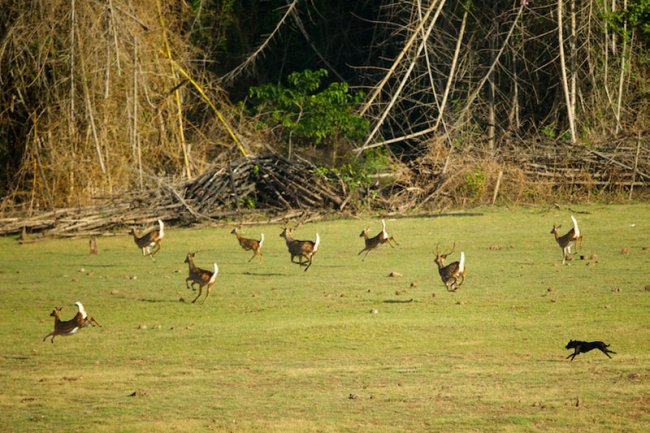
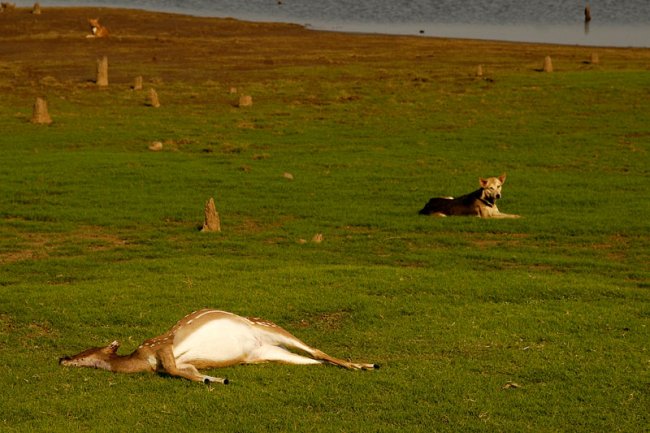
Some cases of stray and village dogs' attack to wild ungulates in wildlife reserves in India

Two village dogs resting after bringing down a chital

Village Dogs Hunting Chital, Nagarahole Tiger Reserve

A pack of stray dogs attacking a nilgai in Sultanpur Wildlife Sanctuary, near New Delhi


Wednesday, 3 December 2014

Reproductive behaviour of free-ranging rural dogs in West Bengal

Pal, S. K. (2003). Reproductive behaviour of free-ranging rural dogs in West Bengal, India. Acta theriologica, 48(2), 271-281.

Reproductive behaviour of free-ranging dogs Canis familiaris Linnaeus, 1758 was studied in a village in the state of West Bengal, India. Increased synchronized breeding was the most striking feature of this study. October (late monsoon) represented the peak period of mating for the feral dogs. Of all courting males, only 41% were observed to mount and copulate. On average, each male mounted 5.47 ± 2.49 (mean ± SD) times per hour. Of all mountings, only 10% were successful matings, ie copulatory ties. There was a negative correlation between the number of courting males and the number of successful copulations. The average duration of copulatory tie was 15.73 ± 7.75 min. Several factors interrupting the duration of copulatory ties were identified. December was the peak period of pup rearing. Mean litter size was 5.70 ± 2.03 with a male-biased sex ratio 1.41:1. Only a single annual breeding cycle recorded here differed from the previous studies on European and American dogs. Mothers spent most of the time with their pups at the dens during the early stage of rearing. The duration of time spent at dens by mothers was minimum when the pups were highly mobile at the age of 10 weeks. The lactating mothers were observed to be more aggressive immediately following litter production. Typically, an old adult male remained near the den as a ‘guard’.

Intergroup agonistic behaviour in free-ranging dog

Pal, S.K. 2014. Factors influencing intergroup agonistic behaviour in free-ranging domestic dogs (Canis familiaris). Acta ecologica.


We investigated the effects of sex, age, season and competitive context on the intergroup agonistic behaviour of free-ranging dogs (Canis familiaris). Data were collected in different places to record competitive cooperative behaviour during intergroup conflicts. Observations of 21 free-ranging dogs belonging to four neighbouring groups were made in Katwa town, India. Throughout the 12-month study period, 85 % of all intergroup agonistic interactions recorded were aggressive and 15 % submissive. Intergroup aggressive interactions were more frequent during the late monsoon months when the females were in oestrus, while submissive interactions reached a peak during the winter months when the females were lactating. Adult dogs, particularly males, displayed a higher rate of aggressive behaviour than other age classes, whereas juvenile dogs, particularly males, displayed the highest rate of submissive behaviour. Male dogs were observed to perform more agonistic behaviours in mating contexts and at the boundaries of their territories, whereas female dogs displayed more agonistic behaviours in feeding contexts and in the vicinity of the den. Both aggressive and submissive patterns displayed by the dogs varied with the competitive contexts. The most frequently observed category of aggressive behaviour was ‘barking, growling and snarling’ and submissive behavioural patterns were displayed frequently by ‘lips retracted in a submissive grin’. The striking feature of this study was that in most cases, more than one dog participated in aggressive conflicts. Such cooperative defense predominantly occurred at the boundaries of territory. Group home range size was largest during the late monsoon months and during the winter months.

Population ecology of free-ranging urban dogs in West Bengal

Pal, S. K. (2001). Population ecology of free-ranging urban dogs in West Bengal, India. Acta Theriologica, 46(1), 69-78.

A population of urban free-ranging dogs Canis familiaris Linnaeus, 1758 was studied in Katwa, West Bengal, India. The analysis of changes in the density of the dog population over a period of 4 years revealed a considerable stability of this population. Mean (±SD)2 seasonal population density was 185±19 dogs/km2, ranging from 156 to 214 dogs/km2. A sex ratio of 1.37∶1 in favour of male was recorded in this study. High mortality (67%) occurred under the age of 4 months, and 82% mortality occurred within the age of 1 year. Among the adults, 24% mortality under the age of 2.6 year was recorded. Only a single breeding cycle and synchronization of breeding was observed. Immigration was observed as a crucial factor affecting the stability of this population.

Agonistic behaviour of free-ranging dogs

Pal, S. K., Ghosh, B., & Roy, S. (1998). Agonistic behaviour of free-ranging dogs (Canis familiaris) in relation to season, sex and age. Applied Animal Behaviour Science, 59(4), 331-348.

Observations on the agonistic behaviour of 12 free-ranging dogs from two neighbouring groups were recorded in Katwa town, India. Both intra- and inter-group agonistic encounters were recorded on a seasonal basis. Mean (±S.E.) seasonal number of intra-group agonistic encounters of individual dog was greatest in winter (13.33±1.89) and then in late monsoon (12.33±1.99), when the females were lactating and in oestrus, respectively. Similarly, the mean (±S.E.) seasonal number of inter-group agonistic encounters of individual dog was greatest in winter (32.25±4.43) and then in late monsoon (27.75±2.01). There was a significant difference between the intra- and inter-group agonistic encounters. Dominance hierarchies were established among the adult dogs of either sex based on aggressive encounters. Although individual differences in agonism were observed, overall levels of aggression were higher among the adult females than for other groups. In contrast, overall levels of submission were higher among the juvenile males than for other groups. The results from this study suggest that reproductive season, sex and age have a significant effect on the agonistic behaviour of free-ranging dogs.

Sunday, 16 November 2014

Dog bite profile in urban India

Ghosh, A., & Pal, R. (2014) PROFILE OF DOG BITE CASES IN AN URBAN AREA OF KOLKATA, INDIA. National Journal of Community Medicine, 5 (3)

Background: There is no nationally representative community based data or organized surveillance system to get the actual magnitude of Ra- bies infection in India. 
Objectives: To estimate the extent of problem & the epidemiological characteristics of animal bite cases in urban field practice area of KPC Medical College and to assess the risk correlates regarding animal bites. 
Methods: The present community based cross sectional study was con- ducted in the urban field practice area of KPC Medical College; Kolkata during the period from 15th May to 15th June 2013 using classification of exposures as per guidelines lay down by WHO. 
Results: In the present study of the reported animal bite cases affected all the ages and both genders; the incidence of animal bites decreased with increasing age. Majority of the victims were males except in elderly population; children were more vulnerable. Two thirds of animal bite victims were from socioeconomic class IV and V. Dogs were the most common biting animal followed by Cats. Maximum number of study participants reported to health centre within 24 to 48 hours and very few cases within 24 hours after bite. Late reported cases, especially after 5 days, constituted by younger children or illiterate elderly people were forcefully brought to the hospital by their family members or caregivers. 
Conclusions: Dog bite is common in males and children less than ten years among our study population with more of third degree bites though health seeking behaviour is far from expectation.

Friday, 14 November 2014

Model to understand multispecies disease transmition between domestic and wild canids

Belsare, A. V., & Gompper, M. E. (2015). A model-based approach for investigation and mitigation of disease spillover risks to wildlife: Dogs, foxes and canine distemper in central India. Ecological Modelling, 296, 102-112.

Multi-host pathogens can pose a serious conservation threat when free-ranging domestic animal populations occur alongside susceptible populations of wild species. An example is canine distemper virus (CDV), which can occur at high prevalence in domestic dog (Canis familiaris) populations from which it may be transmitted (spillover) into wild carnivore populations. Effective management of such disease threats is hindered by our limited understanding of the the dynamics of interspecific CDV transmission in natural settings. We used a modeling approach to better understand CDV spillover threats to wild Indian foxes (Vulpes bengalensis) occurring in a protected grassland habitat in central India. An agent-based stochastic simulation model was built, and parameterized with data from ecological and epidemiological studies. Based on the sensitivity analyses of the model, the CDV incidence rate in dogs was most influenced by the proportion of roamer dogs in the dog population. The CDV incidence rate in dogs was also sensitive to the CDV introduction frequency in the dog population. The proportion of roamer dogs in the dog population also influenced the number of CDV spillover events. The basic reproductive number (R0) for CDV in the model fox population was 0.85, indicating that CDV could not be independently sustained in the fox population. We used the model to explore potential management strategies to mitigate the risk of CDV spillover. Vaccination of local dog populations was an ineffective disease control strategy, while fox vaccination was highly effective. Interventions potentially resulting in lower contact rates between dogs and foxes, like reduction in village dog density and restricting dog movements in fox habitat, implemented in a sustained and integrated manner would be most effective in mitigating disease threats to foxes. Such modeling approaches can be used to better understand disease threats for other species of management concern, and to contrast potential management interventions.

Tuesday, 16 September 2014

Leopards prefer dogs in India

Athreya, V, M. Odden, J.D. C. Linnell, J. Krishnaswamy & K. U. Karanth 2014. A cat among the dogs: leopard Panthera pardus diet in a human-dominated landscape in western Maharashtra, India. Oryx, DOI: http://dx.doi.org/10.1017/S0030605314000106 :1-7

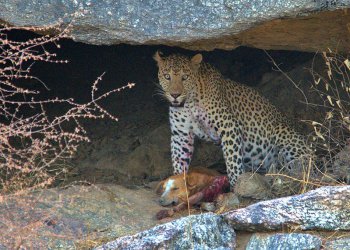
Leopard with its dog prey (Photo Gaffar Khan) 
The ecology and predator–prey dynamics of large felids in the tropics have largely been studied in natural systems where wild ungulates constitute the majority of the prey base. However, human-dominated landscapes can be rich in potential prey for large carnivores because of the high density of domestic animals, especially in tropical countries where pastoralism is an important livelihood activity. We report the almost complete dependence of leopards Panthera pardus on domestic animals as prey in the crop lands of Ahmednagar district, Maharashtra, India. From analysis of 85 confirmed leopard scats, 87% of the leopard's prey biomass consisted of domestic animals, with 39% consisting of domestic dogs Canis lupus familiaris alone. The only wild species that occurred in the leopard's diet were rodents, small indian civet Viverricula indica, bonnet macaque Macaca radiata and other primates Semnopithecus spp., mongoose Herpestes spp., and birds. Interviews conducted in 77 households distributed randomly in the study area documented a high density of domestic animals: adult cattle Bos taurus, calves, goats Capra aegagrus, dogs and cats Felis catus occurred at densities of 169, 54, 174, 24 and 61 per km2, respectively. Ivlev's electivity index indicated that dogs and cats were over-represented in the leopard's diet, given the higher densities of goats and cattle. The standing biomass of dogs and cats alone was sufficient to sustain the high density of carnivores at the study site. Our results show that the abundance of potential domestic prey biomass present in human-use areas supports a relatively high density of predators, although this interaction could result in conflict with humans.

Sunday, 10 August 2014

Prevalence and distribution of gastrointestinal parasites of stray and refuge dogs in India

Traub, R. J., Pednekar, R. P., Cuttell, L., Porter, R. B., Rani, P. A. A. M., & Gatne, M. L. (2014). The prevalence and distribution of gastrointestinal parasites of stray and refuge dogs in four locations in India. Veterinary Parasitology.

A gastrointestinal parasite survey of 411 stray and refuge dogs sampled from four geographical and climactically distinct locations in India revealed these animals to represent a significant source of environmental contamination for parasites that pose a zoonotic risk to the public. Hookworms were the most commonly identified parasite in dogs in Sikkim (71.3%), Mumbai (48.8%) and Delhi (39.1%). In Ladakh, which experiences harsh extremes in climate, a competitive advantage was observed for parasites such as Sarcocystis spp. (44.2%), Taenia hydatigena (30.3%) and Echinococcus granulosus (2.3%) that utilise intermediate hosts for the completion of their life cycle. PCR identified Ancylostoma ceylanicum and A. caninum to occur sympatrically, either as single or mixed infections in Sikkim (Northeast) and Mumbai (West). In Delhi, A. caninum was the only species identified in dogs, probably owing to its ability to evade unfavourable climatic conditions by undergoing arrested development in host tissue. The expansion of the known distribution of A. ceylanicum to the west, as far as Mumbai, justifies the renewed interest in this emerging zoonosis and advocates for its surveillance in future human parasite surveys. Of interest was the absence of Trichuris vulpis in dogs, in support of previous canine surveys in India. This study advocates the continuation of birth control programs in stray dogs that will undoubtedly have spill-over effects on reducing the levels of environmental contamination with parasite stages. In particular, owners of pet animals exposed to these environments must be extra vigilant in ensuring their animals are regularly dewormed and maintaining strict standards of household and personal hygiene.

Sunday, 22 June 2014

Vulture decline and stray dogs' rise in India


The vulture population in India has gone from 40 million to 60,000 largely due to poisoning, often by the drug diclofenac. Carrion-consuming birds are now on the critically endangered list of BirdLife International, a global network of conservation groups. The result is an abundance of carcasses left untouched by vultures bringing in a whole host of new scavengers in ever increasing numbers, such as rats, stray dogs etc.. The new scavengers are less effective in clearing up the carcasses or removing disease from them in comparison to vultures. There is an increased risk of diseases such as tuberculosis, anthrax and foot-and-mouth disease as flesh is left on the bone when dogs scavenge from cows. Packs of dogs are now reported to be 'hunting' humans as well as wildlife and bring with them the threat of rabies. The increase in the number of feral dogs has seen India's human infection rate with rabies reach a world record level, over 20,000 deaths per year. Such is the problem; a plan to sterilize 8 million dogs over a decade has been introduced.
The Parsis of India who practice Zoroastrianism rely on vultures to dispose of their dead as their faith prevents them from burying, burning or submerging them due to fears over hygiene. Corpses are seen in the faith as impure so it contradicts their faith to allow anything that would defile the elements to enter into them. Bodies are laid out in the open for the vultures to consume and this can usually be done (to the bone) in around an hour by a large group of vultures. The practice has existed for centuries. Plummeting vulture populations mean half consumed bodies now lie for days leading to further risk of infection in the neighbouring communities, and ultimately encouraging a taste for human flesh amongst the ever increasing feral dog population. Attacks on humans in Bikaner in western Rajasthan state have rocketed with 1,000 dogs roaming the area. The farming community who have long been unaccustomed to dealing with carcasses have not been quick to adapt and this has exacerbated the problem. Lacking money and resources not to mention experience, they have been unable to dispose of bodies quickly and efficiently. Water contamination is also a worry for authorities as rotting meat degrades and enters the water table. In a country where water is a scarce and valued resource this has potentially dire consequences. 


Vulture decline costs in India

Markandya, A., T. Taylor, A. Longo, M.N. Murty, S. Murty & K. Dhavala. 2008. Counting the cost of vulture decline—An appraisal of the human health and other benefits of vultures in India. Ecological Economics, 67 (2): 194–204

Widespread use of the non-steroidal anti-inflammatory drug (NSAID) diclofenac to treat livestock has resulted in dramatic declines in the populations of vultures across India. This has become an issue of considerable concern as vultures are a keystone species and their decline has a range of socio-economic, as well as cultural and biodiversity impacts. In this paper, we review these impacts and estimate in detail the economic cost of one of them: the human health impacts of the vulture decline. Livestock carcasses provide the main food supply for vultures, and are also eaten by dogs. Dogs are the main source of rabies in humans in India, and their populations have increased substantially in parallel with the vulture decline. The potential human health impact of rabies associated with the vulture decline is found to be significant. This, and a wide range of other impacts suggest that significant resources should be put into (1) testing of pharmaceutical products to ensure that similar situations are not repeated, (2) helping vulture populations to recover through the use of alternative drugs to diclofenac that are of low toxicity to vultures, and (3) through conservation breeding programmes.
Related Posts Plugin for WordPress, Blogger...