Johnston, M., McCaldin, G., & Rieker, A. (2016). Assessing the availability of aerially delivered baits to feral cats through rainforest canopy using unmanned aircraft. Journal of Unmanned Vehicle Systems, 4(4), 276-281.
At least eight threatened wildlife species are at direct risk from predation by cats (Felis catus) on Christmas Island (Director of National Parks. 2014. Christmas Island biodiversity conservation plan. Canberra. Australia: Department of the Environment.). A range of strategies are now being used to manage cats across the island, including responsible ownership methods for domestic cats and lethal control tools to remove feral cats outside the township area. Unmanned aerial vehicles (UAVs) were used to drop non-toxic baits through the rainforest canopy to assess whether aerial baiting could be undertaken successfully on the island. Ground crews located 88% of baits, indicating that sufficient baits would be accessible to feral cats if broad-scale aerial baiting was to be undertaken in the future.
Les hommes ont oublié cette vérité. Mais tu ne dois pas l'oublier, dit le renard. Tu deviens responsable pour toujours de ce que tu as apprivoisé.
Le Petit Prince, chap. 21
Showing posts with label 2016. Show all posts
Sunday, 5 February 2017
Sunday, 29 January 2017
Cats and Tropci birds
Boeken, M. (2016). Breeding success of Red-billed Tropicbirds Phaethon aethereus on the Caribbean island of Saba. Ardea, 104(3), 263-271.
In 2011 and 2012 the breeding success of Red-billed Tropicbirds Phaethon aethereus mesonauta was monitored on Saba, a 13-km2 island in the Caribbean Netherlands. The two colonies on the south and south-west side of the island both contain approximately 100–300 nests; breeding success was zero at these sites, due to predation of newly hatched chicks by Feral House Cats. In the single large colony of Old Booby Hill (estimated to contain approximately 1000 nests) on the east side of the island, rates of predation were lower, resulting in a breeding success (survival from laying until fledging, as far as observed) of 65%. Calculations of daily survival of eggs and chicks following Mayfield, resulted in a nesting success of 48% per pair. I conservatively estimated the size of the Saba breeding population to be at least 1300–1500 pairs, which is larger than the previous estimate of 750–1000 pairs. Potentially, the number of breeding pairs may be as high as 1850 pairs.
Sunday, 8 January 2017
First population assessment of the black forest cat in Madagascar's rainforests
Farris, Z. J., Boone, H. M., Karpanty, S., Murphy, A., Ratelolahy, F., Andrianjakarivelo, V., & Kelly, M. J. (2016). Feral cats and the fitoaty: first population assessment of the black forest cat in Madagascar’s rainforests. Journal of Mammalogy, 97(2), 518-525.
Despite exceptionally high levels of biodiversity and endemism found in Madagascar, much of its wildlife remains little studied, particularly the carnivore community. The recently described, little-known black forest cat (locally known as “fitoaty”) is believed to be restricted to NE Madagascar and has been investigated only through village surveys and anecdotal accounts. From 2008 to 2012, we photographically sampled 7 forest sites with varying degrees of degradation and fragmentation across Makira Natural Park with the goals of: 1) estimating landscape occupancy for fitoaty (Felis spp.), 2) identifying variables influencing fitoaty occupancy, and 3) comparing fitoaty and feral cat (Felis spp.) occupancy across the landscape. We observed higher occupancy for fitoaty, minimal co-occurrence between fitoaty and feral cats (n = 2 sites), and strong divergence in habitat use. We provide the 1st assessment of fitoaty morphology, including comparisons with anecdotal reports, and the 1st population assessment of Madagascar’s exotic cat community with insights into factors associated with carnivore population trends in Madagascar. We suggest the described fitoaty is a phenotypically different form of the feral cat, but additional research is needed. Targeted management plans are needed to diminish the spread and potential negative effects of invasive cats across this important biologically diverse ecoregion.
Feral cats driving the regional extinction of a threatened rodent in northern Australia
Davies, H. F., McCarthy, M. A., Firth, R. S., Woinarski, J. C., Gillespie, G. R., Andersen, A. N., ... & Murphy, B. P. (2016). Top‐down control of species distributions: feral cats driving the regional extinction of a threatened rodent in northern Australia. Diversity and Distributions.
Aim
To investigate whether feral cats influence the distribution of Australia's largest remnant population of the threatened brush-tailed rabbit-rat Conilurus penicillatus and examine whether they influenced the extinction probability of C. penicillatus over a 15-year period (2000–2015).
Location
Melville Island, northern Australia.
Methods
In 2015, small mammal surveys were conducted at 88 sites across Melville Island, 86 of which had previously been surveyed in 2000–2002. We used single-season occupancy models to investigate correlates of the current distribution of C. penicillatus and dynamic occupancy models to investigate correlates of C. penicillatus local extinction.
Results
Our results show that C. penicillatus, which once occurred more widely across the island, is now restricted to parts of the island where feral cats are rarely detected and shrub density is high. Our results suggest that feral cats are driving C. penicillatus towards extinction on Melville Island, and hence have likely been a significant driver in the decline of this species in northern Australia more broadly. The impact of feral cats appears to be mitigated by vegetation structure.
Main conclusions
The ongoing development and implementation of methods to effectively reduce feral cat densities, coupled with the management of landscape processes to maintain shrub density, through fire management and the removal of large exotic herbivores, will contribute substantially to conserving this threatened species. This study demonstrates that the distribution of species can be strongly influenced by top-down factors such as predation, thereby highlighting the importance of including biotic interactions when investigating the distribution of predation-susceptible species.
Aim
To investigate whether feral cats influence the distribution of Australia's largest remnant population of the threatened brush-tailed rabbit-rat Conilurus penicillatus and examine whether they influenced the extinction probability of C. penicillatus over a 15-year period (2000–2015).
Location
Melville Island, northern Australia.
Methods
In 2015, small mammal surveys were conducted at 88 sites across Melville Island, 86 of which had previously been surveyed in 2000–2002. We used single-season occupancy models to investigate correlates of the current distribution of C. penicillatus and dynamic occupancy models to investigate correlates of C. penicillatus local extinction.
Results
Our results show that C. penicillatus, which once occurred more widely across the island, is now restricted to parts of the island where feral cats are rarely detected and shrub density is high. Our results suggest that feral cats are driving C. penicillatus towards extinction on Melville Island, and hence have likely been a significant driver in the decline of this species in northern Australia more broadly. The impact of feral cats appears to be mitigated by vegetation structure.
Main conclusions
The ongoing development and implementation of methods to effectively reduce feral cat densities, coupled with the management of landscape processes to maintain shrub density, through fire management and the removal of large exotic herbivores, will contribute substantially to conserving this threatened species. This study demonstrates that the distribution of species can be strongly influenced by top-down factors such as predation, thereby highlighting the importance of including biotic interactions when investigating the distribution of predation-susceptible species.
Saturday, 7 January 2017
Impact of a 3-year pet management program on pet population and owner’s perception
Costa, E. D., Martins, C. M., Cunha, G. R., Catapan, D. C., Ferreira, F., Oliveira, S. T., ... & Biondo, A. W. (2017). Impact of a 3-year pet management program on pet population and owner’s perception. Preventive Veterinary Medicine.
Although pet population management programs have been established worldwide, few reports on program evaluation have been carried out to date. Accordingly, a 3-year longitudinal study has been carried out in a 4,000 household neighborhood located within the metropolitan area of Curitiba, the eighth most populated city of Brazil. Visits were conducted and questionnaires completed to estimate and characterize the local pet population (animal sex, reproductive and vaccination status, street access). Care provided by owners, community perception on stray dog management and the possible changes were compared in these variables over time (2010 and 2013) were evaluated, after the establishment of a city pet population management program. In addition, associations between having children, owning dogs and cats, responsible pet ownership education and owner’s perception on stray dogs were statistically tested. A total of 354/4,000 (8.9%) household families were interviewed in 2010 and 70/354 (19.8%) of the same families again in 2013. No significant changes were found in overall number of dogs and cats and average pet age, animal care and owner’s perception on stray dogs following the 3-year population management program. In 2010, an average of 1.6 dogs and 0.3 cats were found per family, with slightly more females (51.3% dogs and 51.1% cats), adults (4.0 ± 3.5 years for dogs and 2.1 ± 2.4 for cats), intact (not neutered; 94.2% dogs and 84.0% cats) and lacking regular visit to veterinarian (71.6%). Although more families (53.1%) had children under 12 years old, no association was found between having children and having dogs and cats. Questionnaires revealed that owners perceived neutering/spaying to be the best pet population control method (42.4%), with “society” (50%) and “government” (49.4%) as responsible for pet population management. A significant positive association has been found between education level and the best way to control stray dogs (p = 0.03), between having dogs and in favor of neutering/spaying (p = 0.04) and considering neutering/spaying as the best control method (p = 0.02). The chances of thinking the best way to control stray dogs by neutering/spaying and adoption were almost 2.0 fold higher than other methods. In conclusion, the present study has provided indicators (education level, having dogs) for pet population control program assessment and effectiveness evaluation. Moreover, this study may serve as a warning on the real long-term effect of such programs, which should be periodically evaluated to identify necessary adjustments and/or improvements.
Labels:
2016,
Brazil,
demography,
dogs,
human attitude,
neutering,
stray
Thursday, 5 January 2017
Interactions between invasive predators, native mammals and fire in a forest ecosystem
Hradsky, B. A. K. (2016). Interactions between invasive predators, native mammals and fire in a forest ecosystem (Doctoral dissertation, University of Melbourne).
A predator’s impact upon its prey depends not only on the evolutionary history and intrinsic characteristics of the two species, but also on the structure of the environment in which they interact. Fire is a major driver of vegetation structure, and there is growing concern that fire could increase the threat that invasive predators pose to native fauna. In this thesis, I investigated the interactions between fire, two invasive predators (red foxes Vulpes vulpes and feral cats Felis catus), and a suite of native mammal species. I used four different approaches to examine this problem within a fire-prone forest ecosystem of south-eastern Australia.
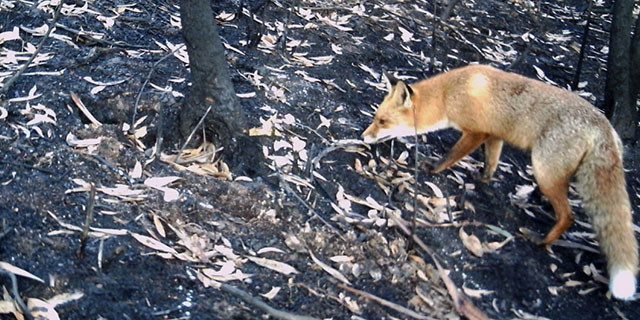
At a landscape-scale, species distributions are often poorly predicted by time-since-fire. I developed a conceptual model of the potential interactions between fire and other drivers of faunal occurrence (including predation), and then used non-parametric Bayesian networks to quantify these relationships for terrestrial native mammals. I found that critical-weight-range mammals were more likely to occur at long unburnt sites with high habitat complexity, and in wetter forest types. In contrast, large macropods preferred less complex habitats and younger or drier forest. Species distributions were generally more strongly associated with habitat complexity than time-since-fire or invasive predator occurrence. Yet, because Bayesian networks captured the relationships between proximal and distal drivers, models could effectively predict the distributions of most species using only mapped and remote-sensed data.
At a finer-scale, I used a before-after control-impact experiment to investigate the short-term effects of a prescribed fire on understorey vegetation cover, native mammal occurrence, and invasive predator occurrence and diet. Associations between species occurrences and vegetation cover in unburnt forest indicated that fire was likely to promote invasive predators but disadvantage small- and medium-sized native mammals. After the fire, there was a five-fold increase in invasive predator occurrence at burnt sites, relative to the control. Concurrently, red foxes increased their consumption of medium-sized native mammals, and selected more strongly for long-nosed bandicoots Perameles nasuta and short-beaked echidnas Tachyglossus aculeatus. The occurrence of several native mammals declined after the fire, but it was difficult to distinguish the effects of the fire from seasonal variation.
I used GPS-tracking collars to investigate whether forest-dwelling red foxes selected for human-modified habitats (including recently-burnt forest). There was substantial variation in fox behaviour, highlighting the importance of considering individual variation in habitat selection studies. At a broad-scale, however, red fox habitat selection tended to vary with proximity to the forest edge. Most foxes selected for human-modified habitats such as reservoirs, roads and forest-farmland edges in their fine-scale movements, particularly at night. Two foxes whose home-ranges overlapped a burn-block intensified their use of the block immediately after fire. Yet other nearby foxes showed little response, suggesting that fire responses are highly localised.
Finally, I used an agent-based simulation model to explore how changes in vegetation cover and predator abundance after fire could affect a critical-weight-range mammal. The model confirmed that fire and predation can have synergistically negative impacts on native mammal populations in burnt forest, and that local access to unburnt refuges substantially reduces these effects.
Invasive predators are highly opportunistic, wide-ranging and thoroughly integrated into this flammable forest ecosystem. Lethal control programs for foxes need to consider fox movement across land-tenures, and could selectively target habitat features such as roadsides, forest-farmland edges and recently-burnt forest. Habitat-based management approaches might also reduce invasive predator impacts on native mammals, for example by preserving dense vegetation in unburnt refuges, or removing anthropogenic resources that subsidise predator populations within forests. Evidence-based, integrated management of threatening processes is vital to conserving native biodiversity.
A predator’s impact upon its prey depends not only on the evolutionary history and intrinsic characteristics of the two species, but also on the structure of the environment in which they interact. Fire is a major driver of vegetation structure, and there is growing concern that fire could increase the threat that invasive predators pose to native fauna. In this thesis, I investigated the interactions between fire, two invasive predators (red foxes Vulpes vulpes and feral cats Felis catus), and a suite of native mammal species. I used four different approaches to examine this problem within a fire-prone forest ecosystem of south-eastern Australia.
At a landscape-scale, species distributions are often poorly predicted by time-since-fire. I developed a conceptual model of the potential interactions between fire and other drivers of faunal occurrence (including predation), and then used non-parametric Bayesian networks to quantify these relationships for terrestrial native mammals. I found that critical-weight-range mammals were more likely to occur at long unburnt sites with high habitat complexity, and in wetter forest types. In contrast, large macropods preferred less complex habitats and younger or drier forest. Species distributions were generally more strongly associated with habitat complexity than time-since-fire or invasive predator occurrence. Yet, because Bayesian networks captured the relationships between proximal and distal drivers, models could effectively predict the distributions of most species using only mapped and remote-sensed data.
At a finer-scale, I used a before-after control-impact experiment to investigate the short-term effects of a prescribed fire on understorey vegetation cover, native mammal occurrence, and invasive predator occurrence and diet. Associations between species occurrences and vegetation cover in unburnt forest indicated that fire was likely to promote invasive predators but disadvantage small- and medium-sized native mammals. After the fire, there was a five-fold increase in invasive predator occurrence at burnt sites, relative to the control. Concurrently, red foxes increased their consumption of medium-sized native mammals, and selected more strongly for long-nosed bandicoots Perameles nasuta and short-beaked echidnas Tachyglossus aculeatus. The occurrence of several native mammals declined after the fire, but it was difficult to distinguish the effects of the fire from seasonal variation.
I used GPS-tracking collars to investigate whether forest-dwelling red foxes selected for human-modified habitats (including recently-burnt forest). There was substantial variation in fox behaviour, highlighting the importance of considering individual variation in habitat selection studies. At a broad-scale, however, red fox habitat selection tended to vary with proximity to the forest edge. Most foxes selected for human-modified habitats such as reservoirs, roads and forest-farmland edges in their fine-scale movements, particularly at night. Two foxes whose home-ranges overlapped a burn-block intensified their use of the block immediately after fire. Yet other nearby foxes showed little response, suggesting that fire responses are highly localised.
Finally, I used an agent-based simulation model to explore how changes in vegetation cover and predator abundance after fire could affect a critical-weight-range mammal. The model confirmed that fire and predation can have synergistically negative impacts on native mammal populations in burnt forest, and that local access to unburnt refuges substantially reduces these effects.
Invasive predators are highly opportunistic, wide-ranging and thoroughly integrated into this flammable forest ecosystem. Lethal control programs for foxes need to consider fox movement across land-tenures, and could selectively target habitat features such as roadsides, forest-farmland edges and recently-burnt forest. Habitat-based management approaches might also reduce invasive predator impacts on native mammals, for example by preserving dense vegetation in unburnt refuges, or removing anthropogenic resources that subsidise predator populations within forests. Evidence-based, integrated management of threatening processes is vital to conserving native biodiversity.
Sunday, 1 January 2017
Exotics replace native carnivores in Madagascar rainforest
Farris, Z. J., Kelly, M. J., Karpanty, S., Murphy, A., Ratelolahy, F., Andrianjakarivelo, V., & Holmes, C. (2016). The times they are a changin': Multi-year surveys reveal exotics replace native carnivores at a Madagascar rainforest site. Biological Conservation.
Surveys across multiple seasons or years are necessary to evaluate the effects of dynamic processes on long-term persistence of wildlife populations, such as effects of exotic species on native species populations. Unfortunately, multi-year surveys are rare, particularly for rainforest carnivore populations, and managers often rely on single-season/year, ‘snapshot’ surveys that produce static estimates of population parameters. Here we provide results using single-species, multi-year occupancy modeling from a six-year survey (2008–2013) of a rainforest carnivore community at a 15 km2 area study site within the newly established Makira Natural Park, Madagascar. We demonstrate a precipitous decline in the native carnivore community with four of the six native carnivores (falanouc Eupleres goudotii, ring-tailed vontsira Galidia elegans, broad-striped vontsira Galidictis fasciata, and brown-tailed vontsira Salanoia concolor) decreasing by at least 60% over this six-year period. In addition, we observed two exotic carnivores (small Indian civet Viverricula indica and feral cat Felis species) colonize this study site with Felis species increasing in occupancy from 0 to 0.68 by the final year. Further, we demonstrate how variables associated with human encroachment (i.e. distance to forest edge and nearest village) are most important for explaining these trends in native carnivore extirpation and exotic carnivore colonization. These findings provide additional evidence on the threat posed to native carnivore populations by the expansion of exotic carnivores worldwide. We highlight the striking increase in extirpation, and the factors influencing such changes, for native carnivores. In this manuscript, we point to the limited number of multi-year surveys to evaluate dynamic processes on long-term persistence of native wildlife populations, as well as the lack of exotic carnivore control programs in threatened ecosystems in many developing nations as factors limiting our ability to effectively conserve biodiversity across the globe.
How many feral cats are in Australia?
Legge, S., Murphy, B. P., McGregor, H., Woinarski, J. C. Z., Augusteyn, J., Ballard, G., ... & Edwards, G. (2016). Enumerating a continental-scale threat: How many feral cats are in Australia?. Biological Conservation.
Feral cats (Felis catus) have devastated wildlife globally. In Australia, feral cats are implicated in most recent mammal extinctions and continue to threaten native species. Cat control is a high-profile priority for Australian policy, research and management. To develop the evidence-base to support this priority, we first review information on cat presence/absence on Australian islands and mainland cat-proof exclosures, finding that cats occur across >99.8% of Australia's land area. Next, we collate 91 site-based feral cat density estimates in Australia and examine the influence of environmental and geographic influences on density. We extrapolate from this analysis to estimate that the feral cat population in natural environments fluctuates between 1.4 million (95% confidence interval: 1.0–2.3 million) after continent-wide droughts, to 5.6 million (95% CI: 2.5–11 million) after extensive wet periods. We estimate another 0.7 million feral cats occur in Australia's highly modified environments (urban areas, rubbish dumps, intensive farms). Feral cat densities are higher on small islands than the mainland, but similar inside and outside conservation land. Mainland cats reach highest densities in arid/semi-arid areas after wet periods. Regional variation in cat densities corresponds closely with attrition rates for native mammal fauna. The overall population estimate for Australia's feral cats (in natural and highly modified environments), fluctuating between 2.1 and 6.3 million, is lower than previous estimates, and Australian feral cat densities are lower than reported for North America and Europe. Nevertheless, cats inflict severe impacts on Australian fauna, reflecting the sensitivity of Australia's native species to cats and reinforcing that policy, research and management to reduce their impacts is critical.
Thursday, 29 December 2016
Research, conservation and urban cat management in NZ
Kikillus, K. H., Chambers, G. K., Farnworth, M. J., & Hare, K. M. 2106. Research challenges and conservation implications for urban cat management in New Zealand. Pacific Conservation Biology.
Over the past 20 years, conservation efforts in New Zealand have moved from being concentrated in rural and isolated island locations, where exotic mammalian predators are often controlled, to begin to bring native fauna back to major cities. However, human–wildlife conflicts arise when conservation occurs in close proximity to cities. These are particularly intense when companion animals are involved either as potential predators or prey of high-value conservation animals. Within New Zealand, this conflict is particularly fraught around domestic cats (Felis catus) in the urban environment. Cats in New Zealand are recognised as major introduced predators of native fauna, but they also prey on small introduced predatory mammals. This dynamic causes much conflict between people with different attitudes towards animals; however, as yet, few studies have explored the role(s), either negative or positive, of urban cats in New Zealand. Here, we review current knowledge on domestic cats in urban New Zealand, identify gaps in knowledge and make suggestions for future research, which includes further social science research, citizen science-based research programs, market research, investigation into cat-management legislation, and more in-depth studies of cat diseases and zoonoses. These data are vital for informing the public and improving the management of urban cat populations, including mitigating conservation impacts. Urban ecologists will need to be versatile in the way they design and conduct experiments, exploiting multiple disciplines to both ensure scientific robustness, but also community and government support for uptake of results into management and legislation.
Sunday, 11 December 2016
Lethal control of stray dogs could increase frequency of conflicts in India
Yoak, A. J., Reece, J. F., Gehrt, S. D., & Hamilton, I. M. (2016). Optimizing free-roaming dog control programs using agent-based models. Ecological Modelling, 341, 53-61.
Urban free-roaming dog populations in the developing world are managed by a patchwork of local veterinary practitioners, government programs, and non-governmental organizations with varied effectiveness. While lethal removal is still commonly practiced, vaccination and fertility control methods are increasingly being adopted. Identifying which method(s) provides the most cost effective management is needed to inform dog population managers who seek to limit conflicts like dog bites, the spread of disease, and predation on wildlife. Here we describe an agent-based model that simulates the population of free-roaming dogs in Jaipur, a northwestern Indian city. We then apply various lethal and fertility control methodologies to identify which most effectively lowered the dog population size. This spatially explicit model includes temporal and demographic details of street dog populations modeled after data from the study city. We tested each pairing of control type (lethal or fertility) with search method (how to target efforts) to see their efficacy at altering the city’s dog population size, age structure, sterilization coverage, as well as the number of dogs handled. Models were run for 15 years to assess the long term effects of intervention. We found that the fertility control method that targets areas of the city with the highest percentage of intact bitches outperforms all other fertility control and lethal removal programs at reducing the population size while sterilizing a significantly higher proportion of the population. All lethal program methods skewed population demographics towards significantly younger dogs, thus likely increasing the frequency of conflict with humans. This work demonstrates the benefits of modeling differing management policies in free-roaming dogs.
Labels:
2016,
dogs,
human conflict,
India,
lethal control,
modelling,
neutering,
stray,
urban
An Islamic perspective with particular reference to unwanted pets–stray dogs and cat
Min, M., & Zaw, C. C. (2016). Animal care: an Islamic perspective with particular reference to unwanted pets–stray dogs and cat. In: Kuala Lumpur International Islamic Studies and Civilisations (KLiISC) 2016, 7th-8th May 2016, Kuala Lumpur.
The topic of animal care especially the area of “unwanted pets in Islam” is rarely distributed among Muslim scholars, scientists and sociologists even though animal rights movement and animal activists are obviously increased among modern society. Small animals such as dogs, and cats have been staying together with people since the beginning of human history. Humans have been receiving numerous benefits from them, such as keeping them as companions, using them for hunting, house keeping, and conducting research studies. At the same time, the number of stray dogs and cats population on the streets has increased unexpectedly nowadays, and the risk of getting injury or disease from the stray animals becomes a huge concern for the community. Some people treated animals with cruelty, and there has been widespread abuse of animal cases in the society. Animals are part of Allah (SWT) creations, and the Qur’an and the Al- Hadith (sayings of the prophet) prohibit cruelty to them. Islam guides us to treat animals kindly, and have mercy on them. As Muslims, Islamic teachings and concepts should be contemplated and incorporated in our daily activities. This study was conducted with the purpose of collecting authentic guidelines regarding animal care in Islam, and exploring the view of Muslim scholars regarding animal care. The qualitative, library based approach was used as a research methodology for this study. The data were exclusively sought from books, journals, and Islamic manuscripts that were mainly based on the teachings of the Holy Qu’ran, Sunnah, and views of the Muslim scholars.The rights of animals, and
human responsibility towards them were clearly presented from the perspectives of Islam. This study pointed out the need for maintaining balance between animal rights, and human benefits, focusing on treating animals with mercy, and reducing their sufferings even in times of killing them as a necessity. The study suggested that a need for developing a strategy by the relevant authorities regarding guidelines on some controversial issues such as animal neutering, spay, or euthanasia to reduce the problems of pet owners, as well as to prevent the dangers of zoonotic diseases in the community. This study also serves as a comprehensive overview for the readers that assist them in obtaining knowledge, and increase understanding of animal care in Islam. And it was expected to make a contribution to pet lovers in order to facilitate necessary prevention before their pets become unwanted and a burden to them.
The topic of animal care especially the area of “unwanted pets in Islam” is rarely distributed among Muslim scholars, scientists and sociologists even though animal rights movement and animal activists are obviously increased among modern society. Small animals such as dogs, and cats have been staying together with people since the beginning of human history. Humans have been receiving numerous benefits from them, such as keeping them as companions, using them for hunting, house keeping, and conducting research studies. At the same time, the number of stray dogs and cats population on the streets has increased unexpectedly nowadays, and the risk of getting injury or disease from the stray animals becomes a huge concern for the community. Some people treated animals with cruelty, and there has been widespread abuse of animal cases in the society. Animals are part of Allah (SWT) creations, and the Qur’an and the Al- Hadith (sayings of the prophet) prohibit cruelty to them. Islam guides us to treat animals kindly, and have mercy on them. As Muslims, Islamic teachings and concepts should be contemplated and incorporated in our daily activities. This study was conducted with the purpose of collecting authentic guidelines regarding animal care in Islam, and exploring the view of Muslim scholars regarding animal care. The qualitative, library based approach was used as a research methodology for this study. The data were exclusively sought from books, journals, and Islamic manuscripts that were mainly based on the teachings of the Holy Qu’ran, Sunnah, and views of the Muslim scholars.The rights of animals, and
human responsibility towards them were clearly presented from the perspectives of Islam. This study pointed out the need for maintaining balance between animal rights, and human benefits, focusing on treating animals with mercy, and reducing their sufferings even in times of killing them as a necessity. The study suggested that a need for developing a strategy by the relevant authorities regarding guidelines on some controversial issues such as animal neutering, spay, or euthanasia to reduce the problems of pet owners, as well as to prevent the dangers of zoonotic diseases in the community. This study also serves as a comprehensive overview for the readers that assist them in obtaining knowledge, and increase understanding of animal care in Islam. And it was expected to make a contribution to pet lovers in order to facilitate necessary prevention before their pets become unwanted and a burden to them.
Sunday, 4 December 2016
Optimizing an indoor lifestyle for cats
Scherk, M. (2016). Optimising an indoor lifestyle for cats. Veterinary Focus, 26(2), 2-9.
• Cats restricted to indoor living have a reduced risk for vehicular trauma, predation,
aggressive interactions with cats and other animals, and exposure to infectious diseases.
• Indoor living is not without risks.
• Not all cats can adapt readily to an indoor lifestyle, and may be at increased risk for
certain behavioral and medical problems.
• All environmental and social needs must be met for successful indoor living, and
the well-being of each cat needs to be evaluated repeatedly over time.
• Predictability, familiarity, routine and having a sense of control are key factors in
reducing stress.
• Offering outdoor access does not compensate if the cat has poor conditions indoors.
• Cats restricted to indoor living have a reduced risk for vehicular trauma, predation,
aggressive interactions with cats and other animals, and exposure to infectious diseases.
• Indoor living is not without risks.
• Not all cats can adapt readily to an indoor lifestyle, and may be at increased risk for
certain behavioral and medical problems.
• All environmental and social needs must be met for successful indoor living, and
the well-being of each cat needs to be evaluated repeatedly over time.
• Predictability, familiarity, routine and having a sense of control are key factors in
reducing stress.
• Offering outdoor access does not compensate if the cat has poor conditions indoors.
Thursday, 1 December 2016
Drons to deliver baits to control feral
Johnston, M., McCaldin, G., & Rieker, A. (2016). Assessing the availability of aerially delivered baits to feral cats through rainforest canopy using unmanned aircraft. Journal of Unmanned Vehicle Systems, 4(4), 276-281.
At least eight threatened wildlife species are at direct risk from predation by cats (Felis catus) on Christmas Island (Director of National Parks. 2014. Christmas Island biodiversity conservation plan. Canberra. Australia: Department of the Environment.). A range of strategies are now being used to manage cats across the island, including responsible ownership methods for domestic cats and lethal control tools to remove feral cats outside the township area. Unmanned aerial vehicles (UAVs) were used to drop non-toxic baits through the rainforest canopy to assess whether aerial baiting could be undertaken successfully on the island. Ground crews located 88% of baits, indicating that sufficient baits would be accessible to feral cats if broad-scale aerial baiting was to be undertaken in the future.
Saturday, 8 October 2016
nteractions between domestic and wild carnivores around the greater Serengeti ecosystem
Craft, M. E., Vial, F., Miguel, E., Cleaveland, S., Ferdinands, A., & Packer, C. (2016). Interactions between domestic and wild carnivores around the greater Serengeti ecosystem. Animal Conservation.
The domestic and wild carnivore interface is complex, yet understudied. Interactions between carnivore species have important implications for direct interference competition, cross-species transmission of shared pathogens and conservation threats to wild carnivores. However, carnivore intraguild interactions are hard to quantify. In this study, we asked 512 villagers residing around a conservation area in the Serengeti Ecosystem, Tanzania, to report on the presence of wild carnivores in their village, the number of domestic dogs Canis familiaris and cats Felis catus in their household and interactions between domestic and wild carnivores. Wild carnivores are abundant near households surrounding the Serengeti National Park, villagers have many free-ranging domestic dogs (and would like to have more) and direct and indirect contacts between wild and domestic carnivores are common. Large carnivores, such as spotted hyenas and leopards, often killed or wounded domestic dogs. Small carnivores, such as mongoose, bat-eared fox, serval and wildcat, are locally abundant and frequently interact with domestic dogs. We demonstrate that interspecific carnivore behavior, human culture and local and regional geography play a complex role in domestic and wild carnivore interaction risk around conservation areas. Through the use of household surveys, we were able to efficiently obtain data on a wide scope of carnivore interactions over a large area, which may provide a direction for future targeted and in-depth research to reduce interspecific conflict. Improving the health and husbandry of domestic animals and reducing the unintentional feeding of wild carnivores could reduce dog–wildlife interactions and the potential for pathogen transmission at the domestic–wild animal interface.
Saturday, 1 October 2016
Confinement remains the simplest measure to reduce roaming by pet cats
Hall, C. M., Bryant, K. A., Haskard, K., Major, T., Bruce, S., & Calver, M. C. (2016). Factors determining the home ranges of pet cats: A meta-analysis. Biological Conservation, 203, 313-320.
Highlights
• We assessed pet cats' roaming behaviour using meta-analyses and mixed linear models.
• Desexing, regular feeding and interaction with owners did not affect home range.
• Males had larger home ranges than females.
• Both sexes had larger home ranges at low housing densities.
• Confinement remains the simplest measure to reduce roaming by pet cats.
Abstract
Roaming pet cats Felis catus are a significant conservation issue because they may hunt, harass and compete with wildlife; spread disease, interbreed with cats in feral populations, and hybridise with wild native felids. Studies of the roaming behaviour of pet cats are often hampered by modest sample sizes and variability between cats, limiting statistical significance of the findings and their usefulness in recommending measures to discourage roaming. We resolved these difficulties through meta-analyses of 25 studies from 10 countries involving 469 pet cats to assess the influence of sex, whether a cat was desexed and housing density on roaming. A complementary linear mixed models approach used data on 311 individual animals from 22 studies and was also able to assess the influence of age and husbandry practices on roaming. This restricted sample gave greater statistical power than the meta-analyses.
Meta-analyses found that: male pet cats had larger home ranges than females, desexing did not influence home range, and cats had larger home ranges when housing densities were low. The linear mixed models supported those results. They also indicated that animals ≥ 8 years old had smaller home ranges than younger cats. Cats fed regularly, provided with veterinary care and socialised with humans had similar home ranges to cats living in association with households but not provided for in some of these ways. Short of confinement, there is no simple measure owners can adopt to reduce roaming by their cats and prevent the associated environmental problems.
Highlights
• We assessed pet cats' roaming behaviour using meta-analyses and mixed linear models.
• Desexing, regular feeding and interaction with owners did not affect home range.
• Males had larger home ranges than females.
• Both sexes had larger home ranges at low housing densities.
• Confinement remains the simplest measure to reduce roaming by pet cats.
Abstract
Roaming pet cats Felis catus are a significant conservation issue because they may hunt, harass and compete with wildlife; spread disease, interbreed with cats in feral populations, and hybridise with wild native felids. Studies of the roaming behaviour of pet cats are often hampered by modest sample sizes and variability between cats, limiting statistical significance of the findings and their usefulness in recommending measures to discourage roaming. We resolved these difficulties through meta-analyses of 25 studies from 10 countries involving 469 pet cats to assess the influence of sex, whether a cat was desexed and housing density on roaming. A complementary linear mixed models approach used data on 311 individual animals from 22 studies and was also able to assess the influence of age and husbandry practices on roaming. This restricted sample gave greater statistical power than the meta-analyses.
Meta-analyses found that: male pet cats had larger home ranges than females, desexing did not influence home range, and cats had larger home ranges when housing densities were low. The linear mixed models supported those results. They also indicated that animals ≥ 8 years old had smaller home ranges than younger cats. Cats fed regularly, provided with veterinary care and socialised with humans had similar home ranges to cats living in association with households but not provided for in some of these ways. Short of confinement, there is no simple measure owners can adopt to reduce roaming by their cats and prevent the associated environmental problems.
Friday, 30 September 2016
Feral cats: Genetic and sanitary risk for wild felids in Iberian Peninsula (in Spanish)
Tobajas, J. (2016). Riesgos genéticos y sanitarios asociados al gato asilvestrado (Felis silvestris catus): el caso de los felinos salvajes de la península ibérica. Chronica naturae, (6), 63-82.
El gato cimarrón o asilvestrado (Felis silvestris catus) se ha distribuido ampliamente
por todo el mundo, colonizando nuevos territorios e interactuando en muchas ocasiones
con las especies domésticas y silvestres. Sanitariamente, la presencia de gatos asilvestrados
trae consigo una serie de inconvenientes para las especies de felinos salvajes, actuando
como reservorios y dispersores de enfermedades. Por ello es de vital importancia conocer
la situación actual de la presencia de estas enfermedades, y conocer bien la epidemiología
asociada a la presencia del gato asilvestrado. Esta revisión recoge los estudios sanitarios
sobre el gato asilvestrado, el gato montés (Felis silvestris) y el lince ibérico (Lynx
pardinus). Estas dos últimas, son las especies silvestres que pueden sufrir las consecuencias
del aumento de la presencia de gatos asilvestrados en la naturaleza de la Península Ibérica.
Los resultados de los estudios sanitarios sobre gatos asilvestrados, muestran una prevalencia
alta de parásitos helmintos (especialmente de nematodos como Toxocara cati) y protozoos
como Toxoplasma gondii. Del mismo modo, se han encontrado altas prevalencias de virus
compartidos entre los felinos salvajes y los gatos asilvestrados, como el virus de la leucemia
felina, coronavirus y el moquillo, convirtiéndose en una amenaza para la conservación del
lince ibérico. También cabe destacar la presencia de bacterias transmitidas por vectores,
como el género Rickettsia y Bartonella. Aparte de las amenazas sanitarias, el aumento
detectado en la presencia de híbridos de gato doméstico y gato montés a lo largo de toda
Europa también es remarcable. Por estas razones, se puede considerar el gato cimarrón
como una de las mayores amenazas para el gato montés y el lince ibérico dentro de su área
de distribución.
El gato cimarrón o asilvestrado (Felis silvestris catus) se ha distribuido ampliamente
por todo el mundo, colonizando nuevos territorios e interactuando en muchas ocasiones
con las especies domésticas y silvestres. Sanitariamente, la presencia de gatos asilvestrados
trae consigo una serie de inconvenientes para las especies de felinos salvajes, actuando
como reservorios y dispersores de enfermedades. Por ello es de vital importancia conocer
la situación actual de la presencia de estas enfermedades, y conocer bien la epidemiología
asociada a la presencia del gato asilvestrado. Esta revisión recoge los estudios sanitarios
sobre el gato asilvestrado, el gato montés (Felis silvestris) y el lince ibérico (Lynx
pardinus). Estas dos últimas, son las especies silvestres que pueden sufrir las consecuencias
del aumento de la presencia de gatos asilvestrados en la naturaleza de la Península Ibérica.
Los resultados de los estudios sanitarios sobre gatos asilvestrados, muestran una prevalencia
alta de parásitos helmintos (especialmente de nematodos como Toxocara cati) y protozoos
como Toxoplasma gondii. Del mismo modo, se han encontrado altas prevalencias de virus
compartidos entre los felinos salvajes y los gatos asilvestrados, como el virus de la leucemia
felina, coronavirus y el moquillo, convirtiéndose en una amenaza para la conservación del
lince ibérico. También cabe destacar la presencia de bacterias transmitidas por vectores,
como el género Rickettsia y Bartonella. Aparte de las amenazas sanitarias, el aumento
detectado en la presencia de híbridos de gato doméstico y gato montés a lo largo de toda
Europa también es remarcable. Por estas razones, se puede considerar el gato cimarrón
como una de las mayores amenazas para el gato montés y el lince ibérico dentro de su área
de distribución.
Labels:
2016,
cats,
feline hybridization,
feral,
FULL,
Parasites,
toxoplasmosis,
VIRUS,
zoonosis
Monday, 26 September 2016
Continental‐scale analysis of feral cat diet in Australia, prey‐switching and the risk: benefit of rabbit control
Mutze, G. (2016). Continental‐scale analysis of feral cat diet in Australia, prey‐switching and the risk: benefit of rabbit control. Journal of Biogeography.
Recent analyses of geographical variation in cats’ diet across Australia have been used to highlight rabbit control as a conservation risk, on the basis that prey-switching by cats following rabbit control is likely to threaten Australian fauna. There is no direct evidence to support that proposition. However, there is direct evidence of repeated prey-switching due to seasonal fluctuations in uncontrolled rabbit populations, of long-term suppression of rabbit numbers by effective rabbit control, and that reduced rabbit abundance leads to reduced cat abundance, reduced predation of native fauna and recovery of threatened prey populations. Furthermore, rabbits are a known threat to many Australian native plants and rabbit control has proven benefits for their recovery, thereby offering long-term benefits for dependent fauna and broader ecosystem function. On the balance of evidence, rabbit control should be encouraged in Australia wherever possible, as a national conservation priority.
Sunday, 25 September 2016
Involvement in a Northern California community on the feral cat problem
Lando, C. A. (2016). Building involvement in a Northern California community on a targeted public health issue: a service announcement on the feral cat problem in Chico. Faculty of California State University, Chico
The primary purpose of this study is to examine the health and environmental issues caused by feral cats and to offer solutions to control the growth of feral cat colonies in a Northern California community. Research supports the claim that feral cats, or community cats are a community problem and a community’s responsibility. Therefore, the local government, local animal welfare groups, and concerned citizens need to work together to find viable solutions.
Furthermore, the City of Chico’s Animal Control Officer estimates there are approximately 14,000 feral cats living on the streets and in the parks of the city of Chico. Several animal welfare organizations have worked to reduce this number through adoption, offering permanent housing, or trapping, vaccinating, neutering and returning cats to their colonies. The city’s euthanasia policy is only in effect for sick animals brought into the shelter by citizens. Due to budget cuts and lack of space, the city cannot house abandoned or surrendered animals. Therefore, the city refers calls about feral cats to one of the other animal welfare agencies.
The results of this project have shown that a collaborative organization consisting of members of concerned citizens and animal welfare groups can offer the best solutions to the feral cat dilemma. Accessing information about the ways other communities have addressed the feral cat problem is helpful. Working together individual organizations can share strategies for implementing fundraising activities, publicity, grant writing, and other issues such as purchasing pet supplies and food.
In addition, California State University, Chico, needs to take a more active role in disseminating information to its students about not releasing cats at the end of the school year. This information should be provided during orientation and through the university’s newspaper. Research has shown that an ongoing public service announcement through television and radio is one of the best ways to reach the most people. Public service announcements offer information and resources available to
citizens for assistance with a feral cat problem.
The primary purpose of this study is to examine the health and environmental issues caused by feral cats and to offer solutions to control the growth of feral cat colonies in a Northern California community. Research supports the claim that feral cats, or community cats are a community problem and a community’s responsibility. Therefore, the local government, local animal welfare groups, and concerned citizens need to work together to find viable solutions.
Furthermore, the City of Chico’s Animal Control Officer estimates there are approximately 14,000 feral cats living on the streets and in the parks of the city of Chico. Several animal welfare organizations have worked to reduce this number through adoption, offering permanent housing, or trapping, vaccinating, neutering and returning cats to their colonies. The city’s euthanasia policy is only in effect for sick animals brought into the shelter by citizens. Due to budget cuts and lack of space, the city cannot house abandoned or surrendered animals. Therefore, the city refers calls about feral cats to one of the other animal welfare agencies.
The results of this project have shown that a collaborative organization consisting of members of concerned citizens and animal welfare groups can offer the best solutions to the feral cat dilemma. Accessing information about the ways other communities have addressed the feral cat problem is helpful. Working together individual organizations can share strategies for implementing fundraising activities, publicity, grant writing, and other issues such as purchasing pet supplies and food.
In addition, California State University, Chico, needs to take a more active role in disseminating information to its students about not releasing cats at the end of the school year. This information should be provided during orientation and through the university’s newspaper. Research has shown that an ongoing public service announcement through television and radio is one of the best ways to reach the most people. Public service announcements offer information and resources available to
citizens for assistance with a feral cat problem.
Labels:
2016,
California,
cats,
feral,
FULL,
human attitude,
North America,
responsible ownership,
shelters
Saturday, 24 September 2016
Cats are a factor contributing to the collapse of mammal communities in N Australia
Hohnen R, Tuft K, McGregor HW, Legge S, Radford IJ, Johnson CN (2016) Occupancy of the Invasive Feral Cat Varies with Habitat Complexity. PLoS ONE 11(9): e0152520. https://doi.org/10.1371/journal.pone.0152520
The domestic cat (Felis catus) is an invasive exotic in many locations around the world and is thought to be a key factor driving recent mammal declines across northern Australia. Many mammal species native to this region now persist only in areas with high topographic complexity, provided by features such as gorges or escarpments. Do mammals persist in these habitats because cats occupy them less, or despite high cat occupancy? We show that occupancy of feral cats was lower in mammal-rich habitats of high topographic complexity. These results support the idea that predation pressure by feral cats is a factor contributing to the collapse of mammal communities across northern Australia. Managing impacts of feral cats is a global conservation challenge. Conservation actions such as choosing sites for small mammal reintroductions may be more successful if variation in cat occupancy with landscape features is taken into account.
Saturday, 17 September 2016
Semi-Stray Dogs and Graduated Humanness
Sandoval-Cervantes, I. (2016). Semi-Stray Dogs and Graduated Humanness: The Political Encounters of Dogs and Humans in Mexico. In Companion Animals in Everyday Life (pp. 169-181). Palgrave Macmillan US.
In January 2013, a pack of stray dogs was accused with murder in one of Mexico City’s poorest and most populated boroughs. Images of the dogs, expert testimonies, and protests saturated the media. Eventually, the dogs were ambiguously exonerated. This event raises important questions that show the intricate ways in which human–dog relationships in Mexico have been historically constructed around notions of humanness, and informed by notions of class, race, and citizenship. I rely on the concept of “graduated humanness” to analyze the case of the “doglinquents” of Mexico City. I conclude that the concept of “graduated humanness” can illuminate how humans and animal rights are used contextually to “save” specific nonhuman beings while not addressing the larger structural conditions that frame the lives of humans and nonhumans.
Labels:
2016,
dogs,
human attitude,
human conflict,
North America,
stray
Subscribe to:
Posts (Atom)

