Johnston, M., McCaldin, G., & Rieker, A. (2016). Assessing the availability of aerially delivered baits to feral cats through rainforest canopy using unmanned aircraft. Journal of Unmanned Vehicle Systems, 4(4), 276-281.
At least eight threatened wildlife species are at direct risk from predation by cats (Felis catus) on Christmas Island (Director of National Parks. 2014. Christmas Island biodiversity conservation plan. Canberra. Australia: Department of the Environment.). A range of strategies are now being used to manage cats across the island, including responsible ownership methods for domestic cats and lethal control tools to remove feral cats outside the township area. Unmanned aerial vehicles (UAVs) were used to drop non-toxic baits through the rainforest canopy to assess whether aerial baiting could be undertaken successfully on the island. Ground crews located 88% of baits, indicating that sufficient baits would be accessible to feral cats if broad-scale aerial baiting was to be undertaken in the future.
Les hommes ont oublié cette vérité. Mais tu ne dois pas l'oublier, dit le renard. Tu deviens responsable pour toujours de ce que tu as apprivoisé.
Le Petit Prince, chap. 21
Showing posts with label Australia. Show all posts
Sunday, 5 February 2017
Saturday, 21 January 2017
Invasive mesopredators should be controlled at the same time
Molsher, R., Newsome, A. E., Newsome, T. M., & Dickman, C. R. (2017). Mesopredator Management: Effects of Red Fox Control on the Abundance, Diet and Use of Space by Feral Cats. PloS one, 12(1), e0168460.
Apex predators are subject to lethal control in many parts of the world to minimize their impacts on human industries and livelihoods. Diverse communities of smaller predators—mesopredators—often remain after apex predator removal. Despite concern that these mesopredators may be 'released' in the absence of the apex predator and exert negative effects on each other and on co-occurring prey, these interactions have been little studied. Here, we investigate the potential effects of competition and intraguild predation between red foxes (Vulpes vulpes) and feral cats (Felis catus) in south-eastern Australia where the apex predator, the dingo (Canis dingo), has been extirpated by humans. We predicted that the larger fox would dominate the cat in encounters, and used a fox-removal experiment to assess whether foxes affect cat abundance, diet, home-range and habitat use. Our results provide little indication that intraguild predation occurred or that cats responded numerically to the fox removal, but suggest that the fox affects some aspects of cat resource use. In particular, where foxes were removed cats increased their consumption of invertebrates and carrion, decreased their home range size and foraged more in open habitats. Fox control takes place over large areas of Australia to protect threatened native species and agricultural interests. Our results suggest that fox control programmes could lead to changes in the way that cats interact with co-occurring prey, and that some prey may become more vulnerable to cat predation in open habitats after foxes have been removed. Moreover, with intensive and more sustained fox control it is possible that cats could respond numerically and alter their behaviour in different ways to those documented herein. Such outcomes need to be considered when estimating the indirect impacts of fox control. We conclude that novel approaches are urgently required to control invasive mesopredators at the same time, especially in areas where apex predators are absent.
Labels:
2017,
Australia,
competition,
FULL,
mesopredator release,
predation
Sunday, 15 January 2017
Ecology of feral cats on a Tasmanian Island
Hayde, K. A. (1992). Ecology of the feral cat Felis catus on Great Dog Island (Doctoral dissertation, University of Tasmania).
Aspects of
the ecology of feral cats on Great Dog Island, Bass Strait, were investigated
from May to September 1991. Population structure and dynamics, morphology and
phenotypes, condition and gastro-intestinal parasites and diet were studied. A
culled sample of 189 feral cats displayed a male: female ratio of 1:1 and
indicated a pre-eradication density of at least 56.9 cats/km2• Juveniles and
sub-adults made up 44.9% of the population. A breeding season was inferred by
kitten age and by changes through time in the population structure. Approximate
life expectancy was estimated to be 73-84 months for males and 85-96 months for
females. Counting cementum annuli in the teeth was shown to be an effective
method of age determination. The length and weight of male and female feral
cats of Great Dog Island was comparable to that of feral cats found on the
mainland Australian. However, a decline in the weight of females between autumn
and winter suggested the occurrence of a seasonal nutritional stress. The
relationship between age and length in adult males suggests that greater length
offers an advantage to longevity. The presence of seven mutant pelagerelated
genes, in addition to the wild type, indicated a comparatively high degree of
genetic diversity within the feral cat population of Great Dog Island. The long
hair allele is probably being selected against as juveniles suffer high
mortality. The expression of the inhibitor allele is bias toward males. No
significant relationships were found to occur between coat colour and weight or
length. The analysis of gut contents showed that a total of 26 species were
ingested: 2 bird, 1 mammal, 5 reptile and 18 arthropod species. The gut of 16
cats were either empty or contained only residual food stuffs. Most cats had soil
and plant matter in the gut. There was no evidence of cannabalism and no human
refuse was present. It is likely that some artht:opod prey were excavated.
There was no advantage in age or body size in obtaining prey species.
Generally, the coat skin and tooth condition of cats on Great Dog Island was
very good. The nutritional condition (fat deposits) of cats suggested that cats
were generally in good condition in autumn. Both males and females underwent a
large decline in fat reserves from autumn to winter and reserves were further
depleted as winter progressed. This resulted in the general nutiitional
condition of the winter cats being poor. Gastro-intestinal parasites present
were Taenia taeniaeformis, Toxocara cati and Cylicospirura felineus . Parasite infestation
was biased toward females. Loss of condition did not generally result in
increased susceptibility to parasite infestation. This was instead better
explained as a response to diet and climate.
Sunday, 8 January 2017
Feral cats driving the regional extinction of a threatened rodent in northern Australia
Davies, H. F., McCarthy, M. A., Firth, R. S., Woinarski, J. C., Gillespie, G. R., Andersen, A. N., ... & Murphy, B. P. (2016). Top‐down control of species distributions: feral cats driving the regional extinction of a threatened rodent in northern Australia. Diversity and Distributions.
Aim
To investigate whether feral cats influence the distribution of Australia's largest remnant population of the threatened brush-tailed rabbit-rat Conilurus penicillatus and examine whether they influenced the extinction probability of C. penicillatus over a 15-year period (2000–2015).
Location
Melville Island, northern Australia.
Methods
In 2015, small mammal surveys were conducted at 88 sites across Melville Island, 86 of which had previously been surveyed in 2000–2002. We used single-season occupancy models to investigate correlates of the current distribution of C. penicillatus and dynamic occupancy models to investigate correlates of C. penicillatus local extinction.
Results
Our results show that C. penicillatus, which once occurred more widely across the island, is now restricted to parts of the island where feral cats are rarely detected and shrub density is high. Our results suggest that feral cats are driving C. penicillatus towards extinction on Melville Island, and hence have likely been a significant driver in the decline of this species in northern Australia more broadly. The impact of feral cats appears to be mitigated by vegetation structure.
Main conclusions
The ongoing development and implementation of methods to effectively reduce feral cat densities, coupled with the management of landscape processes to maintain shrub density, through fire management and the removal of large exotic herbivores, will contribute substantially to conserving this threatened species. This study demonstrates that the distribution of species can be strongly influenced by top-down factors such as predation, thereby highlighting the importance of including biotic interactions when investigating the distribution of predation-susceptible species.
Aim
To investigate whether feral cats influence the distribution of Australia's largest remnant population of the threatened brush-tailed rabbit-rat Conilurus penicillatus and examine whether they influenced the extinction probability of C. penicillatus over a 15-year period (2000–2015).
Location
Melville Island, northern Australia.
Methods
In 2015, small mammal surveys were conducted at 88 sites across Melville Island, 86 of which had previously been surveyed in 2000–2002. We used single-season occupancy models to investigate correlates of the current distribution of C. penicillatus and dynamic occupancy models to investigate correlates of C. penicillatus local extinction.
Results
Our results show that C. penicillatus, which once occurred more widely across the island, is now restricted to parts of the island where feral cats are rarely detected and shrub density is high. Our results suggest that feral cats are driving C. penicillatus towards extinction on Melville Island, and hence have likely been a significant driver in the decline of this species in northern Australia more broadly. The impact of feral cats appears to be mitigated by vegetation structure.
Main conclusions
The ongoing development and implementation of methods to effectively reduce feral cat densities, coupled with the management of landscape processes to maintain shrub density, through fire management and the removal of large exotic herbivores, will contribute substantially to conserving this threatened species. This study demonstrates that the distribution of species can be strongly influenced by top-down factors such as predation, thereby highlighting the importance of including biotic interactions when investigating the distribution of predation-susceptible species.
Thursday, 5 January 2017
Interactions between invasive predators, native mammals and fire in a forest ecosystem
Hradsky, B. A. K. (2016). Interactions between invasive predators, native mammals and fire in a forest ecosystem (Doctoral dissertation, University of Melbourne).
A predator’s impact upon its prey depends not only on the evolutionary history and intrinsic characteristics of the two species, but also on the structure of the environment in which they interact. Fire is a major driver of vegetation structure, and there is growing concern that fire could increase the threat that invasive predators pose to native fauna. In this thesis, I investigated the interactions between fire, two invasive predators (red foxes Vulpes vulpes and feral cats Felis catus), and a suite of native mammal species. I used four different approaches to examine this problem within a fire-prone forest ecosystem of south-eastern Australia.
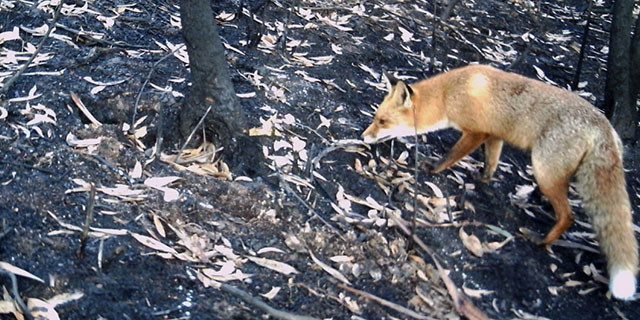
At a landscape-scale, species distributions are often poorly predicted by time-since-fire. I developed a conceptual model of the potential interactions between fire and other drivers of faunal occurrence (including predation), and then used non-parametric Bayesian networks to quantify these relationships for terrestrial native mammals. I found that critical-weight-range mammals were more likely to occur at long unburnt sites with high habitat complexity, and in wetter forest types. In contrast, large macropods preferred less complex habitats and younger or drier forest. Species distributions were generally more strongly associated with habitat complexity than time-since-fire or invasive predator occurrence. Yet, because Bayesian networks captured the relationships between proximal and distal drivers, models could effectively predict the distributions of most species using only mapped and remote-sensed data.
At a finer-scale, I used a before-after control-impact experiment to investigate the short-term effects of a prescribed fire on understorey vegetation cover, native mammal occurrence, and invasive predator occurrence and diet. Associations between species occurrences and vegetation cover in unburnt forest indicated that fire was likely to promote invasive predators but disadvantage small- and medium-sized native mammals. After the fire, there was a five-fold increase in invasive predator occurrence at burnt sites, relative to the control. Concurrently, red foxes increased their consumption of medium-sized native mammals, and selected more strongly for long-nosed bandicoots Perameles nasuta and short-beaked echidnas Tachyglossus aculeatus. The occurrence of several native mammals declined after the fire, but it was difficult to distinguish the effects of the fire from seasonal variation.
I used GPS-tracking collars to investigate whether forest-dwelling red foxes selected for human-modified habitats (including recently-burnt forest). There was substantial variation in fox behaviour, highlighting the importance of considering individual variation in habitat selection studies. At a broad-scale, however, red fox habitat selection tended to vary with proximity to the forest edge. Most foxes selected for human-modified habitats such as reservoirs, roads and forest-farmland edges in their fine-scale movements, particularly at night. Two foxes whose home-ranges overlapped a burn-block intensified their use of the block immediately after fire. Yet other nearby foxes showed little response, suggesting that fire responses are highly localised.
Finally, I used an agent-based simulation model to explore how changes in vegetation cover and predator abundance after fire could affect a critical-weight-range mammal. The model confirmed that fire and predation can have synergistically negative impacts on native mammal populations in burnt forest, and that local access to unburnt refuges substantially reduces these effects.
Invasive predators are highly opportunistic, wide-ranging and thoroughly integrated into this flammable forest ecosystem. Lethal control programs for foxes need to consider fox movement across land-tenures, and could selectively target habitat features such as roadsides, forest-farmland edges and recently-burnt forest. Habitat-based management approaches might also reduce invasive predator impacts on native mammals, for example by preserving dense vegetation in unburnt refuges, or removing anthropogenic resources that subsidise predator populations within forests. Evidence-based, integrated management of threatening processes is vital to conserving native biodiversity.
A predator’s impact upon its prey depends not only on the evolutionary history and intrinsic characteristics of the two species, but also on the structure of the environment in which they interact. Fire is a major driver of vegetation structure, and there is growing concern that fire could increase the threat that invasive predators pose to native fauna. In this thesis, I investigated the interactions between fire, two invasive predators (red foxes Vulpes vulpes and feral cats Felis catus), and a suite of native mammal species. I used four different approaches to examine this problem within a fire-prone forest ecosystem of south-eastern Australia.
At a landscape-scale, species distributions are often poorly predicted by time-since-fire. I developed a conceptual model of the potential interactions between fire and other drivers of faunal occurrence (including predation), and then used non-parametric Bayesian networks to quantify these relationships for terrestrial native mammals. I found that critical-weight-range mammals were more likely to occur at long unburnt sites with high habitat complexity, and in wetter forest types. In contrast, large macropods preferred less complex habitats and younger or drier forest. Species distributions were generally more strongly associated with habitat complexity than time-since-fire or invasive predator occurrence. Yet, because Bayesian networks captured the relationships between proximal and distal drivers, models could effectively predict the distributions of most species using only mapped and remote-sensed data.
At a finer-scale, I used a before-after control-impact experiment to investigate the short-term effects of a prescribed fire on understorey vegetation cover, native mammal occurrence, and invasive predator occurrence and diet. Associations between species occurrences and vegetation cover in unburnt forest indicated that fire was likely to promote invasive predators but disadvantage small- and medium-sized native mammals. After the fire, there was a five-fold increase in invasive predator occurrence at burnt sites, relative to the control. Concurrently, red foxes increased their consumption of medium-sized native mammals, and selected more strongly for long-nosed bandicoots Perameles nasuta and short-beaked echidnas Tachyglossus aculeatus. The occurrence of several native mammals declined after the fire, but it was difficult to distinguish the effects of the fire from seasonal variation.
I used GPS-tracking collars to investigate whether forest-dwelling red foxes selected for human-modified habitats (including recently-burnt forest). There was substantial variation in fox behaviour, highlighting the importance of considering individual variation in habitat selection studies. At a broad-scale, however, red fox habitat selection tended to vary with proximity to the forest edge. Most foxes selected for human-modified habitats such as reservoirs, roads and forest-farmland edges in their fine-scale movements, particularly at night. Two foxes whose home-ranges overlapped a burn-block intensified their use of the block immediately after fire. Yet other nearby foxes showed little response, suggesting that fire responses are highly localised.
Finally, I used an agent-based simulation model to explore how changes in vegetation cover and predator abundance after fire could affect a critical-weight-range mammal. The model confirmed that fire and predation can have synergistically negative impacts on native mammal populations in burnt forest, and that local access to unburnt refuges substantially reduces these effects.
Invasive predators are highly opportunistic, wide-ranging and thoroughly integrated into this flammable forest ecosystem. Lethal control programs for foxes need to consider fox movement across land-tenures, and could selectively target habitat features such as roadsides, forest-farmland edges and recently-burnt forest. Habitat-based management approaches might also reduce invasive predator impacts on native mammals, for example by preserving dense vegetation in unburnt refuges, or removing anthropogenic resources that subsidise predator populations within forests. Evidence-based, integrated management of threatening processes is vital to conserving native biodiversity.
Sunday, 1 January 2017
How many feral cats are in Australia?
Legge, S., Murphy, B. P., McGregor, H., Woinarski, J. C. Z., Augusteyn, J., Ballard, G., ... & Edwards, G. (2016). Enumerating a continental-scale threat: How many feral cats are in Australia?. Biological Conservation.
Feral cats (Felis catus) have devastated wildlife globally. In Australia, feral cats are implicated in most recent mammal extinctions and continue to threaten native species. Cat control is a high-profile priority for Australian policy, research and management. To develop the evidence-base to support this priority, we first review information on cat presence/absence on Australian islands and mainland cat-proof exclosures, finding that cats occur across >99.8% of Australia's land area. Next, we collate 91 site-based feral cat density estimates in Australia and examine the influence of environmental and geographic influences on density. We extrapolate from this analysis to estimate that the feral cat population in natural environments fluctuates between 1.4 million (95% confidence interval: 1.0–2.3 million) after continent-wide droughts, to 5.6 million (95% CI: 2.5–11 million) after extensive wet periods. We estimate another 0.7 million feral cats occur in Australia's highly modified environments (urban areas, rubbish dumps, intensive farms). Feral cat densities are higher on small islands than the mainland, but similar inside and outside conservation land. Mainland cats reach highest densities in arid/semi-arid areas after wet periods. Regional variation in cat densities corresponds closely with attrition rates for native mammal fauna. The overall population estimate for Australia's feral cats (in natural and highly modified environments), fluctuating between 2.1 and 6.3 million, is lower than previous estimates, and Australian feral cat densities are lower than reported for North America and Europe. Nevertheless, cats inflict severe impacts on Australian fauna, reflecting the sensitivity of Australia's native species to cats and reinforcing that policy, research and management to reduce their impacts is critical.
Thursday, 1 December 2016
Drons to deliver baits to control feral
Johnston, M., McCaldin, G., & Rieker, A. (2016). Assessing the availability of aerially delivered baits to feral cats through rainforest canopy using unmanned aircraft. Journal of Unmanned Vehicle Systems, 4(4), 276-281.
At least eight threatened wildlife species are at direct risk from predation by cats (Felis catus) on Christmas Island (Director of National Parks. 2014. Christmas Island biodiversity conservation plan. Canberra. Australia: Department of the Environment.). A range of strategies are now being used to manage cats across the island, including responsible ownership methods for domestic cats and lethal control tools to remove feral cats outside the township area. Unmanned aerial vehicles (UAVs) were used to drop non-toxic baits through the rainforest canopy to assess whether aerial baiting could be undertaken successfully on the island. Ground crews located 88% of baits, indicating that sufficient baits would be accessible to feral cats if broad-scale aerial baiting was to be undertaken in the future.
Monday, 26 September 2016
Continental‐scale analysis of feral cat diet in Australia, prey‐switching and the risk: benefit of rabbit control
Mutze, G. (2016). Continental‐scale analysis of feral cat diet in Australia, prey‐switching and the risk: benefit of rabbit control. Journal of Biogeography.
Recent analyses of geographical variation in cats’ diet across Australia have been used to highlight rabbit control as a conservation risk, on the basis that prey-switching by cats following rabbit control is likely to threaten Australian fauna. There is no direct evidence to support that proposition. However, there is direct evidence of repeated prey-switching due to seasonal fluctuations in uncontrolled rabbit populations, of long-term suppression of rabbit numbers by effective rabbit control, and that reduced rabbit abundance leads to reduced cat abundance, reduced predation of native fauna and recovery of threatened prey populations. Furthermore, rabbits are a known threat to many Australian native plants and rabbit control has proven benefits for their recovery, thereby offering long-term benefits for dependent fauna and broader ecosystem function. On the balance of evidence, rabbit control should be encouraged in Australia wherever possible, as a national conservation priority.
Saturday, 24 September 2016
Cats are a factor contributing to the collapse of mammal communities in N Australia
Hohnen R, Tuft K, McGregor HW, Legge S, Radford IJ, Johnson CN (2016) Occupancy of the Invasive Feral Cat Varies with Habitat Complexity. PLoS ONE 11(9): e0152520. https://doi.org/10.1371/journal.pone.0152520
The domestic cat (Felis catus) is an invasive exotic in many locations around the world and is thought to be a key factor driving recent mammal declines across northern Australia. Many mammal species native to this region now persist only in areas with high topographic complexity, provided by features such as gorges or escarpments. Do mammals persist in these habitats because cats occupy them less, or despite high cat occupancy? We show that occupancy of feral cats was lower in mammal-rich habitats of high topographic complexity. These results support the idea that predation pressure by feral cats is a factor contributing to the collapse of mammal communities across northern Australia. Managing impacts of feral cats is a global conservation challenge. Conservation actions such as choosing sites for small mammal reintroductions may be more successful if variation in cat occupancy with landscape features is taken into account.
Saturday, 3 September 2016
Guard dogs as top predators in altered communities
Bommel, L., & Johnson, C. N. (2016). Livestock guardian dogs as surrogate top predators? How Maremma sheepdogs affect a wildlife community. Ecology and evolution, 6(18), 6702-6711.
Use of livestock guardian dogs (LGDs) to reduce predation on livestock is increasing. However, how these dogs influence the activity of wildlife, including predators, is not well understood. We used pellet counts and remote cameras to investigate the effects of free ranging LGDs on four large herbivores (eastern gray kangaroo, common wombat, swamp wallaby, and sambar deer) and one mesopredator (red fox) in Victoria, Australia. Generalized mixed models and one- and two-species detection models were used to assess the influence of the presence of LGDs on detection of the other species. We found avoidance of LGDs in four species. Swamp wallabies and sambar deer were excluded from areas occupied by LGDs; gray kangaroos showed strong spatial and temporal avoidance of LGD areas; foxes showed moderately strong spatial and temporal avoidance of LGD areas. The effect of LGDs on wombats was unclear. Avoidance of areas with LGDs by large herbivores can benefit livestock production by reducing competition for pasture and disease transmission from wildlife to livestock, and providing managers with better control over grazing pressure. Suppression of mesopredators could benefit the small prey of those species. Synthesis and applications: In pastoral areas, LGDs can function as a surrogate top-order predator, controlling the local distribution and affecting behavior of large herbivores and mesopredators. LGDs may provide similar ecological functions to those that in many areas have been lost with the extirpation of native large carnivores.
Wednesday, 13 April 2016
An international comparison of the attitudes of urban people regarding predation by pet cats
Hall, C. M., Adams, N. A., Bradley, J. S., Bryant, K. A., Davis, A. A., Dickman, C. R., ... & Pollock, K. H. (2016). Community Attitudes and Practices of Urban Residents Regarding Predation by Pet Cats on Wildlife: An International Comparison. PLoS One, 11(4), e0151962.
International differences in practices and attitudes regarding pet cats' interactions with wildlife were assessed by surveying citizens from at least two cities in Australia, New Zealand, the UK, the USA, China and Japan. Predictions tested were: (i) cat owners would agree less than non-cat owners that cats might threaten wildlife, (ii) cat owners value wildlife less than non-cat owners, (iii) cat owners are less accepting of cat legislation/restrictions than non-owners, and (iv) respondents from regions with high endemic biodiversity (Australia, New Zealand, China and the USA state of Hawaii) would be most concerned about pet cats threatening wildlife. Everywhere non-owners were more likely than owners to agree that pet cats killing wildlife were a problem in cities, towns and rural areas.
Labels:
2016,
Australia,
cats,
China,
Hawaii,
human attitude,
indoors,
Japan,
New Zealand,
North America,
outdoors,
pet,
predation,
UK,
USA
Sunday, 3 April 2016
Predation by feral cats key to the failure of a long-term reintroduction of the western barred bandicoot
Short, J. (2016). Predation by feral cats key to the failure of a long-term reintroduction of the western barred bandicoot (Perameles bougainville). Wildlife Research, 43(1), 38-50.
Context: Reintroduction of endangered species potentially places them back in contact with putative factors of historical decline, inadvertently providing the opportunity to evaluate their impact.
Aims: To monitor the long-term progress of a population of western barred bandicoot reintroduced to mainland Australia and to assess factors involved in its eventual local extinction.
Methods: Bandicoots were reintroduced from offshore Dorre Island to the nearby mainland peninsula of Heirisson Prong in 1995. The narrow neck of the peninsula was fenced to exclude foxes and feral cats from a 1200 ha area, but the area was subject to periodic incursions. There was parallel management of a confined but unsupported population in an in situ 17-ha predator refuge. Bandicoots were assessed for abundance, body condition and reproduction two to four times annually between 1995 and 2010. In addition, perceived threatening processes (drought, disease and the abundance of cats, foxes and rabbits) were monitored.
Key results: Bandicoots became well established at the site, spreading to all available habitat. Numbers fluctuated strongly, peaking at ~250 in 1999 and then declining to apparent local extinction (with subsequent re-establishment from the refuge), and at ~470 animals in 2006, followed again by extinction.
Conclusions: Predation by feral cats was implicated as the primary cause of both free-range extinctions and the eventual elimination of all bandicoots from the predator refuge. Other contributing factors in one or more of the declines were a reduction in reproduction and recruitment in bandicoots during a one-in-100-year drought, the impact of overabundant European rabbits on vegetation used by bandicoots for nesting shelter and brief fox incursions at key times.
Implications: Existing methods of control of feral cats are rendered ineffective in the presence of abundant and diverse native fauna and abundant exotic species (particularly European rabbits). In addition, episodic drought in arid Australia intensifies the impact of predation by restricting reproduction of prey species. These factors hamper the attempts of conservation managers to re-establish vulnerable species at sites other than those with the infrastructure and/or management intensity to largely exclude exotic predators (and preferably European rabbits) over the long-term.
Context: Reintroduction of endangered species potentially places them back in contact with putative factors of historical decline, inadvertently providing the opportunity to evaluate their impact.
Aims: To monitor the long-term progress of a population of western barred bandicoot reintroduced to mainland Australia and to assess factors involved in its eventual local extinction.
Methods: Bandicoots were reintroduced from offshore Dorre Island to the nearby mainland peninsula of Heirisson Prong in 1995. The narrow neck of the peninsula was fenced to exclude foxes and feral cats from a 1200 ha area, but the area was subject to periodic incursions. There was parallel management of a confined but unsupported population in an in situ 17-ha predator refuge. Bandicoots were assessed for abundance, body condition and reproduction two to four times annually between 1995 and 2010. In addition, perceived threatening processes (drought, disease and the abundance of cats, foxes and rabbits) were monitored.
Key results: Bandicoots became well established at the site, spreading to all available habitat. Numbers fluctuated strongly, peaking at ~250 in 1999 and then declining to apparent local extinction (with subsequent re-establishment from the refuge), and at ~470 animals in 2006, followed again by extinction.
Conclusions: Predation by feral cats was implicated as the primary cause of both free-range extinctions and the eventual elimination of all bandicoots from the predator refuge. Other contributing factors in one or more of the declines were a reduction in reproduction and recruitment in bandicoots during a one-in-100-year drought, the impact of overabundant European rabbits on vegetation used by bandicoots for nesting shelter and brief fox incursions at key times.
Implications: Existing methods of control of feral cats are rendered ineffective in the presence of abundant and diverse native fauna and abundant exotic species (particularly European rabbits). In addition, episodic drought in arid Australia intensifies the impact of predation by restricting reproduction of prey species. These factors hamper the attempts of conservation managers to re-establish vulnerable species at sites other than those with the infrastructure and/or management intensity to largely exclude exotic predators (and preferably European rabbits) over the long-term.
Monday, 8 February 2016
Longer breeding seasons, more kittens: are cats reacting to climate change?
| Animal behaviourist Erica Pankhurst at the Animal Welfare League with cats available for adoption. Photo: Peter Rae Read more: http://www.canberratimes.com.au/nsw/longer-breeding-seasons-more-kittens-are-cats-reacting-to-climate-change-20160208-gmo5bl#ixzz3zeO26IQd Follow us: @canberratimes on Twitter | CanberraTimes on Facebook |
Labels:
adoption,
Australia,
climate change,
reproduction,
shelters
Tuesday, 2 February 2016
Feral cats targeted to protect turtle hatchlings
Feral cats targeted to protect turtle hatchlings in Exmouth
Rangers and conservationists concerned for the welfare of turtle hatchlings have carried out a feral cat trapping program in Exmouth.
The Jurabi coastline, located on the point of the Cape Range National Park in Western Australia, is a major nesting ground for local turtle populations.
In a trapping program undertaken last week, seven cats were captured and destroyed using cages and soft jaw leg traps, designed to restrain the animals without causing any physical pain.
Rangers and conservationists concerned for the welfare of turtle hatchlings have carried out a feral cat trapping program in Exmouth.
The Jurabi coastline, located on the point of the Cape Range National Park in Western Australia, is a major nesting ground for local turtle populations.
In a trapping program undertaken last week, seven cats were captured and destroyed using cages and soft jaw leg traps, designed to restrain the animals without causing any physical pain.
Wednesday, 30 December 2015
Dingo interactions with exotic mesopredators
Schroeder, T., Lewis, M. M., Kilpatrick, A. D., & Moseby, K. E. (2015). Dingo interactions with exotic mesopredators: spatiotemporal dynamics in an Australian arid-zone study. Wildlife Research, 42(6), 529-539.
Apex predators occupy the top level of the trophic cascade and often perform regulatory functions in many ecosystems. Their removal has been shown to increase herbivore and mesopredator populations, and ultimately reduce species diversity. In Australia, it has been proposed that the apex predator, the dingo (Canis dingo), has the potential to act as a biological control agent for two introduced mesopredators, the red fox (Vulpes vulpes) and the feral cat (Felis catus). Understanding the mechanisms of interaction among the three species may assist in determining the effectiveness of the dingo as a control agent and the potential benefits to lower-order species. Aims. To test the hypotheses that feral cats and foxes attempt to both temporally avoid dingoes and spatially avoid areas of high dingo use. Methods Static and dynamic interaction methodologies based on global positioning system (GPS) telemetry data were applied to test temporal and spatial interactions between the two mesopredators (n=15) and a dingo pair (n=2). The experimental behavioural study was conducted in a 37-km2 fenced enclosure located in arid South Australia. Key results. The dynamic interaction analysis detected neither attraction nor avoidance between dingoes and cats or foxes at short temporal scales. There was no suggestion of delayed interactions, indicating that dingoes were not actively hunting mesopredators on the basis of olfactory signalling. However, static interaction analysis suggested that, although broad home ranges of cats and foxes overlapped with dingoes, core home ranges were mutually exclusive. This was despite similar habitat preferences among species. Conclusions. We found that avoidance patterns were not apparent when testing interactions at short temporal intervals, but were manifested at larger spatial scales. Results: support previous work that suggested that dingoes kill mesopredators opportunistically rather than through active hunting. Implications. Core home ranges of dingoes may provide refuge areas for small mammals and reptiles, and ultimately benefit threatened prey species by creating mesopredator-free space. However, the potential high temporal variation in core home-range positioning and small size of mutually exclusive areas suggested that further work is required to determine whether these areas provide meaningful sanctuaries for threatened prey.
Sunday, 20 December 2015
Origin and expansion of feral cats in Australia
Spencer, P. B., Yurchenko, A. A., David, V. A., Scott, R., Koepfli, K. P., Driscoll, C., O’Brien, S.J. & Menotti-Raymond, M. (2015). The Population Origins and Expansion of Feral Cats in Australia. Journal of Heredity, esv095.
The historical literature suggests that in Australia, the domestic cat (Felis catus) had a European origin [~200 years before present (ybp)], but it is unclear if cats arrived from across the Asian land bridge contemporaneously with the dingo (4000 ybp), or perhaps immigrated ~40000 ybp in association with Aboriginal settlement from Asia. The origin of cats in Australia is important because the continent has a complex and ancient faunal assemblage that is dominated by endemic rodents and marsupials and lacks the large placental carnivores found on other large continents. Cats are now ubiquitous across the entire Australian continent and have been implicit in the range contraction or extinction of its small to medium sized (<3.5kg) mammals. We analyzed the population structure of 830 cats using 15 short tandem repeat (STR) genomic markers. Their origin appears to come exclusively from European founders. Feral cats in continental Australia exhibit high genetic diversity in comparison with the low diversity found in populations of feral cats living on islands. The genetic structure is consistent with a rapid westerly expansion from eastern Australia and a limited expansion in coastal Western Australia. Australian cats show modest if any population structure and a close genetic alignment with European feral cats as compared to cats from Asia, the Christmas and Cocos (Keeling) Islands (Indian Ocean), and European wildcats (F. silvestris silvestris).
Wednesday, 11 November 2015
Pet cat management practices among owners
Howell, T. J., Mornement, K., & Bennett, P. C. (2015). Pet cat management practices among a representative sample of owners in Victoria, Australia. Journal of Veterinary Behavior: Clinical Applications and Research.
Although cats are commonly kept as pets, the extent to which they experience optimal welfare is not well researched. Owner management practices are likely to affect the welfare outcomes of pet cats. The aim of this study was to determine different ways in which pet cat owners attempt to meet their cat's environmental, diet and exercise, behavioral, social, and health needs, using a representative sample of owners in Victoria, Australia. A sample of 488 Victorian pet cat owners (40.0% male), representing 611,000 households, completed an online survey detailing their cat management practices. Descriptive data were used to understand trends in pet keeping practices, and correlations established relationships between demographic variables and pet practices. Our results suggest that Victorians are mostly effectively managing their pet cats, but some common practices could adversely affect pet cat welfare. Nearly half (49%) of all owners reported that their cat roams freely outdoors, which could result in injuries to the cat. Furthermore, 39% of owners indicated that their cat is moderately supervised, not very well supervised, or not supervised at all, during interactions with children. This could result in injuries to the cat through rough play, or to the child through scratches. Female owners were more likely than male owners to rate highly on statements regarding their ability to care for their cat and their satisfaction with the cat's behavior. They also reported a lower frequency of behavioral problems, and a more recent check and/or treatment for parasites. Older owners were less likely than younger owners to have lost a pet cat that they could not find, or to leave their cat without human company for long periods. However, they were more likely to report a high frequency of behavioral problems in their cat than young owners. These data could be used to compare changing practices over time, and help determine the effectiveness, or otherwise, of educational campaigns targeted at improving pet cat welfare.
Labels:
2015,
Australia,
cats,
dogs,
human attitude,
pet,
responsible ownership
Thursday, 1 October 2015
Responses of a vulnerable native rodent to its long term alien predators
Carthey, A. J., & Banks, P. B. (2015). Naiveté is not forever: responses of a vulnerable native rodent to its long term alien predators. Oikos.
Alien predators have wreaked havoc on isolated endemic and island fauna worldwide, a phenomenon generally attributed to prey naiveté, or a failure to display effective antipredator behaviour due to a lack of experience. While the failure to recognise and/or respond to a novel predator has devastating impacts in the short term after predators are introduced, few studies have asked whether medium to long term experience with alien predators enables native species to overcome their naiveté. In Australia, introduced dogs Canis lupus familiaris, foxes Vulpes vulpes and cats Felis catus have caused rapid extinctions and declines in small–medium sized native mammals since they were introduced ∼150 years ago. However, native wildlife have had ∼4000 years experience with another dog – the dingo Canis lupus dingo. Native bush rats Rattus fuscipes remain common despite predation from these predators. We predicted that prior experience with dingoes would mean that bush rats recognise and respond to dogs, but suspect that hundreds of years experience may not be enough for effective responses to cats and foxes. To test these predictions, we combined the giving-up density (GUD) with analysis of remote camera footage to measure bush rat foraging and behavioural responses to body odour from dogs, foxes, cats and native spotted-tail quolls Dasyurus maculatus. Bush rats responded strongly to dogs with increased GUDs, increased vigilance and decreased foraging. However, mixed responses to foxes and cats suggest that at least some individuals remain naïve towards these predators. Naiveté is not necessarily forever: alien predators devastate many native prey species, but others may learn or adapt to the new threat.
Sunday, 30 August 2015
A call for predator profiling in wildlife protection programs
Moseby, K. E., Peacock, D. E., & Read, J. L. (2015). Catastrophic cat predation: A call for predator profiling in wildlife protection programs. Biological Conservation, 191, 331-340.
Introduced predators have been implicated in the decline of many fauna populations around the world and are the main factor responsible for the failure of numerous fauna reintroduction programs. As a result, control of introduced predators is a significant management action implemented in wildlife protection programs, particularly in Australia, New Zealand and on islands. Individual predators are seldom targeted in conservation programs, which usually conduct broad-scale, non-specific predator control based on the assumption that the removal of each individual predator is equally important. In contrast, predator management programs initiated by human–wildlife conflict typically use profiling or specific control techniques to target ‘problem’ predators.
We investigated whether individual domestic cats vary in the magnitude of their predation threat to wildlife by first reviewing published and anecdotal information on incidences where feral cats have had significant impacts on wildlife protection or translocation programs. We concentrated on prey species that were likely to be more challenging to cats based on their size, novelty or behavior. We then used the results from this review to create a profile of cats that were most likely to cause significant problems for challenging prey, and tested this during a translocation of a threatened mammal species. Both the review and translocation suggested that large male cats 3.5 kg or heavier were disproportionally responsible for predation events on challenging prey and possibly implicated in the failure of many protection or reintroduction programs of mammals greater than 1 kg. Some cats within this demographic profile were responsible for multiple prey deaths suggesting that both demography and prior experience may define predators capable of ‘catastrophic predation’ that threatens prey populations.
Current control programs for feral cats and foxes that do not target particular predator profiles may inadvertently avoid controlling individuals most likely to specialize on threatened prey. We call for the application of crime-fighting forensic and aggregate profiling techniques in wildlife protection programs to determine the profile of predators likely to prey on focal wildlife species and to guide the development of control methods that specifically target these individuals.
Introduced predators have been implicated in the decline of many fauna populations around the world and are the main factor responsible for the failure of numerous fauna reintroduction programs. As a result, control of introduced predators is a significant management action implemented in wildlife protection programs, particularly in Australia, New Zealand and on islands. Individual predators are seldom targeted in conservation programs, which usually conduct broad-scale, non-specific predator control based on the assumption that the removal of each individual predator is equally important. In contrast, predator management programs initiated by human–wildlife conflict typically use profiling or specific control techniques to target ‘problem’ predators.
Current control programs for feral cats and foxes that do not target particular predator profiles may inadvertently avoid controlling individuals most likely to specialize on threatened prey. We call for the application of crime-fighting forensic and aggregate profiling techniques in wildlife protection programs to determine the profile of predators likely to prey on focal wildlife species and to guide the development of control methods that specifically target these individuals.
Labels:
2015,
Australia,
cats,
control,
islands,
management,
New Zealand,
predation
Tuesday, 25 August 2015
Feral cats hunt better in open habitats
McGregor, H., Legge, S., Jones, M. E., & Johnson, C. N. (2015). Feral Cats Are Better Killers in Open Habitats, Revealed by Animal-Borne Video. PloS one, 10(8), e0133915.
One of the key gaps in understanding the impacts of predation by small mammalian predators on prey is how habitat structure affects the hunting success of small predators, such as feral cats. These effects are poorly understood due to the difficulty of observing actual hunting behaviours. We attached collar-mounted video cameras to feral cats living in a tropical savanna environment in northern Australia, and measured variation in hunting success among different microhabitats (open areas, dense grass and complex rocks). From 89 hours of footage, we recorded 101 hunting events, of which 32 were successful. Of these kills, 28% were not eaten. Hunting success was highly dependent on microhabitat structure surrounding prey, increasing from 17% in habitats with dense grass or complex rocks to 70% in open areas. This research shows that habitat structure has a profound influence on the impacts of small predators on their prey. This has broad implications for management of vegetation and disturbance processes (like fire and grazing) in areas where feral cats threaten native fauna. Maintaining complex vegetation cover can reduce predation rates of small prey species from feral cat predation.
Subscribe to:
Posts (Atom)

