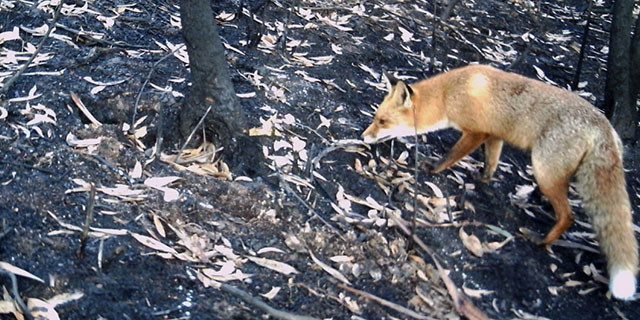
Les hommes ont oublié cette vérité. Mais tu ne dois pas l'oublier, dit le renard. Tu deviens responsable pour toujours de ce que tu as apprivoisé.
Le Petit Prince, chap. 21
Showing posts with label competition. Show all posts

Tuesday, 2 May 2017

Domestic dogs threaten endangered species worldwide


Humans and their canine companions share many close bonds. Wolves (Canis lupus) were the first animal domesticated by people, some time between 15,000 and 50,000 years ago. 

There are now an estimated 1 billion domestic dogs across their near-global distribution.


Sunday, 5 February 2017

Other environmental factors affects more Island foxes diet than competition with feral cats

Cypher, B.L. , Kelly E.C., Ferrara, F.J., Drost C.A., Westall, T.L. & Hudgens, B.R. 2017. Diet patterns of island foxes on San Nicolas Island relative to feral cat removal. Pacific Conservation Biology 23(2) 180-188

Island foxes (Urocyon littoralis) are a species of conservation concern that occur on six of the Channel Islands off the coast of southern California. We analysed island fox diet on San Nicolas Island during 2006–12 to assess the influence of the removal of feral cats (Felis catus) on the food use by foxes. Our objective was to determine whether fox diet patterns shifted in response to the cat removal conducted during 2009–10, thus indicating that cats were competing with foxes for food items. We also examined the influence of annual precipitation patterns and fox abundance on fox diet. On the basis of an analysis of 1975 fox scats, use of vertebrate prey – deer mice (Peromyscus maniculatus), birds, and lizards – increased significantly during and after the complete removal of cats (n = 66) from the island. Deer mouse abundance increased markedly during and after cat removal and use of mice by foxes was significantly related to mouse abundance. The increase in mice and shift in item use by the foxes was consistent with a reduction in exploitative competition associated with the cat removal. However, fox abundance declined markedly coincident with the removal of cats and deer mouse abundance was negatively related to fox numbers. Also, annual precipitation increased markedly during and after cat removal and deer mouse abundance closely tracked precipitation. Thus, our results indicate that other confounding factors, particularly precipitation, may have had a greater influence on fox diet patterns.

Saturday, 21 January 2017

Invasive mesopredators should be controlled at the same time

Molsher, R., Newsome, A. E., Newsome, T. M., & Dickman, C. R. (2017). Mesopredator Management: Effects of Red Fox Control on the Abundance, Diet and Use of Space by Feral Cats. PloS one, 12(1), e0168460.

Apex predators are subject to lethal control in many parts of the world to minimize their impacts on human industries and livelihoods. Diverse communities of smaller predators—mesopredators—often remain after apex predator removal. Despite concern that these mesopredators may be 'released' in the absence of the apex predator and exert negative effects on each other and on co-occurring prey, these interactions have been little studied. Here, we investigate the potential effects of competition and intraguild predation between red foxes (Vulpes vulpes) and feral cats (Felis catus) in south-eastern Australia where the apex predator, the dingo (Canis dingo), has been extirpated by humans. We predicted that the larger fox would dominate the cat in encounters, and used a fox-removal experiment to assess whether foxes affect cat abundance, diet, home-range and habitat use. Our results provide little indication that intraguild predation occurred or that cats responded numerically to the fox removal, but suggest that the fox affects some aspects of cat resource use. In particular, where foxes were removed cats increased their consumption of invertebrates and carrion, decreased their home range size and foraged more in open habitats. Fox control takes place over large areas of Australia to protect threatened native species and agricultural interests. Our results suggest that fox control programmes could lead to changes in the way that cats interact with co-occurring prey, and that some prey may become more vulnerable to cat predation in open habitats after foxes have been removed. Moreover, with intensive and more sustained fox control it is possible that cats could respond numerically and alter their behaviour in different ways to those documented herein. Such outcomes need to be considered when estimating the indirect impacts of fox control. We conclude that novel approaches are urgently required to control invasive mesopredators at the same time, especially in areas where apex predators are absent.

Thursday, 5 January 2017

Interactions between invasive predators, native mammals and fire in a forest ecosystem

Hradsky, B. A. K. (2016). Interactions between invasive predators, native mammals and fire in a forest ecosystem (Doctoral dissertation, University of Melbourne).

A predator’s impact upon its prey depends not only on the evolutionary history and intrinsic characteristics of the two species, but also on the structure of the environment in which they interact. Fire is a major driver of vegetation structure, and there is growing concern that fire could increase the threat that invasive predators pose to native fauna. In this thesis, I investigated the interactions between fire, two invasive predators (red foxes Vulpes vulpes and feral cats Felis catus), and a suite of native mammal species. I used four different approaches to examine this problem within a fire-prone forest ecosystem of south-eastern Australia.


At a landscape-scale, species distributions are often poorly predicted by time-since-fire. I developed a conceptual model of the potential interactions between fire and other drivers of faunal occurrence (including predation), and then used non-parametric Bayesian networks to quantify these relationships for terrestrial native mammals. I found that critical-weight-range mammals were more likely to occur at long unburnt sites with high habitat complexity, and in wetter forest types. In contrast, large macropods preferred less complex habitats and younger or drier forest. Species distributions were generally more strongly associated with habitat complexity than time-since-fire or invasive predator occurrence. Yet, because Bayesian networks captured the relationships between proximal and distal drivers, models could effectively predict the distributions of most species using only mapped and remote-sensed data.

At a finer-scale, I used a before-after control-impact experiment to investigate the short-term effects of a prescribed fire on understorey vegetation cover, native mammal occurrence, and invasive predator occurrence and diet. Associations between species occurrences and vegetation cover in unburnt forest indicated that fire was likely to promote invasive predators but disadvantage small- and medium-sized native mammals. After the fire, there was a five-fold increase in invasive predator occurrence at burnt sites, relative to the control. Concurrently, red foxes increased their consumption of medium-sized native mammals, and selected more strongly for long-nosed bandicoots Perameles nasuta and short-beaked echidnas Tachyglossus aculeatus. The occurrence of several native mammals declined after the fire, but it was difficult to distinguish the effects of the fire from seasonal variation.

I used GPS-tracking collars to investigate whether forest-dwelling red foxes selected for human-modified habitats (including recently-burnt forest). There was substantial variation in fox behaviour, highlighting the importance of considering individual variation in habitat selection studies. At a broad-scale, however, red fox habitat selection tended to vary with proximity to the forest edge. Most foxes selected for human-modified habitats such as reservoirs, roads and forest-farmland edges in their fine-scale movements, particularly at night. Two foxes whose home-ranges overlapped a burn-block intensified their use of the block immediately after fire. Yet other nearby foxes showed little response, suggesting that fire responses are highly localised.

Finally, I used an agent-based simulation model to explore how changes in vegetation cover and predator abundance after fire could affect a critical-weight-range mammal. The model confirmed that fire and predation can have synergistically negative impacts on native mammal populations in burnt forest, and that local access to unburnt refuges substantially reduces these effects.

Invasive predators are highly opportunistic, wide-ranging and thoroughly integrated into this flammable forest ecosystem. Lethal control programs for foxes need to consider fox movement across land-tenures, and could selectively target habitat features such as roadsides, forest-farmland edges and recently-burnt forest. Habitat-based management approaches might also reduce invasive predator impacts on native mammals, for example by preserving dense vegetation in unburnt refuges, or removing anthropogenic resources that subsidise predator populations within forests. Evidence-based, integrated management of threatening processes is vital to conserving native biodiversity.

Sunday, 18 December 2016

No evidence of dietary shift by native predators in sympatry with feral cats

Phillips, R. B., Winchell, C. S., & Schmidt, R. H. (2007). Dietary overlap of an alien and native carnivore on San Clemente Island, California. Journal of Mammalogy, 88(1), 173-180.


Predation by feral cats (Felis catus) is recognized as a major threat to native fauna worldwide, but the competitive effects of cats on native species have not been extensively studied. Cats occur on San Clemente Island, California, in sympatry with endemic island foxes (Urocyon littoralis clementae). We examined diets of cats and island foxes between years, seasons, and habitats to assess the potential for resource competition between the 2 species. Analysis of 602 cat and 958 fox feces revealed a high level of dietary overlap (O = 0.93) and relatively narrow niche breadths for both species (Bstandard Fox = 0.37; Bstandard Cat = 0.49). Despite the overlap in diet, cats and foxes appear to partition prey resources. Cats consume approximately equal proportions of arthropod (47.9%) and vertebrate (44.2%) prey, the latter primarily rodents (29.2%) and lizards (12.9%). In contrast, foxes appear to rely more on arthropods (57.7%), with plants (20.5%) and vertebrates (21.6%) occurring in lower, but roughly equal frequencies. Season appeared to have little effect on diet; however, diet did vary between habitats and years for both species. Diets of cats on San Clemente Island are consistent with those from other studies. We found no evidence of a dietary shift by foxes that were in sympatry with cats.

Sunday, 4 December 2016

Trophic overlap between wolves and free-ranging wolf× dog hybrids

Bassi, E., Canu, A., Firmo, I., Mattioli, L., Scandura, M., & Apollonio, M. (2017). Trophic overlap between wolves and free-ranging wolf× dog hybrids in the Apennine Mountains, Italy. Global Ecology and Conservation, 9, 39-49.

Hybridization between wolves (Canis lupus) and domestic dogs (Canis familiaris) can represent a threat to wild populations via genetic introgression and ecological competition. Therefore understanding the ecological role of hybrids may be crucial for developing appropriate conservation strategies.

The Italian wolf population has a peculiar genetic composition due to a long-lasting geographic isolation. Nowadays, however, its genetic integrity is threatened by the spread of canine genes as a result of the hybridization with stray dogs in the wild.

The aim of the present study was to gain insights into the ecological role of free-ranging wolf–dog hybrids by investigating their winter food habits in comparison with wolves in a mountain area of Central Italy. Levels of genetic introgression from the dogs were assessed in two adjacent areas occupied by up to five different packs by analyzing non-invasive samples and carcasses collected therein with a set of uniparental and bi-parental molecular markers.

The obtained results enabled us to classify the two areas as ‘hybrid’ and ‘wolf’ areas based on their level of genetic introgression.

Trophic niche and similarity/dissimilarity analyses did not detect significant difference in the diet between the two areas: in both of them, wild boar was the main prey, followed by roe deer. Furthermore, the same age/body mass classes of the two ungulates were selected by wolves and hybrids. Our findings confirmed wolf–dog hybrids as potential competitors for wolves. Further studies on other aspects of their biology and ecology are recommended in order to better estimate the impact of hybridization on natural wolf populations.

Sunday, 3 July 2016

Ecological impact of free-ranging dogs in Poland

Wierzbowska, I. A., Hędrzak, M., Popczyk, B., Okarma, H., & Crooks, K. R. (2016). Predation of wildlife by free-ranging domestic dogs in Polish hunting grounds and potential competition with the grey wolf. Biological Conservation, 201, 1-9.

Although the domestic dog (Canis familiaris) is a ubiquitous exotic predator that can detrimentally affect natural environments, studies on their ecological impact are relatively scarce, particularly at a national scale. We exploited data derived from Polish Hunting Association reports to provide a national evaluation of rural free-ranging dogs in Poland. Our results demonstrate that free-ranging dogs are widespread and abundant, frequently killing wildlife and livestock in Poland and likely exerting intraguild competition with native carnivores such as grey wolves (Canis lupus). On average, hunting club records estimate that over 138,000 rural free-ranging dogs occurred annually in hunting grounds. In addition, nearly 3000 free-ranging greyhounds and their mixed breeds occurred annually on hunting grounds, although greyhound hunting has been banned in Poland and they are legally required to be restrained within fencing. On average, over 33,000 wild animals and 280 livestock were killed by free-ranging dogs on Polish hunting grounds annually. The number of both wild animals and livestock killed by dogs were strongly and positively correlated with the numbers of rural free-ranging dogs recorded on hunting grounds, reflective of their predation pressure. Also, the number of wild animals killed by dogs was positively correlated with estimates of population sizes and harvest levels of wildlife, reflective of prey availability. Dog predation, in conjunction with harvest by humans, may cause unsustainable off-take rates of some game species. Grey wolves, documented within 39 of the 49 Hunting Districts, ate similar prey as dogs, including ungulates and livestock, and killed dogs on hunting grounds, suggesting both resource and interference competition between these sympatric canids. This comprehensive analysis provides important information about the ecological impact of free-ranging dogs and recommendations for alternative legislative and management measures to control their impacts.


Wednesday, 6 January 2016

Dogs are a significant problem for the native mammal community in one Andean region

Zapata-Ríos, G., & Branch, L. C. (2016). Altered activity patterns and reduced abundance of native mammals in sites with feral dogs in the high Andes. Biological Conservation, 193, 9-16.

Negative impacts of some introduced carnivores like feral cats are well documented, widespread, and significant. Comparatively, the effects of feral dogs (individuals that are not associated with people or human settlements) on native wildlife are poorly known, even though feral dogs occur worldwide. We assessed the density of feral dogs and compared relative abundance, activity patterns and habitat use of 10 species of mammals in areas with and without feral dogs in Cayambe-Coca National Park in the northern Ecuadorian Andes using line transect surveys, camera traps, and track and sign surveys. In areas where feral dogs were present, four native mammals were absent: mountain coati (Nasuella olivacea), mountain paca (Cuniculus taczanowskii), long-tailed weasel (Mustela frenata), and northern pudu (Pudu mephistophiles). Relative abundances of six species were lower compared to areas without feral dogs: puma (Puma concolor), Andean fox (Lycalopex culpaeus), Andean bear (Tremarctos ornatus), striped hog-nosed skunk (Conepatus semistriatus), mountain tapir (Tapirus pinchaque), and little red brocket deer (Mazama rufina). Three species significantly altered activity patterns where feral dogs were present (Andean bear, mountain tapir, and little red brocket deer). In contrast, none of the native mammal species exhibited shifts in habitat use in areas with feral dogs. Dogs used all habitat types according to availability. Our results point to feral dogs as a significant problem for the native mammal community of this Andean region, and highlight the need to consider feral dogs as a potential threat to wildlife in other regions where anthropogenic effects appear to be low but feral dogs are present, particularly natural areas that contain endangered and endemic species.

Wednesday, 30 December 2015

Distribution and habitat use of invasive dogs in Colombia

Manjarrés Rodríguez, T. S. (2015). Distribución y uso de hábitat del perro (Canis familiaris) en la cuenca alta del río Otún (Risaralda-Colombia).Trabajo de grado presentado para optar al titulo de: Magister en Conservación y Uso de la Biodiversidad (Modalidad de investigación)
The dog (Canis familiaris) is a alien specie that when is present in natural areas get to interact with wildlife as a competitor, predator and transmitter of disease. The present study identified through the
tracking the dog abundance index and the dog selection of habitat types, its density with the probability density Kernel-ArcGis 10 and its potential distribution related with environmental
variables that limit or favor he dog presence through the MAXENT program. How results the dog
was found in both vegetation types studied (secondary forest and grassland). The dog got a high
density and abundance in the study area, surpassing the abundance of wildlife registered. The
Bonferroni interval showed that the dog and the fox (Cerdocyon thous) shared the same types of
habitat. The variables that favors their presence were the proximity to house and roads turning the
upper basin of the river Otun in vulnerable to the constant invasion of this specie.

Friday, 18 September 2015

Stray cats and dogs exclude native predators in Madagascar

Farris, Z. J., Kelly, M. J., Karpanty, S., & Ratelolahy, F. (2015). Patterns of spatial co‐occurrence among native and exotic carnivores in north‐eastern Madagascar. Animal Conservation.

Human populations continue to increase and encroach on remaining natural habitats worldwide, resulting in greater numbers and larger ranges of commensal exotic carnivores such as cats and dogs. This results in increased interactions with native wildlife. In Madagascar, we know relatively little about the effects of domestic and/or feral dogs and cats on native carnivore populations. We investigated spatial interactions by combining photographic sampling across seven sites with two-species co-occurrence modeling to provide the first assessment of the spatial co-occurrence of native and exotic carnivores in Madagascar, including an examination of habitat characteristics that explain these relationships. Our surveys from 2008 to 2013 accumulated 2991 photo-captures of native and exotic carnivores in 8854 trap nights. We found that native and exotic carnivores in rainforest habitat occur together less often than expected and that exotic carnivores may be replacing native carnivores, particularly in forest areas nearest villages. Six of the native carnivores in this study had higher site use in the absence of exotic carnivores and their species interaction factors (SIF) revealed a lack of co-occurrence (e.g. SIF < 1.0). We found that nocturnal and/or crepuscular native carnivores were less likely to co-occur with exotic carnivores. We demonstrate the effectiveness of combining photographic sampling with co-occurrence modeling to investigate the effects of exotic carnivores on an entire community of native carnivores. Our study exposes the strong negative influence of exotic carnivores, ranging from exclusion to complete replacement of native carnivores, and we urgently recommend a combination of targeted educational programs and removal programs to combat the influx of exotic carnivores.

Thursday, 23 April 2015

Vulture-canid competition

Campbell, M. (2015). Biodiversity and Vulture-Canid Relations. J Biodivers Endanger Species, 3, e122.

Conclusions
The evidence hints that the more eagle-like Old World vultures have a more equal relationship than the New World vultures with scavenging canids. Further study on this difference is important for three reasons. Vultures have declined in many Eurasian and African countries and canids (including feral dogs) have increased their scavenging role. Hence, a vulture population recovery must acknowledge the competitive role of canids. Also, as condor recovery programs are gathering ground in the Americas, the coyotes are possible impediments, possibly to a greater degree than jackals would be to old world vultures. Canids have a strong sense of smell and may precede vultures at hidden carcasses (condors and Old World vultures lack a sense of smell), hence when more visible carcasses are removed for sanitation purposes, conflicts may emerge between vultures and canids over the few remaining food sources. This encourages possibilities for detailed field research, which may increase our knowledge of the ecological relations of vultures and link the somewhat disparate studies of vulture evolution and biology with ecology and conservation possibilities.

Thursday, 3 July 2014

Domestic cats outcompete endemic endangered Iriomote cat

Watanabe, S., Nakanishi, N., & Izawa, M. (2003). Habitat and prey resource overlap between the Iriomote cat Prionailurus iriomotensis and introduced feral cat Felis catus based on assessment of scat content and distribution. Mammal Study, 28(1), 47-56.

The Iriomote cat Prionailurus iriomotensis occurs only on Iriomote Island in the Ryukyu Archipelago of southern Japan. The population is estimated at 100 individuals and is on the decline. We examined resource overlap for prey and habitat between this species and introduced cats Felis catus by scat census and analysis of scat contents. The distribution of scats was completely different between the two species. The distribution of scats from Iriomote cats was associated with environmental factors such as vegetation types and terrain conditions, while the distribution of scats from feral cats mainly depended on locations of garbage dumps. Although the feral cat heavily utilized human rubbish, it also preyed upon thirteen species of native animals, ten of which were also used by Iriomote cats. From 1997 to 2001, the number of observed scats from Iriomote cats declined significantly, while feral cat scat became more common. Feral cats on Iriomote Island still depend on humans, but the expansion of their distribution into habitats of Iriomote cats may increase the competition for prey and habitat resources in the future.

Wednesday, 11 June 2014

Can cat predation help competitors coexist in seabird communities?

Pontier, D., Fouchet, D., & Bried, J. (2010). Can cat predation help competitors coexist in seabird communities?. Journal of theoretical biology, 262(1), 90-96.

On oceanic islands, nest site availability can be an important factor regulating seabird population dynamics. The potential for birds to secure a nest to reproduce can be an important component of their life histories. The dates at which different seabird species arrive at colonies to breed will have important consequences for their relative chances of success. Early arrival on the island allows birds to obtain nests more easily and have higher reproductive success. However, the presence of an introduced predator may reverse this situation. For instance, in the sub-Antarctic Kerguelen archipelago, early arriving birds suffer heavy predation from introduced cats. Cats progressively switch from seabirds to rabbits, since the local rabbit population starts to peak after early arriving seabird species have already returned to the colony. When late-arriving birds arrive, cat predation pressure on seabirds is thus weaker. In this paper, we investigate the assumption that the advantage of early nest monopolization conferred to early arriving birds may be counterbalanced by the cost resulting from predation. We develop a mathematical model representing a simplified situation in which two insular seabird species differ only in their arrival date at the colony site and compete for nesting sites. We conclude that predation may ensure the coexistence of the two bird species or favor the late-arriving species, but only when seasonal variations in predation pressure are large. Interestingly, we conclude that arriving early is only favorable until a given level where high reproductive success no longer compensates for the long exposure to strong predation pressure. Our work suggests that predation can help to maintain the balance between species of different phenologies.

Monday, 21 April 2014

Cats' threat to wildlife in San Diego County


...In San Diego County, the potential threat feral cats pose to wildlife is particularly troublesome. Our county is within one of the world’s biodiversity hot spots. Our ocean, beaches, bays, mountains and desert landscapes, and unique coastal sage scrub and chaparral plant communities, support a wide diversity of plant and animal life, including more than 500 species of birds.


Saturday, 22 February 2014

Complex interactions between wolves and dogs


Lescureux, N., & Linnell, J. D. (2014). Warring brothers: The complex interactions between wolves (Canis lupus) and dogs (Canis familiaris) in a conservation context. Biological Conservation, 171, 232-245.

Although both wolves and dogs have been the subjects of numerous studies in many disciplines, the complex relationships between them have not yet been synthesized within a common review, and neither has it been placed in a holistic conservation context. Information and data are spread across numerous publications from different disciplines that rarely interact. Dogs have become the most common carnivore and their population is still increasing. In a context of wolf recovery in multi-use landscapes, there is a growing concern among conservationists for the potential negative impact of dogs on wolf conservation. With this paper we aim to review the numerous and complex interactions existing between wolves and dogs, using literature from disciplines as diverse as history, archeology, anthropology, genetics, ecology, and epidemiology in order to better understand the wolf–dog relationship and its potential impact on wolf conservation. Starting with their phylogenetic relationship and following a summary of the current knowledge on the dog’s ancestry we explore how dogs can represent a direct threat for wolves through hybridization, disease transfer and competition. The review highlights a number of ways in which dogs can impact wolf conservation, although a general lack of data and conclusive studies is a common theme that emerges for many topics. Then we analyse how dogs can mitigate human–wolf conflicts through their role as livestock guardians or wolf hunters. Finally we describe the complex phenomenon of wolf predation on dogs before discussing the wolf–dog relationships in general, with a special focus on including a more anthropological perspective. The review highlights the diversity of interactions between wolves and dogs, that can be both negative and positive for wolf conservation. However, more important than these direct impacts, the review highlights how the wolf–dog relationship challenges human attempts to construct simple dichotomies between wild and domestic, or between nature and culture. The borders between these concepts are in fact much more fluid and elusive than is often appreciated, and wolf conservation must adapt to this more complex reality.


See more on hybridization between dogs and wild canids 

Saturday, 7 December 2013

Dogs limit Fosa populations in Madagascar

Barcala, O. (2009). Invasive Stray and Feral Dogs Limit Fosa (Cryptoprocta ferox) Populations in Ankarafantsika National Park, Madagascar (Doctoral dissertation, Duke University).

The fosa (Cryptoprocta ferox) is a medium sized carnivore of the family Eupleridae which is endemic to the island of Madagascar. Recent publications have shown that the fosa is under significant pressure from deforestation and fragmentation, leading to its classification as Threatened under the Endangered Species Act. A trap study was conducted from 1999 to 2008 in Ankarafantsika National Park, Madagascar, to ascertain the health of a population and measure additional threats to its survival. Feral dogs (Canis lupus familiaris) appeared in the park in 2004 and a comparison of trap rates of the two species shows an inverse relationship between the presence of dogs and the presence of fosa. In this paper I discuss reasons for this relationship, the effect of the continued presence of dogs, and implications for the management of the park.

Monday, 2 December 2013

Feral dog threats to Snow leopard

Jackson, RM, Mallon, D, Sharma, RK, Suryawanshi, KS, & Mishra, C. 2013. Snow Leopard Survival Strategy. Version 2013.1, Snow Leopard Network.

Two main impacts of feral dogs to Snow Leopard

Feral Dogs Attacking Snow Leopard and Prey: In a number of localized areas, packs of feral dogs are increasingly damaging the snow leopard’s natural prey base. In India, for example, such packs are especially prolific around military encampments and townships supporting tourism. Elsewhere, they congregate along tourist trekking routes, including well-travelled routes in Nepal and Bhutan and monasteries.

There are new and emerging threats to snow leopards or their habitats that need better understanding. For instance, a growing population of feral dogs locally poses threats such as disease transmission to snow leopards and other carnivores.


Friday, 1 November 2013

Habitat sharing of wildcat, domestic cat and hybrids

Germain, E., Benhamou, S., & Poulle, M. L. (2008). Spatio‐temporal sharing between the European wildcat, the domestic cat and their hybrids. Journal of Zoology, 276(2), 195-203.

The European wildcat Felis silvestris silvestris, which can hybridize with the domestic cat Felis catus to produce fertile hybrids, is threatened by hybridization. To identify the behavioural processes that can affect interbreeding, we investigated the spatio-temporal sharing between wildcats, domestic cats and their hybrids (defined on their genotypes) in a rural area of north-eastern France where hybridization is frequent. Wildcats' and hybrids' home ranges were larger than those of domestic cats, and they did not vary according to body mass, season and reproductive period. The three types of cats had similar daily activity rhythms but the concordance between their space use patterns was low or null. Thus, a high spatio-temporal concordance is not a prerequisite for hybridization. Rare excursions made by the cats outside of their home ranges may be at the origin of interbreeding. Moreover, hybrids may play a key role in hybridization by behaving as wildcats and by sharing at least a part of their range with them as well as with domestic cats. Behavioural barriers between them and wildcats may not exist because of their similarity in morphology and spatial behaviour.


See more on domestic cat introgression in wildcat

Saturday, 19 October 2013

Interactions between feral cats, foxes, native carnivores, and rabbits in Australia

Robley, A., Reddiex, B., Arthur T., Pech R. & Forsyth, D. (2004). Interactions between feral cats, foxes, native carnivores, and rabbits in Australia. Arthur Rylah Institute for Environmental Research, Department of Sustainability and Environment, Melbourne.

Through the Natural Heritage Trust, the Department of the Environment and Heritage (DEH) is working to develop and implement coordinated actions to reduce damage to the natural environment and primary production caused by feral animals.
Predation by foxes (Vulpes vulpes) and feral cats (Felis catus) have been identified as known or perceived threats to 34 and 38 native species, respectively, in threat abatement plans provided for under the Environment Protection and Biodiversity Conservation Act 1999 (EPBC Act). Land degradation and competition with native species by European rabbits (Oryctolagus cuniculus) is also listed as a key threatening process under the EPBC Act. The aim of this report is to review the evidence of the interactions between these three pest species, their control and the impact they have on Australian native species. The objectives of this report are:
1. To determine the nature of interactions between feral cats and foxes (competition and/or predation), especially in relation to control of either or both species, and the associated impacts on native species and ecological communities (especially those
listed as threatened under the EPBC Act), and feral rabbit populations within Australian habitats/regions.
2. To determine the implications of feral rabbit control to feral cat, fox and native prey populations, and the importance of rabbits for maintaining high feral cat and fox numbers within Australian habitats/regions.
3. To determine the interactions between feral cats, foxes and native carnivores and relative significance of competition and predation by feral cats and foxes to these native species.
Based on the degree of overlap in distribution and diet of feral cats and foxes, there is a potential for competitive interactions. There is circumstantial evidence of foxes excluding feral cats from food resources, and of foxes killing feral cats. No studies have experimentally demonstrated an increase in the rate of predation by feral cats on native species following a reduction in fox abundance in Australia. Several studies have described increases in cat abundance following reductions in fox numbers resulting from control operations. However, the evidence for an increase in abundance in cat abundance following fox control is inconsistent between studies and may be confounded by inadequate monitoring techniques and behavioural changes.
A potential cost of predator control is an increase in rabbit abundance, which may cause increased competition for food and other resources with native herbivores. Several studies suggest that predators can exert prolonged regulating pressure on rabbits at low densities and can impede recovery of rabbit populations. Particularly when populations have already been significantly reduced through external factors such as disease, drought, high or low rainfall, floods or warren ripping. However, predator manipulation studies over a wide range of habitats have provided inconsistent evidence of predator regulation of rabbits. Predation appears to play an important role in regulating rabbit populations in arid and semi-arid systems under certain conditions (e.g. after drought has reduced rabbit populations), but has weaker effects in more temperate environments or when environmental conditions improve and rabbits escape regulation. It is important to note that many of the studies that have shaped our understanding of population regulation of rabbits in Australia were undertaken prior to the escape of Rabbit Haemorrhagic disease (RHD) in Australia. The potential regulatory effect of RHD on rabbit populations and the effect this could have on rabbit–predator interactions is largely unknown. The impact of rabbits on flora and soils is well documented, but the impact on native mammal species is poorly understood.
The impact of changes in predators and their primary prey on native mammal species has been the focus of few experimental studies. Studies that have discussed the role of foxes and feral cats in regulating rabbit populations have largely not investigated the benefits or costs of predator control to native species. Other studies that have investigated the impact of fox and cat control on native mammal species have reported benefits from pest control; however, there are many acknowledged limitations of these studies. While several studies have reported that fox removal has benefited a range of native species, many have not assessed pre-control population parameters, do not have control sites, are not replicated, and have not attempted to test alternative hypotheses to predation, such as competition by herbivores. Also there are several notable exceptions to a general response to fox control (e.g. mixed responses of small mammal abundance from Operation FoxGlove WA, Project Eden, WA and Project Deliverance, Vic). While
the limitations cited above might have resulted from limited budgets and logistical constraints associated with large-scale operations, the inferences that can be drawn are limited nevertheless.
From the studies reviewed it is unclear what the impact of a decline in rabbits is on native species. In the studies reviewed in this report, both feral cats and foxes shift consumption to the next most abundant prey item (e.g. invertebrates, reptiles, or birds) in the absence or decline of rabbits. There is no evidence that as a result of a decrease in rabbits there is an increase in predation rates on populations of rare or endangered species. The interactions between rabbits and predators in arid and semi-arid environments have been relatively well studied in comparison to more temperate parts of Australia. Our level of understanding of these interactions and the impact on native species in arid and semi-arid and temperate environments is less well understood. In temperate environments the relationship between changes in rabbit abundance and declines in either feral cats or foxes has not been clearly demonstrated. Also, no studies showed that a decline in rabbit abundance leads to an increased rate of predation on native species. It appears that in systems where rabbits are not the staple prey item, changes in rabbit abundance have little impact on populations of feral cats or foxes.
Little quantitative information is available on the interactions between introduced predators and native carnivores. Available data suggests that dingoes (Canis lupus dingo), may be capable of suppressing fox populations, but that this is likely to be mediated by specific environmental conditions such as drought. There is some evidence to suggest that foxes spatially and temporally avoid wild dogs and that only during times of limited resources do the two come into direct conflict. Similarly, there is a lack of knowledge on the impacts of feral cats and foxes on native predators.
We used simulation models to explore the potential interactions between rabbits, foxes and feral cats. The sensitivity of the model to small changes in rainfall suggests a more detailed understanding of the relationships is required. More specifically, there is a need to quantify the relationship between rabbits and foxes and feral cats. Numerical responses for the two predators should be determined in relation to both the abundance of rabbits (or juvenile rabbits) and simultaneously the abundance of alternative food sources. To properly quantify and model the impact of foxes and feral cats on both rabbits and native prey requires kill rates of these prey to be assessed in relation to the availability of all prey types. This is particularly important for native prey. It is also important to understand the population dynamics of native Australian prey and the population dynamics of rabbits following the arrival of RHD, in the absence of predation from introduced predators. The limited data available for temperate systems suggest fox population dynamics may not be linked as strongly to rabbit dynamics as they appear to be in semi-arid systems. Alternative models are thus required for temperate systems. These models will almost certainly require data on the interactions of predators and a wide variety of foods. Feral cats are rarely seen in spotlight counts in temperate systems and no quantitative numerical relationships can be established from
the available data. Several studies have reported that integrated control (ripping, RHD or both poison baiting and RHD) has enhanced the decline of predator species, but to our knowledge no studies have investigated the costs and benefits of integrated feral animal control. A risk-averse approach would be to undertake integrated control wherever feral cats, foxes and rabbits co-occur. However, this may not be practical or possible due to limitations on resources. At present we have no clear understanding of the costs and benefits associated with integrated control programs. Despite a number of studies that have provided valuable insights into the impacts that changes in prey abundance can have on populations of introduced predators, and how predators can influence the abundance of prey species, there are many gaps in our understanding of predator prey interactions.
The four main areas where further information would improve our understanding of the interactions between feral cats, foxes, rabbits, their control and the impacts on native species are:
1. How to effectively monitor changes in abundance of introduced predators, particularly feral cats. At this point in time we are limited in our ability to control feral cats over large areas, although this is an area of current research.
2. The impact of predator control operations on the population dynamics and social organisation of sympatric predators and the impacts on native species and communities.
3. The role of rabbits in temperate systems in supporting elevated numbers of foxes and feral cats.
4. The effects of disease (RHD and myxomatosis), particularly in temperate environments, on the interactions between predators and their prey A combination of focused research programs on the more tractable parameters of the above identified gaps, and larger scale experiments conducted over appropriate temporal and spatial scales is likely to produce important advances in our understanding of the interactions between feral cats, foxes, rabbits, their control and native species. It is recommended that at the completion of such studies the information gained is used to update the models of the systems as presented in this review, that the results be peer reviewed and made widely available, and the outcomes from the models should be used to direct management strategies for these pest species.

Friday, 4 October 2013

BOOK: Free-Ranging Dogs and Wildlife Conservation

Gompper, M.E. (Ed.) 2013. Free-Ranging Dogs and Wildlife Conservation. Oxford University Press. 

Table of contents

Luigi Boitani: Foreword
Matthew E. Gompper: Introduction: Outlining the Ecological Influences of a Subsidized, Domesticated Predator
1: Matthew E. Gompper: The Dog-Human-Wildlife Interface: Assessing the Scope of the Problem
2: Euan G. Ritchie, Mike Letnic, Christopher R. Dickman and Abi Tamim Vanak: Dogs as Predators and Trophic Regulators
3: Abi Tamim Vanak, Christopher R. Dickman, Eduardo A. Silva-Rodriguez, James R. A. Butler and Euan G. Ritchie: Top-dogs and Under-dogs: Competition between Dogs and Sympatric Carnivores
4: Michael A. Weston and Theodore Stankowich: Dogs as Agents of Disturbance
5: James R.A. Butler, John D.C. Linnell, Damian Morrant, Vidya Athreya, Nicolas Lescureux and Adam Mckeown: Dog Eat Dog, Cat Eat Dog: Social-ecological Dimensions and Implications of Dog Predation by Wild Carnivores
6: Darryn Knobel, James R. A. Butler, Tiziana Lembo, Rob Critchlow and Matthew E. Gompper: Dogs, Disease, and Wildlife
7: Jennifer A. Leonard, Jorge Echegaray, Ettore Randi and Carles Vilà: Impact of Hybridization with Domestic Dogs on the Conservation of Wild Canids
8: Ryan H. Boyko and Adam R. Boyko: Dog Conservation and the Population Genetic Structure of Dogs
9: Kurt VerCauteren, Michael Lavelle, Thomas M. Gehring, Jean-Marc Landry and Laurie Marker: Dogs as Mediators of Conservation Conflicts
10: Deborah A. (Smith) Woollett, Aimee Hurt and Ngaio Richards: The Current and Future Roles of Free-ranging Detection Dogs in Conservation Efforts
11: Jeremy Koster and Andrew Noss: Hunting Dogs and the Extraction of Wildlife as a Resource
12: Kelly K. Miller, Euan G. Ritchie and Michael A. Weston: The Human Dimensions of Dog-Wildlife Interactions
Related Posts Plugin for WordPress, Blogger...