Les hommes ont oublié cette vérité. Mais tu ne dois pas l'oublier, dit le renard. Tu deviens responsable pour toujours de ce que tu as apprivoisé.
Le Petit Prince, chap. 21
Showing posts with label fencing. Show all posts

Thursday, 17 March 2016

For Rare Hawaiian Birds, Cats Are Unwelcome Neighbors

Last fall, a nest camera operated by the Kaua‘i Endangered Seabird Recovery Project recorded a devastating scene. A feral cat extracted an adult shearwater and its chick from their nearly inaccessible mountaintop burrow and killed both birds. (Watch the video here, but be warned that the content is graphic.)...


Tuesday, 2 December 2014

Patent: animal proof hooded barrier, related enclosure systems and method of maintaining an animal proof domain

Moore, D. E. 2014. Animal Proof Hooded Barrier, Related Enclosure Systems and Method of Maintaining an Animal Proof Domain. U.S. Patent Application 12/689,591, 19 Ene. 2010.

The invention encompasses a substantially animal-proof barrier (“APB”) that includes (a) two supports that are laterally spaced apart to define a substantially vertical plane there between; (b) fencing material that is attached to each of the supports and spans the defined substantially vertical plane to form a simple barrier that has a top edge, a bottom edge, a front surface and a back surface, wherein the simple barrier divides a domain into a first area and a second area; and (c) a hood having an inner surface, the hood originating from the top edge of the simple barrier. An angle formed by the inner surface of the hood and the front surface of the simple barrier measures about 10 degrees to about 80 degrees, such that a channel having a substantially V-shaped cross section is formed.

http://www.google.com/patents/US20100243979

Friday, 1 August 2014

Small vertebrate abundance in alien-proof exclosures

Moseby, K. E., Hill, B. M., & Read, J. L. (2009). Arid recovery – a comparison of reptile and small mammal populations inside and outside a large rabbit, cat and fox-proof exclosure in arid South Australia. Austral Ecology 34, 156–169.

Australian arid zone mammal species within the Critical Weight Range (CWR) of 35 g–5.5 kg have suffered disproportionately in the global epidemic of contemporary faunal extinctions. CWR extinctions have been attributed largely to the effects of introduced or invasive mammals; however, the impact of these threatening processes on smaller mammals and reptiles is less clear. The change in small mammal and reptile assemblages after the removal of rabbits, cats and foxes was studied over a 6-year period in a landscape-scale exclosure in the Australian arid zone. Rodents, particularly Notomys alexis and Pseudomys bolami, increased to 15 times higher inside the feral-proof Arid Recovery Reserve compared with outside sites, where rabbits, cats and foxes were still present. Predation by cats was thought to exert the greatest influence on rodent numbers owing to the maintenance of the disparity in rodent responses through dry years and the differences in dietary preferences between rabbits and P. bolami. The presence of introduced Mus domesticus or medium-sized re-introduced mammal species did not significantly affect resident small mammal or reptile abundance. Abundance of most dasyurids and small lizards did not change significantly after the removal of feral animals although reductions in gecko populations inside the reserve may be attributable to second order trophic interactions or subtle changes in vegetation structure and cover. This study suggests that populations of rodent species in northern South Australia below the CWR may also be significantly affected by introduced cats, foxes and/or rabbits and that a taxa specific model of Australian mammal decline may be more accurate than one based on body weight.

Monday, 9 June 2014

Control of feral cats for nature conservation (parts I to IV)

Risbey, D. A., Calver, M., & Short, J. (1997). Control of feral cats for nature conservation. I. Field tests of four baiting methods. Wildlife Research, 24(3), 319-326.

Four methods of baiting were evaluated on a radio-collared population of feral cats on Heirisson Prong, Shark Bay, Western Australia. Dried-meat baits, baiting rabbits to kill cats through secondary poisoning, a fishmeal-based bait and a bait coated in the flavour enhancer Digest were tested. All proved to be ineffective for controlling feral cats. Future research should explore baits more ‘natural’ in appearance and the effect of visual lures, and possibly bait over a larger area to increase the number of cats exposed to baits.

Short, J., Turner, B., Risbey, D. A., & Carnamah, R. (1997). Control of feral cats for nature conservation. II. Population reduction by poisoning. Wildlife Research, 24(6), 703-714.

A feral cat population was substantially reduced by poisoning at a semi-arid site in Western Australia. The control programme was designed to protect two species of endangered native mammals that had recently been reintroduced to the site. Feral cats were poisoned with carcasses of laboratory mice, each impregnated with 4.5 mg of sodium monofluoroacetate (1080). Baits were placed at 100-m intervals along the track system each night for four consecutive nights. Kill rates were assessed by monitoring survival of radio- collared cats and by spotlight counts of cats before and after baiting. All radio-collared cats were killed and there was a 74% reduction in spotlight counts of cats after baiting. Bait removal varied with the abundance of rabbits, the primary prey item for cats in this area. Effectiveness of control operations against feral cats is maximised by baiting at times of low prey abundance. Monitoring the changing abundance of the primary prey species provides important information for timing control operations against feral cats.

Short, J., Turner, B., & Risbey, D. (2003). Control of feral cats for nature conservation. III. Trapping. Wildlife Research, 29(5), 475-487.

We present comparative success of various trapping methods trialed during control of feral cats at a site for the reintroduction of threatened mammals at Shark Bay, Western Australia. Our results come from 31 703 trap-nights that caught 263 cats (an average of 0.83 per 100 trap-nights). Cats differed markedly in their vulnerability to trapping depending on whether they primarily scavenged at rubbish tips or around human settlement or whether they hunted for their food in the bush. Cage traps were an effective means of controlling the former, with 9.4 cats captured per 100 trap-nights. Scavenging cats included a higher proportion of sub-adults and kittens and lower proportion of adult males than hunting cats. Variation between years in capture success for hunting cats was largely explained by the abundance of rabbits relative to that of cats and whether the rabbit population was increasing or decreasing. These factors accounted for a nine-fold difference in trap success. The number of cats caught in any particular trapping session could be explained by location (rubbish tip or town versus bush), trapping effort (typically greater effort yielded higher captures), abundance of cats at the site (captures were highest when cats were abundant), and season (captures were highest in the first half of the year when the young of the year were becoming independent). Concealed foot-hold traps, in a range of possible sets, provided effective methods for capturing cats that hunt, except where capture of non-target species was a critical limiting factor. Cage traps caught cats at a comparable rate to foot-hold traps for standard sets, but caught a significantly different cohort. Concealed foot-hold traps caught a higher percentage of adult cats, particularly males, than did cage traps. Mouse carcases and rabbit pieces were significantly more effective as lures when rabbits (the major food of cats at the site) were at low densities, whereas the success of commercial scent lures was unrelated to food availability. Significantly more cats than expected were caught using food as an attractant at times of food shortage (late summer, autumn and early winter) for both scavenging and hunting cats. In contrast, scent lures caught significantly more cats than expected in spring and summer when cats were defending access to mates and/or territory. Hence, no single trap type, trap set, or lure provided unequivocally superior performance over others. Control is likely to be best achieved by a variety of trapping methods and lure types used in combination, supplementing well timed poisoning efforts. Trap success is likely to be maximised by trapping at times when the dominant prey of cats are scarce relative to the number of cats and are decreasing in abundance.

Short, J., & Turner, B. (2005). Control of feral cats for nature conservation. IV. Population dynamics and morphological attributes of feral cats at Shark Bay, Western Australia. Wildlife Research, 32(6), 489-501.

The dynamics of feral cats (Felis catus) were assessed at Shark Bay at two adjoining sites subject to differing intensities of predator control. The Heirisson Prong conservation reserve (12 km2) was fenced to exclude predators and was subject to intensive control actions, while a portion of the adjoining Carrarang pastoral lease (60 km2) was subject to a lesser level of control. Foxes (Vulpes vulpes) were largely absent at both sites owing to effective control. Densities of cats were highly variable over time, showing strong annual fluctuations over 14 years of records Three independent estimates of peak density were made, varying between 1.5 and 2.8 km-2. Rate of increase was assessed as 0.98 on the pastoral lease and 0.99 on the conservation reserve (to give an approximate doubling of the population every 8.5 months). A logistic model, with K = 1.5 km-2 and r of 0.98, gave a maximum sustained yield of 0.37 cats km-2 year-1 and a harvest rate of >0.6 cats km-2 year-1 for their elimination in 5 years or less (for K = 2.8 km-2  these values increase to 0.69 and >1.05 km-2 year-1 respectively). Harvest outcomes at both sites were consistent with these models. However, the effort required to maintain a given offtake rate increased 6-fold at low cat densities and offtake by trapping as a function of cat density took the form of a Type 3 functional response. The functional response for cat trapping (the offtake with constant effort per unit time) overlaid against the curve of cat productivity suggested a stable equilibrium point at low cat densities (0.07–0.13 cats km-2). Hence, trapping effort needed to be greatly intensified at low cat densities and/or augmented by other methods of control to eradicate cats from the closed system of the reserve. The strongly male-biased sex ratio of captures at the barrier fence suggested high levels of reinvasion from beyond the harvested area of the pastoral lease and this made effective control in this open system difficult.
Wednesday, 4 June 2014

Cost‐effectiveness analisys of fencing vs. pest trapping

Norbury, G., Hutcheon, A., Reardon, J., & Daigneault, A. (2014). Pest fencing or pest trapping: A bio‐economic analysis of cost‐effectiveness. Austral Ecology.

Scofield et al. discredited the utility of pest-exclusion fences for restoring biodiversity partly on the grounds of unquantified costs and benefits. We estimated the discounted costs of mammal exclusion fences, semi-permeable (‘leaky’) fences and trapping, over 50 years and adjusted costs by their observed effectiveness at reducing mammalian predator abundance. We modelled data from two large predator management programmes operated by the New Zealand Department of Conservation. Using typical baseline costs and predator control efficacies (scale 0 to 1), the model predicted that an exclusion fence (efficacy 1.0) is the cheapest and most cost-effective option for areas below about 1 ha, a leaky fence (efficacy 0.9) is most cost-effective for 1–219 ha, and trapping (efficacy 0.6, based on 0.2 traps per hectare and a 1500-m buffer to reduce predator reinvasion) for areas above 219 ha. This ranking was insensitive to adjustments in efficacy, but reducing efficacy of leaky fences to 0.8 or increasing trapping efficacy to 0.7 reduced the cost-effective range of leaky fences by about 90 ha. Reducing trap maintenance costs from $300 to $100 per trap per year (e.g. using long-life lures), or reducing trap buffer widths to 500 m, significantly elevated trapping as the most cost-effective method for areas greater than 11–15 ha. These results were largely consistent with an ecological measure of effectiveness based on observed rates of recovery of two indigenous skink species inside exclusion fences or with trapping. The results support criticisms that exclusion fences are generally not cost-effective, but highlight the value of considering cheaper leaky designs for small- to medium-sized areas. Because this study is based largely on reductions in predator abundance, it has general application to broader biodiversity protection interests, but not to indigenous species that are highly sensitive to predation and only ever adequately protected on the mainland by exclusion fences.

Thursday, 2 January 2014

Fencing to eradicate cats, and others, from large islands

Bode, M., Brennan, K. E., Helmstedt, K., Desmond, A., Smia, R., & Algar, D. (2013). Interior fences can reduce cost and uncertainty when eradicating invasive species from large islands. Methods in Ecology and Evolution, 4 ( 9): 819–827
  1. The conservation of many threatened species can be advanced by the eradication of alien invasive animals from islands. However, island eradications are an expensive, difficult and uncertain undertaking. An increasingly common eradication strategy is the construction of ‘interior fences’ to partition islands into smaller, independent eradication regions that can be treated sequentially or concurrently. Proponents argue that, while interior fences incur substantial up front construction costs, they reduce overall eradication costs. However, this hypothesis lacks an explicit theoretical or empirical justification.
  2. We formulate a general theory that relates the number of interior fences to the magnitude and variation of the economic cost of island eradication. We use this theory to explore the conditions under which interior fences represent a defensible management strategy, under cost and risk minimisation objectives. We then specifically consider the forthcoming eradication of cats Felis catus from Dirk Hartog Island, Western Australia, by parameterising our general theory using published data on the cost and success of previous projects.
  3. Our results predict that under a wide range of reasonable conditions, interior fences can reduce the expected cost of a successful invasive alien animal eradication from large islands. On Dirk Hartog Island, interior fences will marginally reduce eradication costs, with two fences reducing expected costs by 3%. Interior fences have a much more substantial effect on the variability of eradication costs: two fences reduce the width of the 95% confidence bounds by more than one-third and halve the size of the average project cost overrun/underrun.
  4. Our results reveal that the construction of interior fences is a defensible management strategy for eradicating alien invasive species from islands. However, the primary benefit of interior fences will be risk management, rather than a reduction in expected project costs.

Friday, 4 October 2013

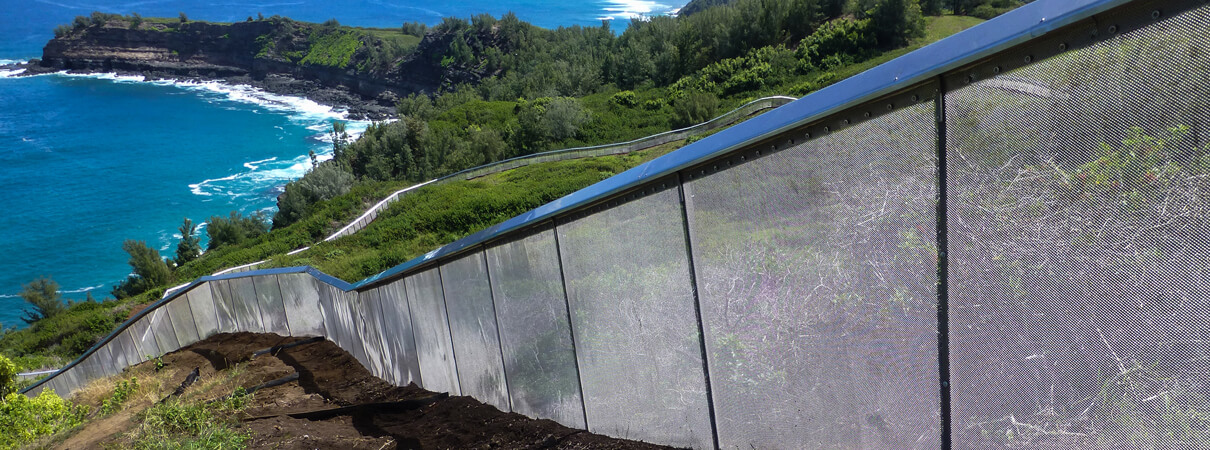
Predator proof fencing in Hawai'i

UNIT, P. C. S. (2012). The use of predator proof fencing as a management tool in the Hawaiian Islands: a case study of Kaena Point Natural Area Reserve.

The Ka`ena Point Ecosystem Restoration Project was the result of a partnership between the Hawai`i Department of Land and Natural Resources, Divisions of Forestry and Wildlife and State Parks, the U.S. Fish and Wildlife Service, and the Hawai`i Chapter of The Wildlife Society. Ka`ena Point Natural Area Reserve (NAR) hosts one of the largest seabird colonies in the main Hawaiian islands, three species of endangered plants, and is a pupping ground for the endangered Hawaiian monk seals. Prior to fence construction, nesting seabirds and native plants were under constant threat from predatory animals; up to 15% of seabird chicks were killed each year prior to fledging and many endangered plants were unable to reproduce as a result of seed predation. The project involved the construction of predator-proof fencing (2m tall) to prevent feral predators such as dogs, cats, mongoose, rats and mice from entering into 20ha of coastal habitat within Ka`ena Point, followed by removal of these species.

The project was initiated with the hiring of a project coordinator, followed closely by hiring of a two-person public outreach team. The public outreach was extensive reaching over 2500 individuals via personal contact and tens of thousands more as a result of dozens of stories appearing on evening news channels, articles published in local newspapers and newsletters, and several mini-documentaries aired on local cable television shows. A website was also established to post educational materials and information on the project (www.restoreKa`ena.org). The vast majority of the public was supportive despite the vigorous objections of a few individuals.

Multiple federal, state and county permits were required. In total 12 permits were applied for and obtained over a four-year period. Two years were lost as a result of multiple contested cases filed against the project which prevented progress during their resolution. Final permit approvals were completed in November 2010, construction began on November 10, 2010 and was completed on March 30, 2011 after a two-month hiatus for the holidays

To document the effects of predator removal, extensive ecological monitoring was conducted on both native and non-native species prior to the predator removal. A permanent monitoring grid with points placed every 50m was established in the reserve to document micro-habitat shifts. Seabird populations in the reserve had been monitored intensively for over seven years, and a complete botanical, invertebrate and marine intertidal survey was conducted to document the vascular plant species present and their percent cover. Extensive rodent monitoring was also conducted to document the species present, their relative abundance, reproductive cycle, and home range to select the most effective eradication method. Based on monitoring results and regulatory restrictions, a combination of diphacinone in bait boxes, as well as live traps were used to eradicate rodents, and a combination of live-trapping and shooting was used to remove larger animals such as dogs, cats and mongoose.

Invasive mammal eradication operations were initiated in February 2011 during the low point in the rodent reproductive cycle, using a combination of rodenticide in bait boxes spaced 25m apart and live multiple-catch traps placed 12.5m apart. Within three months, all predators, with the exception of mice were eradicated from within the reserve. Mice took an additional six months to full remove and operations were completed in the fall of 2011.

The exclusion and removal of these predatory animals is anticipated to increase in the existing population of nesting seabirds, encourage new seabird species to nest at Ka`ena Point, enhance regeneration and recruitment of native plants, and benefit monk seals by reducing the risk of disease transmission. The

Ka`ena Point Ecosystem Restoration Project is expected to have primarily positive effects on the resources protected in the NAR and provide the people of Hawai`i with an opportunity to visit a restored ecosystem. This was the first predator proof fence constructed in the United States at the time of its completion, and was the first project to successfully eliminate mice using the techniques discussed above.

Fencing to eradicate several invasive predators in Hawai'i

Young, L. C., VanderWerf, E. A., Lohr, M. T., Miller, C. J., Titmus, A. J., Peters, D., & Wilson, L. (2013). Multi-species predator eradication within a predator-proof fence at Ka ‘ena Point, Hawai ‘i. Biological Invasions, 1-12.

Ka‘ena Point Natural Area Reserve on O‘ahu hosts one of the largest seabird colonies in the main Hawaiian Islands and supports three species of endangered plants. In order to stop chronic predation by invasive alien mammals on native species, a peninsula-style predator-proof fence was constructed around a 20-ha portion of the reserve in 2011. Multi-species predator removal efforts began upon fence completion; diphacinone poison in bait boxes spaced 25 m apart was used to remove black rats, house mice, and small Indian mongooses. House mice also were removed with multiple-catch live traps spaced 12.5 m apart. Feral cats were removed with padded leg-hold traps. Feral cats and mongooses were eradicated in 1 month, black rats were eradicated in 2.5 months, and house mice were eradicated in about 9 months. Since eradication, incursions of cats and mongoose have been rare (1/7.2 months), but incursion frequency has been higher for black rats (1/56 days) and house mice (1/36–47 days). Buffer predator control was conducted to limit predator access and prevent reinvasion around the fence ends along the shoreline. Even with the high initial fence cost and ongoing predator incursion management, this method is expected to become more cost effective than previous predator control efforts after 16 years. Record numbers of Wedge-tailed shearwaters and Laysan albatrosses have fledged from the reserve after predator eradication, and regeneration of native plants and invertebrates is being observed. With careful planning and persistence, predator fences can be a cost-effective method of protecting natural resources, and multiple species of predators can be eradicated with traps and first-generation anti-coagulents.

Friday, 29 March 2013

Fencing against several invasive mammals

Moseby K.E. & Read J.L. (2006) The efficacy of feral cat, fox and rabbit exclusion fence designs for threatened species protection. Biological Conservation, 127, 429-437.
Pen and field trials were used to test the effectiveness and cost-efficiency of wire netting and electric fence designs as barriers to feral cats, foxes and rabbits in northern South Australia. A 180 cm high wire netting fence with foot apron and a curved ‘floppy’ overhang effectively contained most rabbits, feral cats and foxes during pen trials and proved effective with intensively monitored paddock-scale exclosures. A reduced height fence of 115 cm did not reduce effectiveness of the fence during fence trials but paddock-scale trials are yet to be completed. Conventional 40 mm diameter hexagonal ‘‘rabbit netting’’ was not an effective barrier against young independent rabbits and it is recommended that 30 mm hexagonal netting should be used. A 60 cm wide external netting overhang, curved in an arc and supported by lengths of heavy gauge wire, effectively precluded more feral cats and foxes than a 30 cm wide overhang angled upwards. The 30 cm foot apron was augmented in erosion-prone dunes and watercourses by the addition of wider netting or rubber matting to prevent incursions. Posts, and particularly corners, were targeted by feral cats and foxes and the efficacy of the fence was improved by using steel, rather than timber posts. Electric wires offset from the netting at heights of 120 and 150 cm provided a shock to animals exploring the base of the overhang and further improved the fence efficacy. PVC conduit rollers on the top wire were not effective
Related Posts Plugin for WordPress, Blogger...