Les hommes ont oublié cette vérité. Mais tu ne dois pas l'oublier, dit le renard. Tu deviens responsable pour toujours de ce que tu as apprivoisé.
Le Petit Prince, chap. 21
Showing posts with label Galápagos. Show all posts

Monday, 12 January 2015

Floreana Island rodent and cat eradication feasibility analysis

Island Conservation (2013) Floreana Island Ecological Restoration: Rodent and Cat Eradication
Feasibility Analysis version 6.0. Island Conservation, Santa Cruz, California. 85 pp.

The eradication of introduced vertebrates has become a widely accepted strategy for restoring island ecosystems. Based on an understanding of eradication methods and the Floreana Island project site, the feasibility of removing black rats, house mice, and feral cats is assessed within this document. Feasibility was assessed based on current techniques to safely remove rodents and feral cats from islands which have been used worldwide, including recent eradications within the Galápagos archipelago.
The goal of this project is to restore ecosystem function as well as enhance community well-being on Floreana Island. This would be achieved through the eradication of black rats, house mice and feral cats and by implementing effective biosecurity measures (e.g. preventing a rodent incursion and ensuring that domestic cats present on the island cannot act as a source population).
The most common technique used globally for removing rodents from islands is the application of bait containing a rodenticide. Cats are primarily targeted with poison, trapping, and hunting. Floreana is a large island (17,125 ha) compared to efforts undertaken elsewhere. If successful, it would be the second largest island to have had cats and rats removed and the largest to have had mice removed. Methods recommended for this multi-species eradication on Floreana Island are aerial- and ground-dispersed toxic baits (resulting in primary and secondary exposure of target populations), trapping, and hunting with and without dogs. To complement these actions, domestic cats must be sterilized and registered, euthanized, or removed from the island. Regulations must be implemented prior to the eradication to ensure that these actions can be applied to all domestic cats on the island, and that no cats can be imported to the island. Community buy-in and regulations will be required to allow access to all buildings and areas of the island, regardless of tenure. Additional recommendations are made regarding options for interisland biosecurity as well as legislation to regulate or prohibit importations of certain animals.
Factors such as a permanent community on island, tourism, and farmland/agriculture will complicate actions to eradicate rodents and cats. Although this is the case, all eradication principles can be met if the appropriate measures are taken during the planning, implementation, and confirmation phases. The technical removal of both rodents and cats is considered feasible with current eradication methods. Social, legal, and environmental acceptability has been assessed and is considered feasible within the region. Feasibility should be re-assessed periodically as results are received from processes to engage the community. A total cost of $10-12 million dollars is estimated for the planning and implementation of the recommended actions.
This document lays out a detailed description of the site and target species, recommended project approach, scope, and suggested stakeholder involvement needed to carry out a successful multispecies (mouse, rat, cat) eradication campaign on Floreana Island.

Saturday, 8 November 2014

Adjustments to new predators in the Galapagos marine iguana


Berger, S., Wikelski, M., Romero, L. M., Kalko, E. K., & Rödl, T. (2007). Behavioral and physiological adjustments to new predators in an endemic island species, the Galapagos marine iguana. Hormones and behavior, 52(5), 653-663.

For the past 5 to 15 million years, marine iguanas (Amblyrhynchus cristatus), endemic to the Galápagos archipelago, experienced relaxed predation pressure and consequently show negligible anti-predator behavior. However, over the past few decades introduced feral cats and dogs started to prey on iguanas on some of the islands. We investigated experimentally whether behavioral and endocrine anti-predator responses changed in response to predator introduction. We hypothesized that flight initiation distances (FID) and corticosterone (CORT) concentrations should increase in affected populations to cope with the novel predators. Populations of marine iguanas reacted differentially to simulated predator approach depending on whether or not they were previously naturally exposed to introduced predators. FIDs were larger at sites with predation than at sites without predation. Furthermore, the occurrence of new predators was associated with increased stress-induced CORT levels in marine iguanas. In addition, age was a strong predictor of variation in FID and CORT levels. Juveniles, which are generally more threatened by predators compared to adults, showed larger FIDs and higher CORT baseline levels as well as higher stress-induced levels than adults. The results demonstrate that this naive island species shows behavioral and physiological plasticity associated with actual predation pressure, a trait that is presumably adaptive. However, the adjustments in FID are not sufficient to cope with the novel predators. We suggest that low behavioral plasticity in the face of introduced predators may drive many island species to extinction.

Monday, 3 November 2014

The Trouble with Dogs on the Galapagos


The Trouble with Dogs on the Galapagos: Blue-Footed Boobies and Siberian Huskies
By Ketzel Levine
For canines, 1835 was a banner year. The centuries-old sport of bull-baiting — pitting dogs against bulls — was outlawed in England. Breeding began that year for a dog we call the Golden Retriever. And in the fall of ’35, the dogged ship, HMS Beagle, dropped anchor in a zoological paradise, with a young naturalist on board who would later ignite the world of science.

Charles Darwin had no Beagle when he stepped foot on the Galapagos Islands, but visit today and you might see more of them than you will bluefooted boobies. It’s actually against the law to bring animals to the islands, but if you want a Golden Retriever, you can easily smuggle one in. Rest assured, you’ll see no bull-baiting, but you might find a hunting dog gored by a boar.

Welcome to the Galapagos nobody wants to know.

Sunday, 8 December 2013

Methods and strategies to control feral cats to protect Galapagos land iguanas

Phillips, R. B., Cooke, B. D., Campbell, K., Carrion, V., Marquez, C., & Snell, H. L. (2005). Eradicating feral cats to protect Galapagos land iguanas: methods and strategies. Pacific Conservation Biology, 11(4), 257.

A three-year programme to eradicate Feral Cats Felis catus from the island of Baltra in the Galapagos archipelago achieved good results by Initially poisoning with sodium monofluoroacetate (compound 1080) then trapping or shooting the remaining cats. The poisoning campaign removed 90% of the cats, its success being attributable to pre-baiting with unpolsoned baits to accustom cats to eating baits and placing enough baits to ensure that all cats encountered several baits within their home range. This, together with the use of metaclopromide (Pileran) as an anti-emetic, overcame a problem associated with poor retention of 1080 in thawed fish baits that limited the dose available to 1 mg 1080 bait, a quality insufficient to kill large cats. Removal of the remaining cats was delayed by a weather-induced irruption of Black Rats Rattus rattus and House Mice Mus musculus that enabled recruitment of kittens in 2002, but made cats more susceptible to trapping and shooting in 2003 when rodent populations collapsed. Since July 2003 no sign of a cat has been detected on Baltra despite extensive searching and monitoring throughout 2004. As cat abundance has decreased there have been more locally-bred juvenile iguanas (Conolophus subcristatus) seen during annual censuses. However, such recruitment may reflect the increasing maturity and higher fecundity of iguanas repatriated from 1991 onwards rather than being a direct result of reduced cat predation alone. More time is necessary to determine the benefits of reduced cat predation on the Iguana population.

Monday, 2 December 2013

Evidence on truly feral western dog population

Reponen, S. E., Brown, S. K., Barnett, B. D., & Sacks, B. N. (2013). Genetic and morphometric evidence on a Galápagos island exposes founder effects and diversification in the first‐known (truly) feral western dog population. Molecular Ecology, 23 (2): 269-283.

Domesticated animals that revert to a wild state can become invasive and significantly impact native biodiversity. Although dogs can be problematic locally, only the Australasian dingo is known to occur in isolation from humans. Western dogs have experienced more intense artificial selection, which potentially limits their invasiveness. However, feral dogs eradicated from Isabela Island, Galápagos in the 1980s could be the first-known exception. We used DNA and morphometric data from 92 of these dogs to test the hypotheses (1) these dogs persisted independently of humans for up to a century and a half since descending from a handful of dogs introduced in the early 1800s, versus (2) similarly to other western feral dog populations, they reflected continuous recruitment of strays from human settlements on a portion of the Island. We detected one dominant maternal lineage and one dominant paternal lineage shared by the three subpopulations, along with low autosomal genetic diversity, consistent with the hypothesized common origins from a small founder population. Genetic diversity patterns among the three island subpopulations were consistent with stepping-stone founder effects, while morphometric differentiation suggested rapid phenotypic divergence, possibly due to drift and reinforced by selection corresponding to distinct microclimates and habitats on Isabela. Despite the continued presence of free-ranging dogs in the vicinity of settlements on Isabela and other Galápagos Islands, feral populations have not re-established in remote areas since the 1980s, emphasizing the rarity of conditions necessary for feralization of modern western dogs.

Feral forms in the 1980s,
after Barnett, 1986


See also

Sunday, 1 September 2013

Feral dogs in Galápagos

Barnett, B. D., & Rudd, R. L. (1983). Feral dogs of the Galápagos Islands: Impact and control. International Journal for the study of Animal Problems, 4:44-58.

Organisms introduced onto insular ecosystems, after they have become established, frequently increase to destructive numbers. Several species of mammals introduced onto the Galápagos Islands illustrate this ecological axiom. For example, domestic or pariah, and feral. Problems derived from their presence are most apparent on the islands of Santa Cruz and Isabela. Feral and pariah dogs are both scavengers and predators. While other introduced mammals (chiefly feral cattle and pigs) have served as prey, in recent years severe depredations on the unique endemic Galapagan fauna have been caused by the dogs. The chief targets have included land and marine iguanas, tortoises, and colonially nesting marine birds. To counter this problem, a coordinated and an eradication program on Isla Isabela, begun in 1981, continues with marked success. Control rests primarily on carefully placed flesh baits poisoned with Compound 1080 (sodium monofluoroacetate). Field studies on distribution, demography, behavior, and disease transmission also began on Isla Isabela in 1981. Particularly notable is the high incidence of filarial heartworm in several species of mammals, including the local human residents. Dogs are important reservoirs of this parasite. Descriptions of the problems created by the dogs and speculations on the nature of selective return to the wild state are presented.
Photo Galapagos Conservation Society


Eradication and control of feral dogs in Galápagos

Barnett, B. D. (1986). Eradication and control of feral and free-ranging dogs in the Galápagos Islands. In Proceedings of the Twelfth Vertebrate Pest Conference (1986) (8 pp.).

The history of canid introduction in Galápagos, their impact on biodiversity and the control and eradication by different methods, mainly poisoning with 1080 and chemical sterilisation.
After eradication in some areas, some mesopredator release effect was detected and cats further threatened iguanas populations. Sea lions became free of this danger, but cattle invaded areas previously occupied by dogs.


The iguana tragedy

Kutschera, U., & Kleinhans, S. 2013. Alfred Russel Wallace and the destruction of island life: the Iguana tragedy. Theory in Biosciences, 1-7.

The Galápagos Islands (Ecuador) are usually associated with the explorations and theoretical deductions of Charles Robert Darwin (1809–1882), but Alfred Russel Wallace (1823–1913) also investigated these islands and published several reports on the living world of this unique archipelago. In contrast to Darwin, Wallace described the destruction of natural ecosystems by humans and foresaw the resulting extinction of species. Here, we outline two case studies pertinent to Wallace’s prediction. First, we summarize the behavior of the predator-naive marine iguanas (Amblyrhynchus cristatus) on the Galápagos Islands, which are threatened by feral dogs and cats imported by humans. We also describe the unique life cycle of the spiny-tailed iguana (Ctenosaura bakeri) from the island of Utila (Honduras), a rare species whose populations are declining because of habitat destructions. In contrast to these threatened, endemic island species, the Green iguana (Iguana iguana) is still widely distributed, although, as a result of de-forestation, in some areas of South America local populations have disappeared. We conclude that Wallace was correct in his prediction that, because of human activities, numerous species of animals and plants will be driven to extinction, notably on islands.

Feral Dog with iguana Photo Galapagos Conservation Society

Farewell to the airport cats: Eradication of feral cats from Baltra island

A three-year program to eradicate feral cats, Felis catus,, from the island of Baltra in the Galápagos archipelago has achieved good results. With the objective of reducing the negative impact produced by the cats and restore a Galápagos ecosystem, the Galápagos National Park (GNP), with technical support from the Charles Darwin Foundation (CDF), began a project with the principal objectives of eradicating cats from Baltra island, and the restoration of its natural habitat. In addition, the project guarantees the survival of a population of repatriated land iguanas Conolophus subcristatus, a species made extinct on this island in the past, partly due to the presence of feral cats.
Eradication of cats was possible for various reasons: firstly, it is an island with a very small human population and therefore with a low risk or re-introduction of cats; its size is small (26km2) which helps control and monitoring; and lastly, the vegetation is sparse, with many open areas. Studies on feral cat behaviour and the most appropriate methods of control revealed that cats are active during the day and night. During the day, GNP staff looked for tracks and signs, and placed traps (Tomahawk and Victor types) and poison. At night, hunters removed cats with spotlights and rifles. With the objective of ensuring total eradication, in 2001, sodium monofluoroacetate (1080) in fish baits was placed over the entire island. The island was divided into 13 sectors and 350 bait stations were placed. This methodology was successful in controlling the cats. The population has slowly been reduced to the point of eradication. Removal of the remaining cats was complicated by a weather-induced eruption of rats Rattus rattus, and mice Mus musculus, that enabled recruitment of kittens in 2002, but made cats more sucseptible to trapping and shooting in 2003 when the rodent population collapsed. By the end of 2003 no sign of a cat was seen on Baltra despite extensive searching. Periodic monitoring on Baltra continues throughout 2004 to confirm the eradication of the feral cats, and the establishment of colonies of repatriated land iguanas. On reduction of the cat population there have been immediate increases in the numbers of locally bred terrestrial iguanas seen during annual censuses. However, this response may reflect the coincidental maturation of young produced by iguanas repatriated from 1991 onwards or climatic variations rather than resulting from reduced cat predation alone. It may be necessary to wait some years to see the full benefits of reduced cat predation. Currently the GNP is carrying out cat control programmes at two sites, Cerro Dragon and Cerro Montura, on another island in Galápagos, Santa Cruz. In addition, they are monitoring other islands to determine the areas where feral cats are threatening native species. 

Thursday, 15 August 2013

Diet and home range of feral cats in Galápagos

Konecny, M. J. (1987). Home range and activity patterns of feral house cats in the Galapagos Islands. Oikos, 50: 17-23.

The spatial organization of two populations of feral house cats Felis catus, was examined in the Galápagos Islands using mark-recapture and radio telemetry. Both populations were located in the same habitat vegetation type and had approximately equal densities of cats. Two sites differing in resource density and habitat heterogeneity also differed significantly in home range size and amount of overlap. Male home ranges averaged 3.04 km2 while those of females averaged 0.82 km2. Monthly home ranges did not vary significantly. Activity patterns were roughly bimodal with peaks near dawn and dusk and lows near midday. Daily movement paths differed between sites. Resource levels and home range patterns suggest a resource threshold territoriality based on resource depression at the poorer site while no territoriality was found at the richer site demonstrating the adaptability and ecological flexibility of feral cats.

Konecny, M. J. (1987). Food habits and energetics of feral house cats in the Galápagos Islands. Oikos, 50: 24-32.

The food habits of feral cats (Felis catus) were assessed by visual observations and scats collected in two seasons and at two sites in the Galápagos Islands. Cats were seen to both scavenge and attack live prey with a capture efficiency of 32%. In seasonal comparisons significantly more food items were included in the dry season (7.4) than the wet (5.7). Significantly more items were included in the diet at Tagus Cove (7.8) which was less productive than Cerro Colorado (6.7). The diet included both vertebrate and invertebrate prey but vertebrates constituted 71.9% of each scat by weight and 93.4% of the energy. The estimated daily intake of energy was 170 kcal which is at the caloric break even point for non-pregnant females, slightly below that for adult males and pregnant females and well below that for lactating females. The food habit and energetic data were combined to make some predictions about food preferences, foraging decisions and the role of available water on feral cats.

Dog predation on marine iguanas

Kruuk, H., & Snell, H. (1981). Prey selection by feral dogs from a population of marine iguanas (Amblyrhynchus cristatus). Journal of Applied Ecology, 18: 197-204.

(1) Factors are examined which influence prey selection by feral dogs from a population of marine iguanas on Isabela, Galápagos, Ecuador.
(2) For various size classes of iguanas the relative risk of predation by dogs is significantly greater for large animals. 
(3) Variation in risk was related to differential fleeing distances, and to the greater exposure of territorial male iguanas which did not seek shelter at night. 
(4) Anti-predator behaviour of iguanas did not protect them against feral dogs, and dog predation was probably considerably greater than the marine iguana population could sustain.

Thursday, 2 May 2013

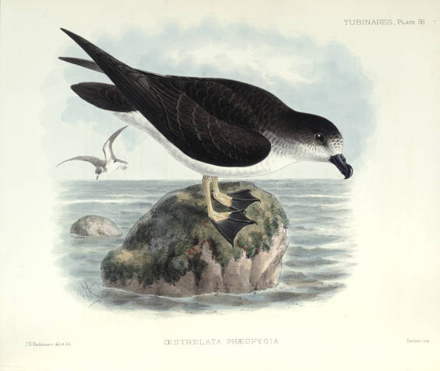
Efforts to preserve Dank rumped petrel

Cruz J.B. & Cruz F. 1996. Conservation of the dark-rumped petrel Pterodroma phaeopygia of the Galápagos Islands, 1982-1991. Bird Conservation International, 6, 23-32.

Early work on the Dark-rumped Petrel Pterodroma phaeopygia of the Galápagos Islands, Ecuador, identified colony sites and population status and alerted wildlife managers to an alarming decline in nesting numbers. Predation by introduced mammals, such as rats, cats, pigs and dogs, is the chief concern, followed by loss of nesting habitat to agricultural development. Programmes to reduce predation through poisoning and hunting, begun in 1983, increased the number of chicks fledged from the main breeding colony in eight out of nine years. Pre-breeding adults were lured by tape-recordings to 'safe' sites where they successfully raised chicks in artificial nests. Tape-luring offers hope for establishing new colonies on predator-free islands.
Related Posts Plugin for WordPress, Blogger...