Les hommes ont oublié cette vérité. Mais tu ne dois pas l'oublier, dit le renard. Tu deviens responsable pour toujours de ce que tu as apprivoisé.
Le Petit Prince, chap. 21

Wednesday, 14 January 2015

Rats, cats and seabirds: hyperpredation and mesopredator release

Ringler, D., Russell, J., & Le Corre, M. (2015). Trophic roles of black rats and seabird impacts on tropical islands: Mesopredator release or hyperpredation?.Biological Conservation.

Rats contribute to the decline of tropical seabird populations by affecting their breeding success through direct predation of eggs and chicks. When they coexist with other predators, invasive rats may also generate indirect interactions via the changes they impose on the structure of communities and trophic interactions following invasion (‘hyperpredation process’), or when apex predators are eradicated from the ecosystem (‘mesopredator release effect’). Understanding these effects is necessary to implement restoration operations that actually benefit threatened seabird populations. We investigated these processes on two French tropical seabird islands of the western Indian Ocean, Europa and Juan de Nova, where black rats coexist with two different apex predator species (introduced cats and potentially native barn owls). The parallel use of several methods (diet analysis, stable isotopes, seabird monitoring) to identify trophic roles of rats revealed that the direct impact of rats on seabirds was particularly high on Europa where only rats and owls occur, with high consumption of chicks resulting in low breeding success for several seabird species. We also suggested that hyperpredation associated with top-down regulation of cats is occurring on Juan de Nova, although territoriality of cats may buffer this process. Conversely we found evidence that mesopredator release effect is unlikely, irrespective of the apex predator identity. Considering the most likely effects on both islands we provided recommendations on eradication priorities to mitigate the risk of local extinction that seabirds are currently facing.

Tuesday, 13 January 2015

Madagascar's carnivores response to fragmentation, hunting and feral cats and dogs

Farris, Z. J. (2015). Responses of Madagascar’s endemic carnivores fragmentation, hunting, and exotic carnivores across the Masoala- Akira landscape. PhD dissertation. Virginia Polytechnic Institute and State University

The carnivores of Madagascar are likely the least studied of the world’s carnivores, thus little is known about threats to their persistence. I provide the first long-term assessment of Madagascar’s rainforest carnivore community, including: 1) how multiple forms of habitat degradation (i.e., fragmentation, exotic carnivores, human encroachment, and hunting) affect native and exotic carnivore occupancy; 2) how native and exotic carnivore temporal activity overlap and how body size and niche explain these patterns; 3) how native and exotic carnivores spatially co-occur across the landscape and which variables explain these relationships; and 4) how native and exotic carnivores and humans co-occur with lemurs across Madagascar’s largest protected landscape: the Masoala-Makira landscape. From 2008 to 2013 I photographically sampled carnivores and conducted linetransect surveys of lemurs at seven study sites with varying degrees of degradation and human encroachment, including repeat surveys of two sites. As degradation increased, exotic carnivores showed increases in activity and occupancy while endemic carnivore, small mammal, and lemur occupancy and/or activity decreased. Wild/feral cats (Felis sp.) and dogs (Canis familiaris) had higher occupancy (0.37 ± SE 0.08 and 0.61 ± SE 0.07, respectively) than half of the endemic carnivore species across the landscape. Additionally, exotic carnivores had both direct and indirect negative effects on native carnivore occupancy. For example, spotted fanaloka (Fossa fossana) occupancy (0.70 ± SE 0.07) was negatively impacted by both wild/feral cat (beta = -2.65) and Indian civets (beta = -1.20). My results revealed intense pressure from hunting (ex. n = 31 fosa Cryptoprocta ferox consumed per year from 2005-2011 across four villages), including evidence that hunters target intact forest where native carnivore and lemur occupancy and/or activity are highest. I found evidence of high temporal overlap between native and exotic carnivores (ex. temporal overlap between brown-tail vontsira Salanoia concolor and dogs is 0.88), including fosa (Cryptoprocta ferox) avoiding dogs and humans across all seasons. However, I found no evidence of body size or correlates of ecological niche explaining temporal overlap among carnivores. Estimates of spatial co-occurrence among native and exotic carnivores in rainforest habitat revealed strong evidence that native and exotic carnivores occur together less often than expected and that exotic carnivores may be replacing native carnivores in forests close to human settlements. For example, falanouc show a strong increase in occupancy when dogs are absent (0.69 ± SE 0.11) compared to when they are present (0.23 ± SE 0.05). Finally, the two-species interaction occupancy models for carnivores and lemurs, revealed a higher number of interactions among species across contiguous forest where carnivore and lemur occupancy were highest. These various anthropogenic pressures and their effects on carnivore and lemur populations, particularly increases in exotic carnivores and hunting, have wide-ranging, global implications and demand effective management plans to target the influx of exotic carnivores and unsustainable hunting affecting carnivore and primate populations across Madagascar and worldwide.

Unspayed cat multiplication


Monday, 12 January 2015

Floreana Island rodent and cat eradication feasibility analysis

Island Conservation (2013) Floreana Island Ecological Restoration: Rodent and Cat Eradication
Feasibility Analysis version 6.0. Island Conservation, Santa Cruz, California. 85 pp.

The eradication of introduced vertebrates has become a widely accepted strategy for restoring island ecosystems. Based on an understanding of eradication methods and the Floreana Island project site, the feasibility of removing black rats, house mice, and feral cats is assessed within this document. Feasibility was assessed based on current techniques to safely remove rodents and feral cats from islands which have been used worldwide, including recent eradications within the Galápagos archipelago.
The goal of this project is to restore ecosystem function as well as enhance community well-being on Floreana Island. This would be achieved through the eradication of black rats, house mice and feral cats and by implementing effective biosecurity measures (e.g. preventing a rodent incursion and ensuring that domestic cats present on the island cannot act as a source population).
The most common technique used globally for removing rodents from islands is the application of bait containing a rodenticide. Cats are primarily targeted with poison, trapping, and hunting. Floreana is a large island (17,125 ha) compared to efforts undertaken elsewhere. If successful, it would be the second largest island to have had cats and rats removed and the largest to have had mice removed. Methods recommended for this multi-species eradication on Floreana Island are aerial- and ground-dispersed toxic baits (resulting in primary and secondary exposure of target populations), trapping, and hunting with and without dogs. To complement these actions, domestic cats must be sterilized and registered, euthanized, or removed from the island. Regulations must be implemented prior to the eradication to ensure that these actions can be applied to all domestic cats on the island, and that no cats can be imported to the island. Community buy-in and regulations will be required to allow access to all buildings and areas of the island, regardless of tenure. Additional recommendations are made regarding options for interisland biosecurity as well as legislation to regulate or prohibit importations of certain animals.
Factors such as a permanent community on island, tourism, and farmland/agriculture will complicate actions to eradicate rodents and cats. Although this is the case, all eradication principles can be met if the appropriate measures are taken during the planning, implementation, and confirmation phases. The technical removal of both rodents and cats is considered feasible with current eradication methods. Social, legal, and environmental acceptability has been assessed and is considered feasible within the region. Feasibility should be re-assessed periodically as results are received from processes to engage the community. A total cost of $10-12 million dollars is estimated for the planning and implementation of the recommended actions.
This document lays out a detailed description of the site and target species, recommended project approach, scope, and suggested stakeholder involvement needed to carry out a successful multispecies (mouse, rat, cat) eradication campaign on Floreana Island.

Saturday, 10 January 2015

Mobility of deers and their arassment by dogs

Progulske, D. R., & Baskett, T. S. (1958). Mobility of Missouri deer and their arassment by dogs. The Journal of Wildlife Management, 184-192.

There is little information on the mobility of the white-tailed deer (Odocoileus virginianus) in the middle United States; data are equally limited on the mobility of white-tails on land that is primarily agricultural or where ther's a yearlong harassment by dogs...


Friday, 9 January 2015

Alien predator and monitoring program at Ramsar sites in Australia

Robley, A. (2014) Hattah–Kulkyne Lakes Ramsar Protection Project: predator control and monitoring program. Arthur Rylah Institute for Environmental Research Technical Report Series No. 258. Department of Environment and Primary Industries, Heidelberg, Victoria.


The Hattah–Kulkyne Lakes Predator Management Strategy forms part of the larger Mallee Catchment Management Authority (MCMA) ‘Building Reconnected, Resilient Landscapes and
Communities across the Murray Mallee’ program to be delivered 2013–2018. Within the broader
program are a series of subprojects, with one specifically addressing the issue of systematically
and strategically reducing pest plant and animal infestations in order to protect key ecological
attributes of the Hattah–Kulkyne Lakes Ramsar site.
In order to achieve this the Mallee Catchment Management Authority engaged the Arthur Rylah
Research Institute (ARI) of the Department of Environment and Primary Industries to prepare a
Predator Management Strategy.
The Predator Management Strategy identifies a range of control techniques for Red Foxes (Vulpes
vulpes), with an appraisal of the predicted benefits and limitations of the various techniques. The
strategy also discusses the potential for innovative control techniques to be employed within the
site.
In order to accurately determine whether the predator control program is meeting its objectives, a
monitoring program must measure the responses of both predator populations (i.e. operational
monitoring) and prey populations (i.e. performance monitoring).
The recommended fox control strategy is a two-stage approach. Stage one is the initial knockdown
of the local fox population, and stage two is the sustained management of the lowered fox
population. To assess the effectiveness of the initial knockdown, the strategy recommends a
before-and-after poison baiting comparison in a proportion of the area occupied by foxes. This
approach will also be implemented for the longer-term monitoring of the fox population.
Suggested approaches to monitoring are provided for the monitoring of waterbirds and reptiles
(including freshwater turtles), which are likely to increase in abundance following control of foxes
to low abundance. A detailed monitoring and evaluation plan will be developed to assess the
performance of the fox control program under a separate project.
Increasing water flows into the Hattah–Kulkyne Lake system is likely to result in increased
European Rabbit (Oryctolagus cuniculus)abundance, with increased and sustained vegetation
growth through spring and early summer. With fox control, and thus reduced predation on rabbits,
it is expected that rabbit densities will increase in the Hattah–Kulkyne Lakes study area, with the
potential for subsequent increases in feral cat (Felis catus) populations. It is recommended that a
rabbit control operation be implemented to complement the fox control program.
As there is no legal definition for ‘feral cats’ in Victoria, and no legal large-scale cost-effective
control tools, the strategy recommends the collection of information on the impact that feral cats
are having in the Lakes system so as to inform the use of broad-scale management programs in the
future.

Thursday, 8 January 2015

Need to close the gap between research and policy to rabies control in India

Abbas, S. S., & Kakkar, M. 2014. Rabies control in India: a need to close the gap between research and policy. Bulletin of the World Health Organization. BLT.14.140723

...
What are the rabies control solutions for India? Researchers and policy-makers need to jointly promote evidence-based policy-making. The landscape of rabies control is complex; with actors from multiple sectors– including animal welfare, public health, veterinary medicine and civil administration – with different perspectives and expectations of a rabies control programme. In such an environment simple intervention strategies are not likely to meet the needs of all stakeholders. Instead, an approach that recognizes the interdependence of – while seeking to improve – human, animal and environmental health, may bring multiple perspectives together. More epidemiological studies and implementation research should be conducted with a wider set of actors. For us, the recognition of the complexity of rabies control is the first step to developing more effective, acceptable and sustainable policy solutions.

Wednesday, 7 January 2015

Effects of sex and reproductive state on interactions between free-roaming dogs

Sparkes J, Körtner G, Ballard G, Fleming PJS, Brown WY (2014) Effects of Sex and Reproductive State on Interactions between Free-Roaming Domestic Dogs. PLoS ONE 9(12): e116053. doi:10.1371/journal.pone.0116053

Free-roaming dogs (Canis familiaris) are common worldwide, often maintaining diseases of domestic pets and wildlife. Management of these dogs is difficult and often involves capture, treatment, neutering and release. Information on the effects of sex and reproductive state on intraspecific contacts and disease transmission is currently lacking, but is vital to improving strategic management of their populations. We assessed the effects of sex and reproductive state on short-term activity patterns and contact rates of free-roaming dogs living in an Australian Indigenous community. Population, social group sizes and rates of contact were estimated from structured observations along walked transects. Simultaneously, GPS telemetry collars were used to track dogs' movements and to quantify the frequency of contacts between individual animals. We estimated that the community's dog population was 326±52, with only 9.8±2.5% confined to a house yard. Short-term activity ranges of dogs varied from 9.2 to 133.7 ha, with males ranging over significantly larger areas than females. Contacts between two or more dogs occurred frequently, with entire females and neutered males accumulating significantly more contacts than spayed females or entire males. This indicates that sex and reproductive status are potentially important to epidemiology, but the effect of these differential contact rates on disease transmission requires further investigation. The observed combination of unrestrained dogs and high contact rates suggest that contagious disease would likely spread rapidly through the population. Pro-active management of dog populations and targeted education programs could help reduce the risks associated with disease spread.

Monday, 5 January 2015

A review of four successful recovery programmes for threatened sub-tropical petrels

Carlile, N., Priddel, D., Zino, F., Natividad, C., & Wingate, D. B. (2003). A review of four successful recovery programmes for threatened sub-tropical petrels. Mar. Ornithol, 31, 185-192.

Recovery programmes have significantly increased the population sizes of four threatened sub-tropical petrels: Zino’s Petrel Pterodroma madeira, Bermuda Petrel P. cahow, Gould’s Petrel P. leucoptera leucoptera and Hawaiian Petrel P. sandwichensis. These recovery programmes were reviewed to examine i) past and present nesting habitat; ii) the nature and commonality of threats; iii) the recovery actions undertaken; iv) the conservation gains; and v) the factors most responsible for these gains. The most significant causes of past population decline were exploitation by humans for food, loss of nesting habitat and the introduction of alien mammals. Primary contemporary threats are predation and disturbance at the breeding grounds by both alien and indigenous species. Current relict populations have restricted distributions and are often confined to nesting habitats that are severely degraded or sub-optimal and dissimilar from those known historically. The crucial attribute of these habitats is the absence or low density of alien predators. The most beneficial recovery actions involved the control or eradication of predators at breeding grounds and the provision of safe artificial nest sites. Recovery actions were more difficult to implement for species on large islands. The success of each recovery programme was due largely to concerted action spanning several decades.

Sunday, 4 January 2015

The Canine Cooperation Hypothesis

 Range, F. & Virányi, Z. (2014) Tracking the evolutionary origins of dog-human cooperation: The ‘Canine Cooperation Hypothesis’. Front. Psychol. 5:1582. doi:10.3389/fpsyg.2014.01582

At present, beyond the fact that dogs can be easier socialized with humans than wolves, we know little about the motivational and cognitive effects of domestication. Despite this, it has been suggested that during domestication dogs have become socially more tolerant and attentive than wolves. These two characteristics are crucial for cooperation, and it has been argued that these changes allowed dogs to successfully live and work with humans. However, these domestication hypotheses have been put forward mainly based on dog-wolf differences reported in regard to their interactions with humans. Thus, it is possible that these differences reflect only an improved capability of dogs to accept humans as social partners instead of an increase of their general tolerance, attentiveness and cooperativeness. At the Wolf Science Center, in order to detangle these two explanations, we raise and keep dogs and wolves similarly socializing them with conspecifics and humans and then test them in interactions not just with humans but also conspecifics. When investigating attentiveness towards human and conspecific partners using different paradigms, we found that the wolves were at least as attentive as the dogs to their social partners and their actions. Based on these findings and the social ecology of wolves, we propose the Canine Cooperation Hypothesis suggesting that wolves are characterized with high social attentiveness and tolerance and are highly cooperative. This is in contrast with the implications of most domestication hypotheses about wolves. We argue, however, that these characteristics of wolves likely provided a good basis for the evolution of dog-human cooperation.

Saturday, 3 January 2015

A survey of feline leukaemia virus infection of domestic cats from selected areas in Harare

Muchaamba, F., Mutiringindi, T. H., Tivapasi, M. T., Dhliwayo, S., & Matope, G. (2014). A survey of feline leukaemia virus infection of domestic cats from selected areas in Harare, Zimbabwe. Journal of the South African Veterinary Association, 85(1), 6-pages.

A cross-sectional study was conducted to detect the feline leukaemia virus (FeLV) p27 antigen and to determine risk factors and the haematological changes associated with infection in domestic cats in Zimbabwe. Sera were collected for detection of the p27 antigen, urea, creatinine, alanine aminotransferase and gamma-glutamyl transferase levels, whilst whole blood was collected for haematology. FeLV p27 antigen was detected using a rapid enzyme-linked immunosorbent assay (ELISA) test kit. Data on risk factors were analysed using a logistic regression model. Of the 100 cats tested, 41% (95% CI: 31.19% - 50.81%) (41/100) were positive for the FeLV p27 antigen. Sex and health status of cats were not significantly (p > 0.05) associated with infection. Intact cats (OR = 9.73), those living in multicat housing (OR = 5.23) and cats that had access to outdoor life (OR = 35.5) were found to have higher odds of infection compared with neutered cats, those living in single-cat housing, and without access to outdoor life, respectively. Biochemistry and haematology revealed no specific changes. The results showed that FeLV infection was high in sampled cats, providing evidence of active infection. Thus, it would be prudent to introduce specific control measures for FeLV infection in Zimbabwe.

Friday, 2 January 2015

Intraguild competition among mesopredators

Garvey, P. M., Glen, A. S., & Pech, R. P. (2014). Foraging Ermine Avoid Risk: behavioural responses of a mesopredator to its interspecific competitors in a mammalian guild. Biological Invasions, 1-13.
Interference competition between predators strongly influences the structure and composition of ecological communities. These interactions are usually asymmetrical as larger predators dominate in aggressive encounters. Smaller predators are forced to balance the conflicting demands of obtaining food while reducing the risk of a confrontation. We tested the behavioural responses of 16 wild captured stoats (Mustela erminea) to the presence of a feral cat (Felis catus) and a ferret (Mustela furo), which we refer to as “larger predators” due to their superior body size. Stoats were released individually into an outdoor arena and nocturnal activities were recorded on infra-red video cameras. On treatment nights, one of the larger predators was placed inside a segregated holding cage on one side of the arena, while an empty cage was placed on the opposite side as a control. A stoat’s daily food allocation was divided into two equal portions, one placed in front of each holding cage to form a food “patch”. Stoats’ perception of risk was assessed by comparing behaviour in the risky patch (close to the caged predator) versus the safe patch (close to the empty cage). Stoats harvested less food at the risky patch. They avoided the area containing the larger predator, both spatially and temporally, and increased vigilance at the risky patch. The results show that stoats alter their foraging behaviour due to perceived interference competition when they encounter larger predators. Understanding trophic interactions between invasive species will help to inform conservation decisions and maximise the effectiveness of management intervention.

Thursday, 1 January 2015

Genetic analysis on hybridization between domestic cats and African wildcats

Le Roux, J. J., Foxcroft, L. C., Herbst, M., & MacFadyen, S. (2014). Genetic analysis shows low levels of hybridization between African wildcats (Felis silvestris lybica) and domestic cats (F. s. catus) in South Africa. Ecology and Evolution.

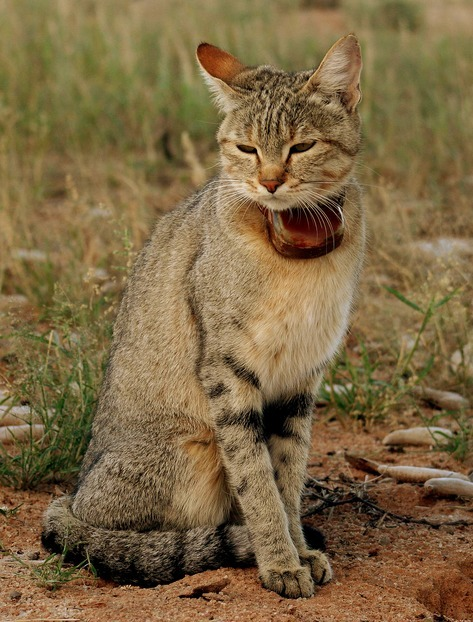
Figure 1. African wildcat (Felis silvestris lybica) in
Kgalagadi Transfrontier Park (South Africa/Botswana)
(Photo M. Herbst).
Hybridization between domestic and wild animals is a major concern for biodiversity conservation, and as habitats become increasingly fragmented, conserving biodiversity at all levels, including genetic, becomes increasingly important. Except for tropical forests and true deserts, African wildcats occur across the African continent; however, almost no work has been carried out to assess its genetic status and extent of hybridization with domestic cats. For example, in South Africa it has been argued that the long-term viability of maintaining pure wildcat populations lies in large protected areas only, isolated from human populations. Two of the largest protected areas in Africa, the Kgalagadi Transfrontier and Kruger National Parks, as well as the size of South Africa and range of landscape uses, provide a model situation to assess how habitat fragmentation and heterogeneity influences the genetic purity of African wildcats. Using population genetic and home range data, we examined the genetic purity of African wildcats and their suspected hybrids across South Africa, including areas within and outside of protected areas. Overall, we found African wildcat populations to be genetically relatively pure, but instances of hybridization and a significant relationship between the genetic distinctiveness (purity) of wildcats and human population pressure were evident.

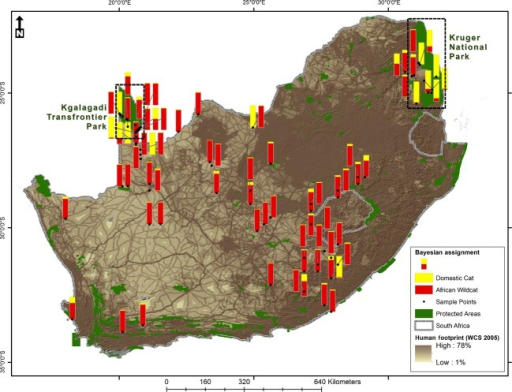
Figure 2. Distribution of collection sites of cats included in this study across
South Africa in relation to formal protected areas and human footprint pressure
The genetically purest African wildcats were found in the Kgalagadi Transfrontier Park, while samples from around Kruger National Park showed cause for concern, especially combined with the substantial human population density along the park's boundary. While African wildcat populations in South Africa generally appear to be genetically pure, with low levels of hybridization, our genetic data do suggest that protected areas may play an important role in maintaining genetic purity by reducing the likelihood of contact with domestic cats. We suggest that approaches such as corridors between protected areas are unlikely to remain effective for wildcat conservation, as the proximity to human settlements around these areas is projected to increase the wild/domestic animal interface. Thus, large, isolated protected areas will become increasingly important for wildcat conservation and efforts need to be made to prevent introduction of domestic cats into these areas.


 Read more on domestic wild feline hybridisation with domestic cat

Related Posts Plugin for WordPress, Blogger...